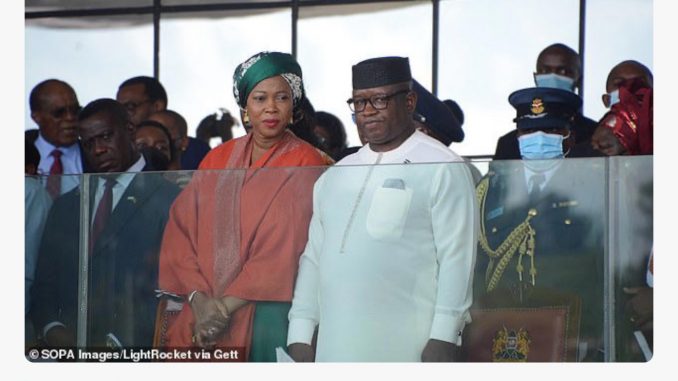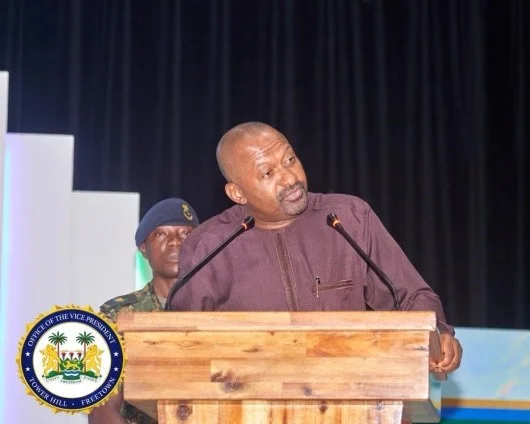
Vice President Dr. Mohamed Juldeh Jalloh on Wednesday, May 20, 2026, called for a fundamental transformation of Sierra Leone’s mining sector during an event at the Freetown International Conference Centre, Bintumani, Aberdeen in Freetown. The Vice President formally launched the National Strategy for Critical Minerals, aiming to position the nation as a leader in critical mineral development, industrialization, and value addition across Africa. Dr. Jalloh described the minerals as "sovereign assets, strategic assets and development assets," emphasizing that "mining must not merely generate exports. Mining must finance transformation."
He noted financial disparities within the sector, stating, "From a billion-dollar export sector, less than five cents of every dollar reaches the national treasury." Dr. Jalloh also stressed the importance of community benefits, noting, "A railway built for a mine should also create economic opportunities for communities." He officially opened Sierra Leone Mining Week 2026 and the 11th African Diamond Producers Association Council of Ministers Meeting alongside the strategy launch. This significant event showed the government's commitment to leveraging its rich mineral endowments for broader national development.
Vision for Mining Sector
Sierra Leone's Vice President, Dr. Mohamed Juldeh Jalloh, stated that the nation's mineral wealth must extend beyond simple extraction to generate substantial employment, develop infrastructure, foster industrial expansion, and ensure lasting prosperity for its citizens. The Vice President's remarks were made during the official opening of Sierra Leone Mining Week 2026, an event that also encompassed the 11th Ordinary Meeting of the African Diamond Producers Association (ADPA) Council of Ministers. The conference, which began on Tuesday, May 19, 2026, and is scheduled to conclude on Saturday, May 23, 2026, was jointly organized by the Ministry of Mines and Mineral Resources and the National Minerals Agency (NMA).
The theme for this year's conference was "Our Mineral Resources: Responsible Mining, Value Multiplication and Shared Prosperity." This theme showed the government's focus on transforming the mining sector from a predominantly extractive industry to one that drives full economic growth. Sierra Leone holds significant deposits of critical minerals, including lithium, cobalt, graphite, coltan, platinum group metals, rare earth elements, iron ore, diamonds, and rutile. These substantial mineral resources are central to the new strategy's ambitions. During the event, Vice President Jalloh conducted a tour of various exhibition booths, among them the display by the Sierra Leone Road Safety Authority, engaging with participants and exhibitors to understand the diverse contributions and innovations within the sector. The strategic focus aims to ensure that these extensive mineral resources contribute directly to the country's socio-economic development goals rather than solely serving as export commodities. The government's push for value addition seeks to create domestic industries and employment opportunities throughout the mineral supply chain, thereby multiplying the economic benefits derived from these natural assets.
Strategy's Ambitious Goals
Sierra Leone's National Strategy for Critical Minerals 2026–2031 was officially launched with several ambitious objectives designed to reshape the nation's economic landscape. The strategy aims to attract approximately US$2.5 billion in exploration and mining investments into the country's critical minerals sector. This substantial investment target forms a core component of the national plan to enhance the sector's contribution to the economy, fostering both primary extraction and downstream processing activities.
A key goal of the strategy involves the establishment of three to five mineral processing plants within Sierra Leone. These facilities are intended to enable local value addition to raw critical minerals, moving beyond primary extraction to produce higher-value products. The development of such processing capabilities is central to the nation's industrialization agenda, aiming to capture a greater share of the global value chain for these essential minerals. By processing minerals domestically, Sierra Leone seeks to create more strong local economies and reduce reliance on exporting raw materials.
The strategy also focuses on human capital development, setting a target to train 15,000 skilled workers for the critical minerals industry. This initiative seeks to build a local workforce capable of supporting advanced mining operations and mineral processing, ensuring that Sierra Leonean citizens are equipped with the expertise required for modern industrial roles. The emphasis on training is designed to ensure Sierra Leonean citizens are prepared for various roles within the expanding sector, from technical positions to management, thereby fostering long-term local ownership and expertise.
Currently, approximately 92 percent of the mining workforce in Sierra Leone is composed of Sierra Leonean nationals. The new strategy aims to build upon this existing local participation by further enhancing skill sets and creating more specialized employment opportunities, aligning with the broader vision of national development. This focus on local content and capacity building is integral to the broader vision of transforming the country's mining landscape, ensuring that the benefits of mineral wealth are widely distributed among its citizens. The strategy outlines a full framework for achieving these targets, emphasizing sustainable practices, environmental stewardship, and economic diversification beyond the traditional mining model.
Context and Stakeholder Views
Sierra Leone generated approximately US$1.12 billion in mineral exports in 2024, according to recent figures, reflecting the significant volume of mineral resources leaving the country. Government revenue from the mining sector concurrently increased by 34 percent, reaching about US$49.9 million in the same year. Despite these export figures, Vice President Dr. Mohamed Juldeh Jalloh stated that less than five cents of every dollar from the billion-dollar export sector reaches the national treasury, noting a critical area for policy intervention and revenue optimization. Addressing concerns about resource benefits, the Mines and Minerals Development Act 2022 guarantees the Government a 10 percent free-carried, non-dilutable equity interest in large-scale mining ventures, with provisions for negotiations up to 35 percent participation. This legislative framework aims to secure a more equitable share of profits for the state and its citizens.
The mining sector also supports a significant portion of the population, with over 120,000 Sierra Leoneans depending on artisanal mining for their livelihoods. This segment of the industry presents both opportunities and challenges, requiring careful management to ensure safety, environmental compliance, and fair compensation. Saa Emerson Lamina, Chairman of Parliament’s Committee on Mines and Mineral Resources, praised reforms enacted under the Mines and Minerals Act 2023, indicating positive legislative developments aimed at modernizing the sector and enhancing its contribution to national development. Salim Sillah, Chief Technical Officer of Leone Rock Metal Group, remarked that Sierra Leone’s mining sector is currently experiencing one of its strongest periods of investment growth in over two decades, signaling renewed confidence from international and domestic investors. Director General of the National Minerals Agency, Ing. Hadji Dabo, acknowledged the participation of delegates from more than 30 countries at the recent industry event, showing international interest in Sierra Leone's mineral potential and its evolving policy landscape. The wide array of stakeholders, from government officials and industry leaders to local communities and international partners, reflects the complex and multifaceted nature of the mining sector in Sierra Leone.
Call to Action and Future Outlook
Vice President Dr. Mohamed Juldeh Jalloh challenged stakeholders to ensure that by Mining Week 2027, Sierra Leone records mining revenues exceeding US$100 million, alongside operational mineral processing plants, stronger community development systems, improved infrastructure models, and increased value addition. This ambitious target serves as a benchmark for the immediate future, urging concerted efforts from all parties involved. The national strategy aims to create approximately 45,000 direct and indirect jobs within the critical minerals sector, providing significant employment opportunities across various skill levels and contributing to poverty reduction. It also projects generating roughly US$300 million in annual Government revenue, a substantial increase that would enable greater public investment in essential services and infrastructure. The strategy targets achieving approximately US$1.5 billion in export earnings from processed mineral products, emphasizing the country's move towards industrialization and economic transformation by adding value to its raw materials. This shift from mere extraction to processing and manufacturing represents a key change in Sierra Leone's economic model, promising a more sustainable and prosperous future for its citizens. The successful implementation of this strategy will require sustained political will, strong regulatory frameworks, and continued collaboration among government, industry, and local communities.