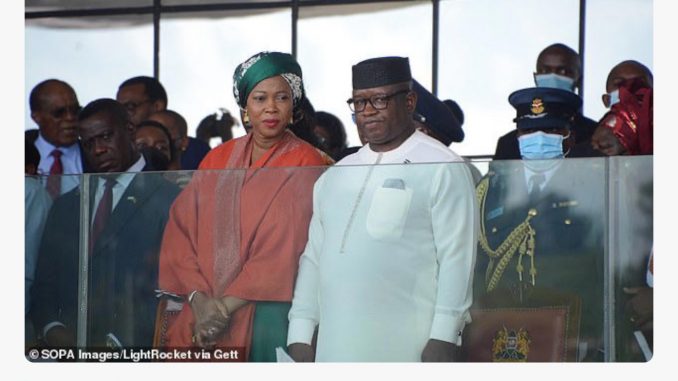
Sierra Leone First Lady Fatima Jabbe-Bio has been accused of maintaining an empty council flat in London for at least three years, according to local residents. Fatima Jabbe-Bio is the First Lady of Sierra Leone. The allegations surfaced amid broader scrutiny of her wealth and property acquisitions. Ms. Jabbe-Bio addressed the claims, stating she had not committed any crime by continuing to rent the property, which has reportedly remained unoccupied for an extended period.
She told the BBC, "My children are all British citizens. I’m paying for my council house myself. I have not committed any crime." Ms. Jabbe-Bio insisted in an interview that she had ‘not committed any crime’ by continuing to rent the flat, despite its apparent vacancy. Residents who spoke about the property indicated it had remained unoccupied for an extended period, spanning at least three years. The accusations highlight growing concerns regarding the use of public housing resources and the financial dealings of prominent political figures.
The London Flat Controversy
Records indicate that Ms. Jabbe-Bio has been the listed tenant of a modest two-bedroom council flat in Southwark, London, since 2007. The dwelling is situated on the first floor of a building containing six other flats. The flat is located on the first floor of a house made up of six other flats, forming part of a larger residential block. Rent for these properties is approximately £150 per week, a rate significantly lower than typical market rents in central London. While all other flats in the building are occupied, the one allocated to Ms. Jabbe-Bio remains vacant. This specific detail was noted by local residents, who observed the lack of activity at the property over a considerable timeframe.
A resident stated that after Ms. Jabbe-Bio departed, some of her family members resided there for a period, but the flat has been unoccupied for approximately three years. This observation aligns with claims that the property has been empty for at least three years. Evidence of the flat's vacancy included uncollected letters addressed to Ms. Jabbe-Bio and her husband, which were observed outside the entrance to the property, further suggesting no regular occupancy. The prolonged vacancy of a council flat by a public figure has drawn criticism, particularly given the acute housing shortage in London.
Southwark Council’s guidelines stipulate specific criteria for inclusion on the housing register. To be eligible for council housing, applicants must demonstrate continuous residency in Southwark for the past five years, or be employed in Southwark with a housing need, or have served in the regular armed forces within five years of the application date. These stringent requirements are in place to ensure that housing resources are allocated to those with genuine and immediate needs within the borough. Additionally, housing regulations mandate that such a property must serve as the tenant’s sole or principal residence. This particular regulation is central to the controversy, as Ms. Jabbe-Bio currently resides in Sierra Leone. The vacant status of the flat, combined with these regulations, raises questions about compliance with council housing policies. The rules are designed to prevent properties from being held by individuals who do not primarily reside in them, thereby freeing up housing for those on the lengthy waiting list.
Presidential Life and Wealth
Fatima Jabbe-Bio, 44, relocated to Sierra Leone’s capital, Freetown, in 2018 when her husband, Julius Maada Bio, became president. The couple currently resides in a presidential lodge in Freetown. The lodge is equipped with a swimming pool, a tennis court, and a helipad, reflecting the opulent lifestyle associated with the presidency. This move to Freetown coincides with the period during which her London council flat is alleged to have become vacant, further noting the discrepancy between her declared primary residence and the continued tenancy of the Southwark property.
Mr. Maada Bio, 60, is reported to be worth an estimated £10 million. He is also said to be the highest-paid president in Sierra Leone’s history, a claim that adds to the scrutiny surrounding the couple's financial affairs. Before his presidency, Mr. Maada Bio served as a brigadier during Sierra Leone’s civil war in the 1990s, a period that predates much of his reported wealth accumulation. His career trajectory from military service to political leadership and significant personal wealth has been a subject of public interest.
Ms. Jabbe-Bio first met her husband in London in 2012. They married a year later, in 2013. Mr. Maada Bio was re-elected as president in 2023, securing another term in office. He shares five children with Ms. Jabbe-Bio, establishing a family life that spans both Sierra Leone and, through her children's British citizenship, the United Kingdom. The family's connections to London, particularly through the children’s British citizenship, are often cited by Ms. Jabbe-Bio in her defense regarding the council flat.
Allegations of Amassed Wealth
A report by the Organised Crime and Corruption Reporting Project indicates that Ms. Fatima Jabbe-Bio has acquired several multi-million pound properties since her husband assumed the presidency. The First Lady is alleged to have accumulated a portfolio of luxury properties situated across the African continent. This portfolio reportedly includes two villas in The Gambia, a flat within a luxury estate, and an entire apartment building. These acquisitions are detailed in the report, which suggests a significant increase in her property holdings since 2018.
Among these acquisitions, Ms. Jabbe-Bio purchased a villa in Bijilo, Gambia, for $44,000 in February 2024. This specific transaction provides a concrete example of the property investments being made. Additionally, she is said to have acquired a four-storey apartment building, also located in Bijilo, Gambia. The acquisition of an entire apartment building represents a substantial investment in real estate, indicating a strategic approach to property ownership. The claims concerning these property acquisitions contribute to broader scrutiny surrounding the First Lady's financial activities and assets since her husband, Julius Maada Bio, became president of Sierra Leone. The Organised Crime and Corruption Reporting Project's findings suggest a pattern of significant property accumulation in various African locations, extending beyond individual residential units to include multi-unit dwellings. These allegations have emerged as part of ongoing investigations into the wealth of public figures and their families, particularly those in prominent political positions. The reported acquisitions include both individual residential units and an entire multi-unit dwelling, indicating a substantial investment in real estate, further fueling questions about the source and management of her wealth. The timing of these acquisitions, largely occurring after her husband’s ascent to the presidency, is a key point of interest for those investigating the matter.
Housing Crisis Context
Southwark Council’s housing waiting list currently includes more than 18,000 individuals, reflecting a significant demand for residential properties in the borough. This substantial number shows the severe housing crisis faced by residents in Southwark, where the availability of affordable housing is critically low. The lengthy queue for housing means that applicants in Southwark typically face waits extending beyond five years before they can be allocated suitable accommodation. This protracted waiting period notes the immense pressure on the local housing market and the council's resources.
This situation shows the pressures on the local housing market, where the number of available council properties is significantly lower than the number of residents seeking housing assistance. The extended waiting periods highlight the ongoing challenge the council faces in providing homes for its population, particularly for vulnerable individuals and families. The limited availability of affordable housing options contributes to the protracted delays experienced by those on the waiting list, making every vacant council property a point of contention. The continued vacancy of Ms. Jabbe-Bio's flat, against the backdrop of this severe housing shortage, has therefore drawn considerable attention and criticism from local residents and housing advocates alike. The situation raises broader questions about equity and access to public services, particularly when high-profile individuals are perceived to be occupying resources that could otherwise benefit those in urgent need within the community.