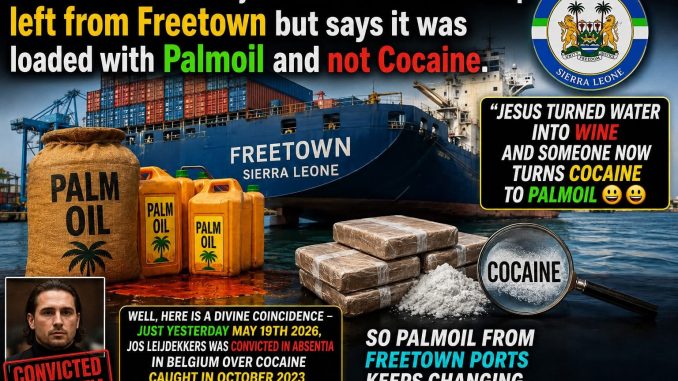
A recent article discusses a political satire image that criticizes and questions official explanations regarding international cocaine trafficking allegations linked to shipments originating from Freetown, Sierra Leone. The image specifically targets and criticizes the government's stance on these serious claims. This article, which delves into the implications of this satirical piece, was published on May 21, 2026, offering timely commentary on an unfolding situation.
Satire Notes Doubts and Accusations
The satirical image employs a potent visual metaphor, drawing a direct comparison to the biblical miracle of turning water into wine. In this context, the satire suggests that official statements have sought to miraculously transform alleged cocaine into palm oil, implying a deliberate misrepresentation of facts. The visual components of the satire are carefully crafted to symbolize accusations of corruption, weak oversight, or possible international criminal activity. These elements include depictions of cargo ships, palm oil containers, and packages explicitly marked as cocaine, all working together to show the perceived discrepancies between official narratives and public suspicions. The article discussing this provocative satire is published under the distinct categories of ACTION NEWS and COMMENTARY, noting both its factual basis and its interpretive nature.
Palm Oil Cocaine Controversy Deepens
A central and highly contentious issue in the broader discussion involves the assertion that a specific shipment, which subsequently became connected to ongoing cocaine investigations, was officially described as carrying palm oil rather than narcotics. This particular claim has significantly fueled public debate and deepened skepticism regarding the official narrative surrounding these incidents. The alleged mislabeling forms the core of the controversy, raising questions about transparency and the integrity of official statements.
Further complicating the already intricate situation, Jos Leijdekkers is identified as a figure reportedly convicted in absentia in Belgium. His conviction stems from his alleged involvement in cocaine consignments that were found hidden within shipments. Crucially, these shipments were consistently labeled as palm oil. According to various reports, these specific shipments originated from ports located in Freetown, Sierra Leone. The detailed circumstances of these cases contribute substantially to the ongoing scrutiny of potential drug trafficking routes and methods involving the region, placing a spotlight on the logistical and official aspects of such operations.
National Reputation at Stake Amidst Allegations
The ongoing situation reflects growing public concerns within Sierra Leone regarding critical issues of governance, transparency, and accountability. These issues are directly impacting the nation's international reputation, threatening to undermine its standing on the global stage. Critics express significant fears that repeated links between high-profile drug trafficking cases and shipments originating from Freetown ports could severely damage investor confidence. Such associations also have the potential to profoundly tarnish Sierra Leone's image abroad, creating long-term economic and diplomatic challenges that could be difficult to overcome. The allegations risk undermining concerted efforts to attract legitimate foreign investment and foster international partnerships, contributing to broader anxieties about the country's economic stability and global standing. The perception of the country as a transit point for illicit substances could deter legitimate businesses and international collaborators.
Differing Perspectives on Accusations
Supporters of the Sierra Leonean government may contend that accusations against officials should be predicated on thoroughly verified evidence rather than relying on online speculation and politically motivated attacks. This viewpoint emphasizes the critical need for concrete, irrefutable proof in addressing claims related to the cocaine allegations, advocating for a process driven by facts rather than conjecture. They argue that unsubstantiated claims can unfairly harm the reputation of individuals and the government.