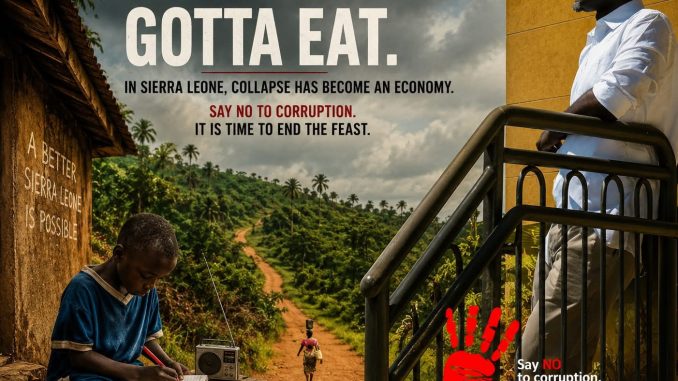
Sierra Leone faces a systemic issue where the justification "Everybody's gotta eat" frequently underpins illicit activities, including stolen contracts, inflated invoices, and the non-payment of teachers, leading to widespread child hunger as a small elite prospers. This phrase, often invoked as a rationale for illicit gains, notes a deeply entrenched problem where the pursuit of individual or small-group enrichment comes at the expense of the broader populace. The consequences are dire, ranging from essential public services being starved of funds to the direct suffering of the nation's most vulnerable citizens. The country, though not a global threat due to its size, possesses significant resources that make it particularly vulnerable to exploitation. Observers note Sierra Leone is "Too small to threaten the world. Too rich to escape exploitation." This paradoxical situation shows the challenges faced by a nation endowed with natural wealth yet struggling with the systemic issues that prevent its equitable distribution and sustainable development.
Systemic Corruption and Economic Drain
Sierra Leone experiences an annual loss equivalent to 12.7% of its Gross Domestic Product (GDP) due to corruption, according to data from the IMF. This substantial economic drain contributes to significant fiscal challenges within the country, directly impacting its ability to fund critical public services and invest in its future. The sheer scale of this loss, confirmed by the IMF, points to a widespread problem that undermines economic stability and development efforts. The national currency, the Leone, has depreciated substantially, losing over 60% of its value since 2018. This dramatic devaluation erodes the purchasing power of ordinary citizens, making imported goods more expensive and diminishing savings, thereby exacerbating poverty and economic hardship across the country. The decline in currency value also complicates government budgeting and planning, as the cost of international obligations and imports rises.
Compounding these issues, Sierra Leone spends an estimated $200 million annually on importing rice, a staple food for its population. This heavy reliance on imports for such a critical commodity further strains the nation's economy and foreign exchange reserves, diverting substantial funds that could otherwise be used for domestic development or other essential services, such as healthcare, education, or infrastructure projects. The consistent outflow of capital for rice imports, coupled with the staggering impact of corruption on the GDP, illustrates a pattern of systemic economic vulnerabilities. These financial outflows and losses create a vicious cycle, hindering economic growth and making it difficult for the country to achieve self-sufficiency or improve living standards for its 8.6 million people. The inability to adequately address these economic hemorrhages perpetuates a state of underdevelopment and dependence, despite the nation's inherent potential.
Human Cost of Neglect
The failure of critical infrastructure in Sierra Leone has directly impacted its youngest population, with 26% of children under five permanently stunted. This devastating outcome is attributed to a collapsed cold chain, which led to vital vaccines spoiling before they could be administered to children. The long-term consequences of stunting include impaired cognitive development, reduced educational attainment, and diminished economic productivity in adulthood, creating a generational cycle of disadvantage. The inability to maintain basic health infrastructure, such as a functional cold chain, reflects a profound breakdown in governance and resource management, with devastating human costs. Meanwhile, the IMF continues to commit hundreds of millions of dollars in credit to Sierra Leone, even while acknowledging that the country remains at a "high risk of debt distress." This financial vulnerability is projected to escalate significantly, raising serious questions about the sustainability of the nation's economic trajectory.
By 2026, debt service payments are forecast to consume 140.5% of the government's total revenue, indicating a severe fiscal burden that will leave virtually no funds for essential public services or development initiatives. This alarming projection suggests a future where the government's primary function will be to service its debt, rather than to serve its citizens. The combination of rampant corruption, currency devaluation, reliance on food imports, and a looming debt crisis paints a bleak picture for the future of Sierra Leone. The impact on human development, particularly on children, shows the urgent need for full reforms and accountability to break this cycle of exploitation and neglect. The systemic issues at play threaten not only the economic stability of the nation but also the fundamental well-being and future prospects of its entire population.
A Legacy of Service
Despite the widespread challenges, a legacy of dedication to public service exists within Sierra Leone. The author's grandfather, Chief Borbor Gbessay Dassama, dedicated his life to the struggle for Sierra Leone's independence and championed education for its citizens. His efforts contributed significantly to the nation's foundational development, laying groundwork that, if properly built upon, could have led to a more prosperous future. Following in his footsteps, the author's father, Dr. Leslie S. Dassama, spent his professional career working to save women and children, focusing on critical health interventions. His commitment to public health extended to the author's mother, Mrs. Hannah Dassama, who dedicated her working years to maternal healthcare as a Health Visitor. Her role involved providing essential care and support to mothers and infants, further establishing a family history of service within the country's public health sector. This lineage of commitment to the well-being of Sierra Leoneans notes the potential for positive change when individuals prioritize collective good over personal gain, offering a stark contrast to the corruption that plagues the nation.
The Path Forward
Sierra Leone possesses significant natural resources, including diamonds, rutile, iron ore, gold, deep-water ports, and extensive agricultural land. These assets, if managed transparently and equitably, could form the basis for strong economic growth and improved living standards for its 8.6 million people. Despite these inherent advantages, the nation faces considerable challenges in its economic framework. The World Bank ranks Sierra Leone among the worst globally for enforcing contracts, indicating a systemic issue that deters both domestic and foreign investment and significantly hinders economic development. This lack of a reliable legal framework for business transactions creates an environment of uncertainty, discouraging the capital inflows and entrepreneurial activity necessary for job creation and wealth generation. Addressing this fundamental governance issue is key for unlocking the country's economic potential.
The path forward for Sierra Leone demands a concerted effort to combat corruption, strengthen institutions, and ensure accountability at all levels of governance. It requires a shift from a culture where illicit activities are justified and tolerated to one where public service genuinely means serving the public. Investing in critical infrastructure, particularly in health and education, is critical to reversing the devastating human costs seen in child stunting and vaccine failures. Strategic investments in agriculture could reduce reliance on food imports, bolstering food security and retaining valuable foreign exchange within the country. Ultimately, the future of Sierra Leone hinges on its ability to harness its rich resources for the benefit of all its citizens, rather than allowing them to fuel a cycle of exploitation and debt. This transformation will require strong political will, sustained international support focused on genuine development, and a renewed commitment from its leaders to uphold the principles of good governance and justice.