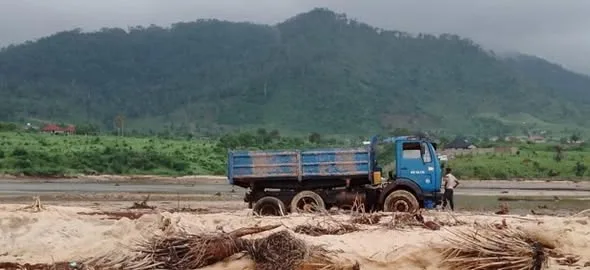
A March 2026 report titled 'Assessment of the Scale and Impact of Sand Mining on Select Tourism and Coastal Communities in Sierra Leone' documents the negative consequences of unregulated sand extraction across the nation. The findings identify significant environmental degradation within coastal regions that rely on these areas for tourism and local livelihoods. According to the data, an estimated 1.25 million cubic metres of sand are extracted annually from these affected coastal zones. This ongoing activity poses severe risks to the stability of the shoreline, as current extraction levels exceed the natural replenishment capacity of the beaches. The report provides a baseline for evaluating how industrial-scale mining operations alter the geography of the coastline and threaten the infrastructure of local communities.
Environmental Toll on Coastline
Shoreline erosion across the studied coastal zones has accelerated as a direct consequence of unregulated sand mining. Data from the March 2026 report indicates that the average shoreline retreat in these areas has been approximately 53 metres since 2000. This loss of land affects diverse sectors, including residential infrastructure and local tourism hubs along the Western Area Peninsula. The Mahera–Lungi corridor, John Obey, Lakka, and Hamilton face the most immediate physical changes to their coastal boundaries. These communities now contend with a significantly reduced beach buffer, which leaves properties and local ecosystems vulnerable to tidal surges. Victor Jones of the Sierra Leone Urban Research Centre (SLURC) noted that the physical transformation of the coast remains a primary concern for long-term regional stability.
Economic Impact on Tourism
Approximately 60 percent of hotels along the Lakka–Hamilton corridor reported structural damage associated with coastal erosion. This physical degradation of the shoreline has created significant operational challenges for tourism businesses situated in these vulnerable areas.
Economic data indicates that transportation costs account for between 50 and 85 percent of the delivered price of sand in Sierra Leone. These logistics expenses reflect the difficulty of moving materials from extraction sites to construction markets across the country. The high cost burden placed on the supply chain influences the regional market for sand, even as unregulated mining continues to alter the geography of the Western Area Peninsula. These factors combined affect the financial sustainability of local infrastructure and the broader tourism sector.
Policy Stagnation and Reform
Government efforts to regulate sand extraction have faced prolonged delays. Officials drafted a National Sand Mining Policy in 2016, but the document remained formally unadopted as of March 2026. This administrative gap leaves coastal areas without a unified regulatory framework to manage extraction activities or mitigate environmental damage.
Local residents and community leaders have begun pursuing independent strategies to protect their shores. On 10 October 2026, eight communities located along the Western Area Peninsula endorsed a coastal conservation declaration. This agreement represents a regional attempt to address the physical risks posed by unregulated mining and shoreline retreat.
Broader economic initiatives continue to operate alongside these local conservation efforts. The World Bank reported in September 2026 that the Sierra Leone Economic Diversification Project contributed to over 35,000 jobs. According to the same report, this project also accounted for over US$92 million in private investment. These figures track the project’s performance in supporting diverse sectors across the country, though the impact of such investment on the specific challenges of coastal regulation and sand management remains a subject of ongoing assessment.