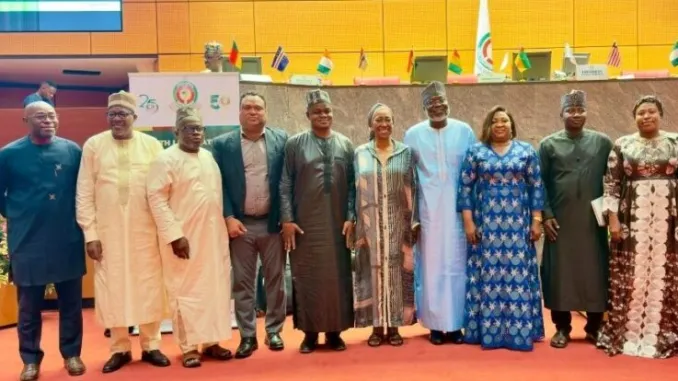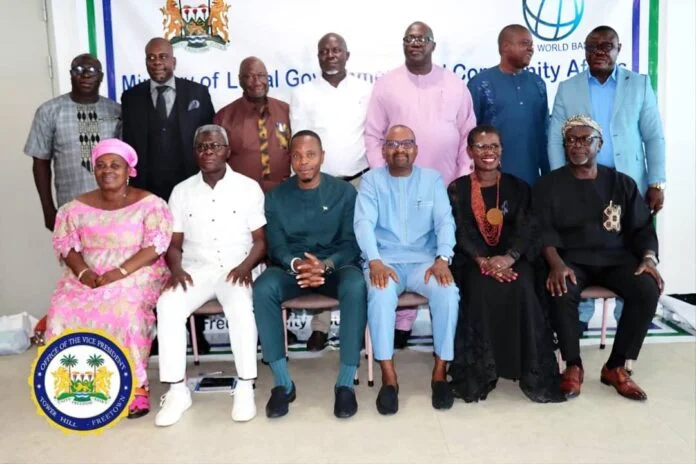
Sierra Leone's Vice President, Dr. Mohamed Juldeh Jalloh, recently chaired a high-level meeting of the Inter-Ministerial Committee (IMC) on Decentralization in Freetown. This key meeting, which gathered key stakeholders and government officials, showed the national commitment to strengthening local governance. During the session, Dr. Jalloh identified several persistent challenges hindering the nation's decentralization efforts, emphasizing the urgency of addressing these systemic issues. He specifically pointed to weak institutional coordination, significant gaps between policy formulation and its practical implementation, and ongoing inconsistencies in the delivery of essential services across Sierra Leone. The Vice President's remarks noted a critical need for a more coordinated and results-oriented approach to decentralization, acknowledging its fundamental role in national development.
Driving Accountability and Performance
Dr. Mohamed Juldeh Jalloh emphasized that decentralization stands as one of Sierra Leone's most critical governance reforms, directly impacting the lives of citizens through improved service delivery and local participation. To enhance its effectiveness and ensure tangible outcomes, the Vice President announced that the Inter-Ministerial Committee (IMC) for Decentralization will undergo a significant transformation. It will transition from a body primarily providing routine updates into a decisive platform, designed to drive action and accountability. This new focus will center on achieving alignment, coordination, and accountability across various sectors involved in decentralization efforts, ensuring that policy decisions translate into practical improvements on the ground.
The government intends to introduce regular coordination meetings, which Vice President Jalloh will lead personally. These high-level sessions are designed to maintain momentum and ensure consistent progress in the reform agenda, fostering a culture of proactive problem-solving and inter-agency collaboration. Additionally, the government plans to prioritize two key areas to strengthen the decentralization framework and empower local authorities. These include clarifying and systematically unbundling devolved functions, ensuring a clear division of responsibilities between central and local government. This process aims to eliminate ambiguities and enhance the efficiency of local governance. Concurrently, efforts will be made to strengthen the fiscal transfer systems, aiming to provide local councils with the necessary financial resources to execute their mandates effectively and sustainably. This financial empowerment is seen as key for enabling local councils to deliver on their responsibilities.
Strategic Reforms for Service Delivery
To enhance oversight and ensure measurable progress, the Inter-Ministerial Committee (IMC) Secretariat will implement an Action Tracker system. This innovative system aims to monitor decisions made during IMC meetings, meticulously tracking their associated timelines for implementation and the progress achieved, according to plans outlined by the Vice President's office. This mechanism is expected to introduce a new level of transparency and accountability to the reform process.
The government also intends to broaden stakeholder engagement significantly, recognizing that successful decentralization requires widespread participation and buy-in. Consultations are scheduled to involve Critical Chiefs, local councils, and frontline service providers. These inclusive discussions are designed to gather diverse perspectives and ensure that reforms are not only theoretically sound but also address the practical challenges faced at the local level, making them more relevant and effective for the communities they serve.
Addressing human resource management is another key reform area identified as critical for the success of decentralization. The government acknowledges the need for significant reforms within the Local Government Service Commission (LGSC) to resolve existing bottlenecks in staffing and personnel deployment. This move is expected to streamline the management of local government employees, improve their capacity, and ultimately enhance overall service delivery. By optimizing human capital, local governments will be better equipped to fulfill their expanded roles.
Efforts are underway to re-establish Regional Coordinating Committees, which are seen as vital for fostering inter-local government cooperation. These committees are expected to play a key role in facilitating inter-district cooperation and ensuring a more cohesive approach to implementing decentralization policies across Sierra Leone's regions. The re-establishment of these bodies aims to improve coordination and efficiency in localized governance, allowing for a more integrated approach to regional development challenges.
Moving Beyond Policy to Action
The Inter-Ministerial Committee (IMC) meeting, where these broad reforms were discussed and endorsed, convened on Thursday, May 7, 2026. This specific date marks a significant step in the government's renewed commitment to decentralization. To support the ongoing work and ensure continuous progress, the IMC Secretariat has been officially established within the Office of the Vice President. This dedicated secretariat will be key for coordinating and tracking the various initiatives, serving as the central hub for all decentralization-related activities.
Further plans include the establishment of a technical working group, which will be chaired by senior government officials. This group is intended to provide specialized expertise, conduct in-depth analysis, and drive the implementation of specific aspects of the decentralization agenda, transforming policy into tangible actions. To broaden engagement and gather firsthand input from diverse communities, regional consultations are scheduled to take place in key areas across Sierra Leone. These critical consultations will be held in Kenema, Bo, Makeni, and Port Loko, allowing for direct interaction with local stakeholders and communities, ensuring that the reforms are truly responsive to the needs and aspirations of all Sierra Leoneans. These consultations are expected to provide invaluable insights, shaping the practical implementation of the decentralization framework.