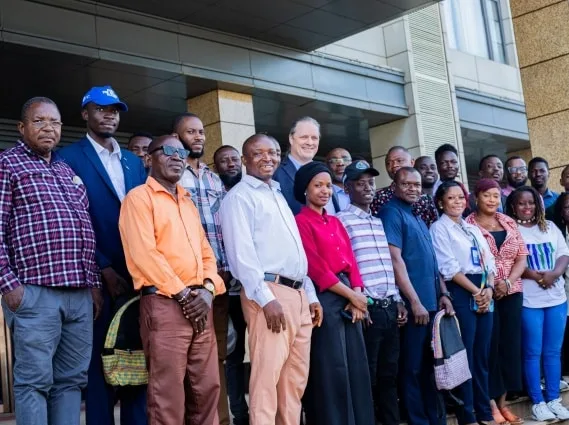
The United Nations Development Programme (UNDP) launched a three-day capacity-building training program for 20 Sierra Leonean innovators during the week of 27 October 2026. The initiative aims to provide participants with the technical skills required to develop sustainable solutions for local environmental issues. Binta Barrie, UniPod Lead for the Zero-Waste Lab at Fourah Bay College, addressed the participants during the opening sessions. "Many innovators have the passion and ideas needed to address plastic pollution, but scaling those solutions remains a significant challenge," she said. The program focuses on equipping these entrepreneurs with the tools necessary to expand their waste management projects effectively within the country.
The training session serves as a core component of the broader efforts to address waste management challenges locally. By focusing on the specific needs of the 20 Sierra Leonean innovators, the UNDP intends to foster a network of entrepreneurs capable of designing, testing, and implementing sustainable waste management systems. These systems are intended to mitigate the environmental impact of plastic materials in various urban and rural settings throughout the nation.
Global Plastics Innovation Initiative
The Global Plastics Innovation Programme (GPIP) serves as the primary framework for this training initiative. The United Nations Peace and Development Trust Fund (UNPDF) provides the financial backing for the program. The initiative is part of the Global Plastics Innovation Programme (GPIP), funded by the United Nations Peace and Development Trust Fund (UNPDF).
Operational timelines for the Global Plastics Innovation Programme extend from 2024 to 2027. The Global Plastics Innovation Programme runs from 2024 to 2027. Implementation of the program occurs across six nations: China, Nigeria, Sierra Leone, South Africa, Tunisia, and Viet Nam. The program is being implemented across six countries: China, Nigeria, Sierra Leone, South Africa, Tunisia, and Viet Nam. These countries participate in the initiative to address specific environmental challenges related to waste management. By operating across these six distinct geographical locations, the program aims to gather data and share best practices that can be adapted to regional contexts.
The United Nations Peace and Development Trust Fund originated in 2016. The UNPDF was established in 2016 with support from the Government of China. The Government of China provided the support necessary to establish the fund. This foundational backing has enabled the UNDP to coordinate cross-border activities and provide the resources required for the training of the 20 Sierra Leonean innovators.
Kevin Petrini, UNDP Deputy Resident Representative in Sierra Leone, noted the significance of local participation in these efforts. "Sierra Leone’s fight against plastic pollution is ultimately a story of innovation, entrepreneurship and community leadership," he said. The collaboration between international funding mechanisms and local innovators is intended to ensure that solutions are not only technically sound but also culturally and economically sustainable for the long term.