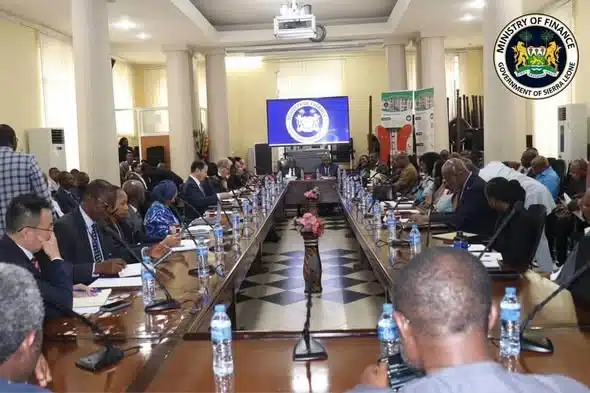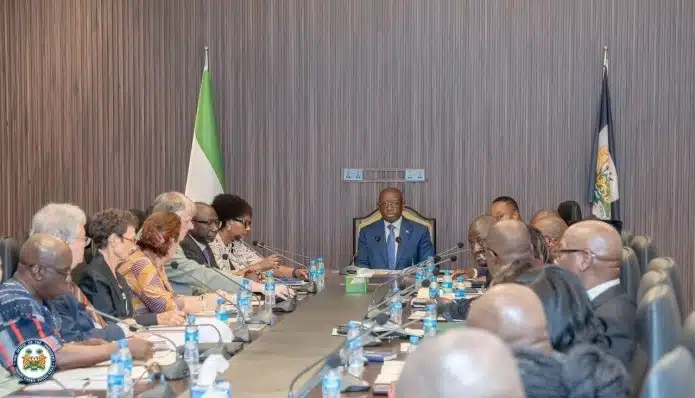
President Dr. Julius Maada Bio urged government institutions and development partners to enhance coordination, bridge critical financing gaps, and expedite national development programmes during the Presidential Development Partners Committee (DEPAC) meeting held at State House on Thursday, September 10, 2026. The President specifically called on Government institutions and development partners to strengthen coordination, address critical financing gaps, and accelerate the implementation of national development programmes. This full approach is aimed at fostering sustainable progress across various sectors. The meeting concluded with the Government and its partners reaffirming their commitment to stronger coordination, predictable financing, and increased accountability. This reaffirmation showed a shared vision for collaborative efforts moving forward. President Bio directed the Ministers of Finance, Foreign Affairs and International Cooperation, and Planning and Economic Development to present a joint framework within a specified timeframe. This framework is intended to address development-partner coordination, financing predictability, and mutual accountability within 30 days. The urgency of this directive notes the administration's focus on creating a more structured and efficient development landscape.
National Development Roadmap
The Medium-Term National Development Plan 2024–2030 and its Big Five Game Changers are intended to provide a roadmap for national transformation. This ambitious plan outlines a strategic direction for the country's development trajectory over the next six years. Five priority areas were outlined as part of this plan, each critical to achieving the nation's development objectives. These areas include data and delivery, which encompasses the vital 2026 Population and Housing Census; political stability, alongside constitutional and electoral reforms designed to strengthen democratic institutions; youth, agriculture, and human capital development, focusing on empowering the nation's most valuable assets; macroeconomic stability, energy, and private-sector growth, essential for economic resilience and job creation; and development financing, coordination, and accountability, which underpins the effective implementation of all development initiatives. These five pillars represent the core strategic priorities guiding the government's efforts.
President Dr. Julius Maada Bio called for inclusive and nationally owned constitutional and electoral reforms to be implemented before the 2028 elections. This call emphasizes the importance of a transparent and participatory process in shaping the country's democratic future. He also urged for a full national response to address harmful drug and substance abuse, recognizing the significant societal challenges posed by this issue. President Bio reaffirmed the Government’s commitment to fiscal discipline, enhanced domestic revenue mobilization, and improved debt management practices. These commitments are central to ensuring the country's financial stability and sustainability, allowing for greater investment in national development priorities. The President's statements collectively show a holistic approach to governance, addressing both immediate challenges and long-term strategic goals.
Urgent Census Funding Needs
An estimated US$37 million financing gap remains for the 2026 Population and Housing Census, noting an urgent need for additional funding to ensure its successful execution. This significant shortfall poses a challenge to the full data collection effort. The Government of Sierra Leone has committed US$24 million towards the census, demonstrating its dedication to this key national undertaking. Of this amount, approximately US$15 million has already been disbursed, ensuring that initial preparations and operational activities can proceed. Meanwhile, development partners have pledged about US$1.5 million to support the nationwide data collection effort, a contribution that, while welcome, still leaves a substantial funding deficit. The upcoming census is a critical component of the Medium-Term National Development Plan 2024–2030, specifically falling under the "data and delivery" priority area. Effective completion of the census is viewed as essential for informed national planning and development initiatives, providing accurate demographic and socio-economic data vital for policy formulation. Census Night, the reference point for data collection, is scheduled for December 1, 2026. The government continues to seek further financial contributions to close the remaining funding deficit ahead of this key date, emphasizing the urgency of securing the necessary resources for a successful and full census.
Context and Partner Commitments
The return of former President Dr. Ernest Bai Koroma was described as an important opportunity to deepen national reconciliation and reduce political tensions within Sierra Leone. This development is seen as contributing to a more unified national environment, fostering an atmosphere conducive to collaborative development efforts.
United Nations Resident Coordinator Seraphine Wakana reaffirmed the commitment of development partners to collaborate with the Government of Sierra Leone. Ms. Wakana emphasized continued support for the country's development agenda and noted the importance of strong partnerships for achieving national goals. Her statement underlined the ongoing dedication of international bodies to assist Sierra Leone in its progress, noting the collective effort required to realize the nation's aspirations. The collaborative spirit demonstrated by both the government and its international partners is key for tackling the complex challenges and leveraging the opportunities that lie ahead for Sierra Leone.