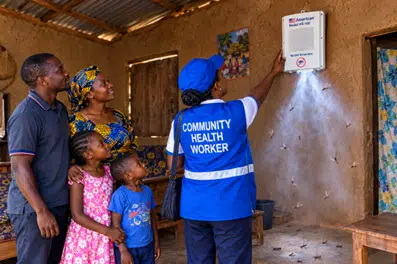
Sierra Leone has initiated the deployment of 101,862 spatial emanators across various districts to enhance its malaria prevention efforts. This measure, aimed at strengthening public health interventions against the disease, is scheduled to take place between October 6 and October 20, 2026. The widespread distribution of these devices marks a significant step in the nation's strategy to combat malaria, a disease that continues to pose a substantial health burden. The deployment of these spatial emanators is a direct effort by Sierra Leone to strengthen its malaria prevention capabilities and protect its population from the widespread threat of the disease.
Details of the Emanator Rollout
The Ministry of Health, in collaboration with the National Malaria Control Programme and its partners, is overseeing the deployment of 101,862 Spatial Emanators. These devices are being distributed in selected communities within Bonthe and Tonkolili districts as part of the national malaria prevention strategy. The full rollout is a key component of the country's broader public health initiatives.
The deployment effort will specifically target Sittia and Dema chiefdoms, alongside Bonthe Municipality, all located within Bonthe District. In Tonkolili District, the rollout will extend to Yoni Mabanta and Poli chiefdoms. This targeted distribution aims to concentrate resources in identified areas where the need for enhanced malaria prevention is particularly acute, ensuring that the devices reach vulnerable populations efficiently. The selection of these specific communities shows a strategic approach to maximizing the impact of the intervention.
Trained Community Health Workers and other authorized personnel are responsible for the installation process. These teams will conduct house-to-house visits throughout the deployment period, ensuring each device is properly placed within households. This direct, community-level engagement is key for the effective implementation of the program, allowing for proper installation and providing opportunities for community members to understand the purpose and benefits of the spatial emanators. The careful approach to installation is designed to optimize the efficacy of the devices in reducing mosquito populations.
The Widespread Malaria Challenge
Malaria continues to be one of Sierra Leone's most serious public-health challenges. The disease places immense pressure on the healthcare system and significantly impacts the socio-economic well-being of communities across the country. Addressing this challenge requires sustained and multi-faceted interventions.
According to the World Health Organization’s 2025 Sierra Leone malaria country profile, over eight million people were residing in high-transmission areas in 2024. This widespread exposure notes the persistent threat of malaria throughout the nation. That same year, Sierra Leone registered approximately two million presumed and confirmed malaria cases. Specifically, confirmed cases reached about 1.9 million, indicating a substantial number of individuals affected by the disease. The high number of cases shows the urgent need for effective prevention and control measures.
The country also recorded nearly 2,500 reported malaria deaths in 2024. While these figures indicate a significant burden, WHO estimates placed the country’s malaria burden at approximately 2.4 million cases and 6,600 deaths, suggesting potentially higher unconfirmed numbers that reflect the challenges of full data collection and reporting. Reported malaria cases saw a decline of approximately 14 per cent in 2024, totaling about 2,023,764 cases, a positive indicator of progress in some areas of malaria control. Despite this reduction, the annual malaria parasite incidence was approximately 213 cases per 1,000 people in 2024, showing the widespread nature of the disease and the continuous public health threat it poses to communities across Sierra Leone. This high incidence rate demonstrates the ongoing battle against malaria and the necessity for innovative prevention strategies.
Understanding Spatial Emanators
Spatial Emanators are devices specifically engineered for malaria prevention, functioning by gradually releasing insecticide into the surrounding environment. These emanators are designed to contribute to public health efforts by creating zones where the presence of mosquitoes is reduced through a controlled release mechanism. This targeted release helps to minimize mosquito activity in residential areas, thereby reducing the risk of malaria transmission. The sustained action of the insecticide released by these devices aims to provide continuous protection over a period of time.
The devices are not intended to serve as a substitute for existing malaria prevention methods. They complement, rather than replace, established interventions such as insecticide-treated mosquito nets, Indoor Residual Spraying, preventive medicines, and malaria vaccination. This approach integrates Spatial Emanators into a broader public health strategy that continues to rely on a combination of recommended tools for effective malaria control. The role of spatial emanators is to enhance the protective barrier against mosquitoes, working in conjunction with other proven methods to create a more strong defense against the disease. This integrated strategy acknowledges the complexity of malaria transmission and the need for multiple layers of intervention to achieve significant reductions in disease burden.
Integrated Prevention Efforts
The initiative to deploy spatial emanators receives support from the United States Government, contributing to the broader public health efforts in Sierra Leone. This international partnership notes the collaborative nature of global health initiatives aimed at combating diseases like malaria. The support from the United States Government is instrumental in enabling the procurement and distribution of these vital prevention tools.
This current deployment is one component of a multi-faceted approach to malaria control within the country. Sierra Leone also introduced the malaria vaccine for young children in 2024, marking another significant step in its strategy to combat the disease and protect its most vulnerable population. These measures integrate various tools to reduce malaria incidence and protect vulnerable populations. The combination of spatial emanators, vaccination, and other established interventions reflects a full strategy designed to tackle malaria from multiple angles. This integrated approach is key for achieving sustainable reductions in malaria cases and deaths, ultimately contributing to improved public health outcomes across Sierra Leone. The country's commitment to deploying a range of interventions shows its determination to mitigate the impact of malaria on its citizens.