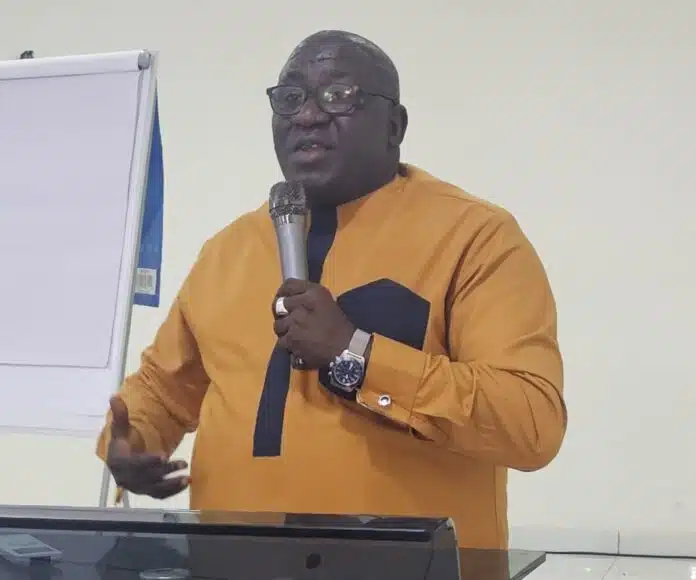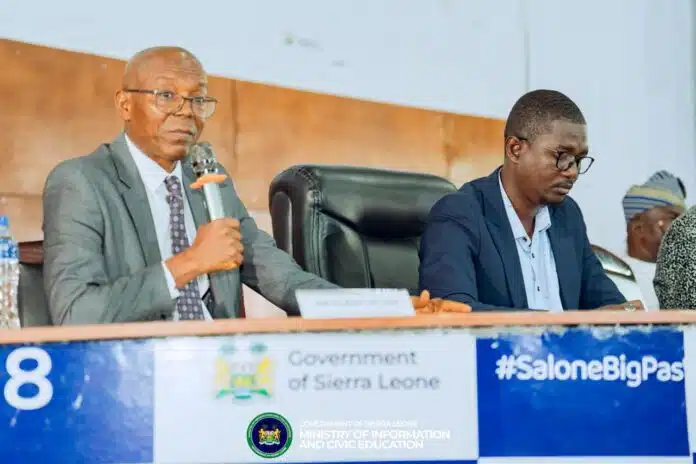
Sierra Leone is implementing significant land administration reforms, moving towards a title-registration system for enhanced land ownership security, as outlined by Dr. Turad Senesi, Minister of Lands, on Tuesday, September 8, 2026. The government's initiatives aim to transform the land sector, addressing historical imbalances in land administration that previously led to widespread disputes and unplanned settlements. Dr. Senesi presented these key measures for transforming the land sector during an engagement hosted by Mohamed Jaward Nyallay, Strategic Communication Officer at the Ministry of Information and Civic Education. This full reform agenda is a critical step towards modernizing land management practices across the nation.
The Minister explained that the government's reform agenda "seeks to move beyond merely allocating land by ensuring that towns, cities and villages are properly planned and sustainably developed." Dr. Senesi emphasized that "discussions on land administration had historically focused largely on land allocation, while other important responsibilities, particularly housing and country planning, received insufficient attention." He added that this "imbalance contributed to widespread land disputes, unplanned settlements and poorly coordinated physical development in communities across Sierra Leone." The shift to a title-registration system, he stated, would provide "a more systematic and secure record of ownership and associated land rights." This move towards a title-registration system is designed to offer stronger and more reliable proof of land ownership, thereby reducing ambiguities and conflicts.
Addressing Historical Deficiencies
A public engagement titled "Land Reform: Where Are We?" was recently held at the Miatta Civic Centre, located within the Youyi Building in Freetown. This event, which took place on Tuesday, September 8, 2026, served as a key platform to discuss the ongoing reforms in Sierra Leone's land administration sector. Historically, discussions surrounding land administration largely concentrated on the allocation of land, according to officials. This focus often resulted in the neglect of other critical responsibilities, particularly those related to housing and full country planning, as stated by Dr. Turad Senesi, Minister of Lands. The Minister noted that this narrow focus had long hampered sustainable development efforts.
The Minister elaborated that this historical imbalance contributed significantly to widespread land disputes throughout the country. It also led to the proliferation of unplanned settlements and poorly coordinated physical development across communities in Sierra Leone. Previous land legislation had become outdated and inadequate to address the nation's current development needs, prompting the necessity for full reforms. The government's new approach aims to rectify these long-standing issues by implementing a more systematic and secure framework for land management. The engagement at the Miatta Civic Centre showed the government's commitment to openly address these historical deficiencies and chart a new path for land administration. This commitment reflects a broader vision for a more equitable and efficient land sector.
Key Pillars of the Reform Agenda
The reform agenda in Sierra Leone is designed to ensure towns, cities, and villages are properly planned and sustainably developed, according to government statements. Development control has been identified as a central pillar of these reforms, intended to ensure that all construction projects comply with approved planning standards. This focus on development control is key for preventing haphazard growth and promoting orderly urban and rural development. A key aspect of the transformation involves the introduction of digital land-administration systems, which are anticipated to improve transparency and significantly reduce fraudulent land transactions within the country. These digital systems are expected to streamline processes, making land records more accessible and less susceptible to manipulation.
A new legal framework has been established to provide a modern foundation for planning communities and strengthening development control measures. This framework replaces outdated regulations, offering a contemporary approach to land use and development. Dr. Turad Senesi, Minister of Lands, stated that developers must adhere to strict guidelines. "Developers must engage qualified professionals, conduct the necessary assessments, secure relevant approvals and ensure that their projects do not adversely affect neighbouring properties or the wider community," Dr. Senesi said. These requirements aim to standardize development practices and mitigate potential negative impacts, ensuring that development is both responsible and sustainable. The reforms also address financial implications for property owners. Secured land titles, a goal of the new system, are expected to enable property owners to access financing more readily from banks and other financial institutions, thereby unlocking economic potential and fostering investment. This ability to leverage land as collateral is a significant benefit for property owners and the national economy.
Path Forward and Collaboration
Successful land reform in Sierra Leone necessitates broad cooperation across various stakeholders, including government institutions, local councils, developers, property owners, and communities. This collaborative approach is vital for the effective implementation and long-term success of the reforms. Officials assert that an efficient land sector holds the potential to become a significant source of national revenue, contributing substantially to the country's economic growth and development. The revenue generated from a well-managed land sector can be reinvested into public services and infrastructure.
The ongoing reforms encompass the decentralization of country-planning responsibilities, with local councils slated to oversee the implementation of these new directives. This decentralization empowers local authorities to manage land use and development more effectively at the grassroots level. To support this shift, capacity-building programs are currently being conducted for key local government officials. These programs target mayors, district council chairpersons, chief administrators, and planning officers, equipping them with the necessary skills for their expanded roles in land administration and planning. The training ensures that local leaders are well-prepared to handle their new responsibilities, promoting consistent application of the new framework across different regions.
The Ministry of Lands has already reported a considerable increase in its revenue performance when compared to figures from previous years, indicating early positive financial outcomes from the reform efforts. This early success demonstrates the potential for the new system to generate significant income for the government, reinforcing the economic benefits of a streamlined and transparent land administration system. The sustained implementation of these reforms is expected to further enhance land tenure security, promote planned development, and ultimately contribute to the socio-economic prosperity of Sierra Leone. The full nature of these reforms, touching upon legal, administrative, and financial aspects, positions Sierra Leone for a more organized and prosperous future in its land sector.