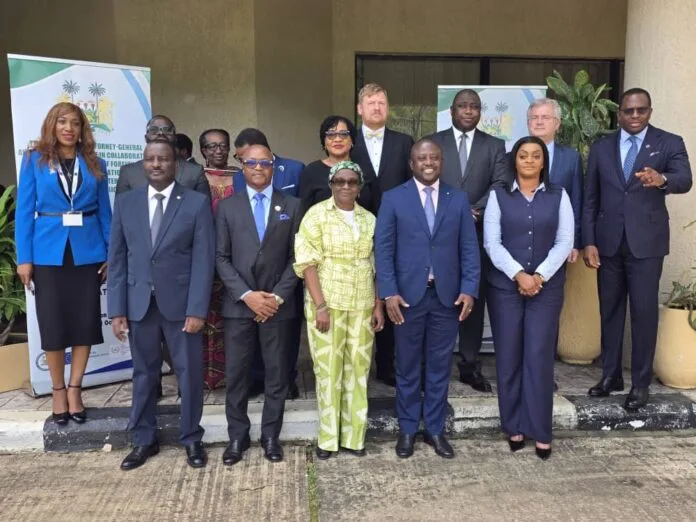
President Julius Maada Bio attended the World Food Day celebration on 22 October 2026 at the Ernest Bai Koroma University of Science and Technology in Magburaka, Tonkolili District. During this event, the government launched the Feed Salone Third-Year Report to document agricultural progress. Addressing the audience on national food security, President Julius Maada Bio stated, "Wetin wi plant, na im wi go eat. Salone go feed insɛf." The ceremony gathered local stakeholders to evaluate the current status of the Feed Salone initiative within the district. Officials presented findings regarding agricultural output and development trends identified over the past three years. Attendees reviewed the data to assess the impact of these programs on local food production capacity and regional supply chains.
Progress in Food Security
Data recorded by government agencies shows a reduction in severe household food insecurity across Sierra Leone. Assessments indicate that the rate of severe food insecurity dropped from 28 percent in September 2023 to 13 percent in July 2025.
President Julius Maada Bio addressed the implications of these trends during the event, stating, "Food security is a matter of national security and national dignity. We must increase local production, strengthen our farmers and build the capacity to produce more of what we consume."
Rice production figures suggest a shift in domestic consumption habits. President Julius Maada Bio noted the current reliance on internal supply, saying, "Today, nearly three of every four cups of rice on our tables come from our own soil." This figure accounts for nearly three out of every four cups of rice consumed in Sierra Leone currently originating from local farms.
Economic activity tied to the agricultural sector expanded throughout the latest reporting period. The Feed Salone initiative supported more than 22,000 direct and indirect jobs during its third year. President Julius Maada Bio linked this labor growth to broader developmental goals, explaining, "Agriculture must become a strong foundation for industrialization. We must add value to our locally produced crops, create jobs, strengthen our economy and reduce dependence on imported food."
Social welfare programs also reached a significant portion of the student population. Records show that nearly one million schoolchildren benefited from school meals during the previous academic year. These figures serve as the current metrics for evaluating the reach of government interventions in nutrition and labor support.