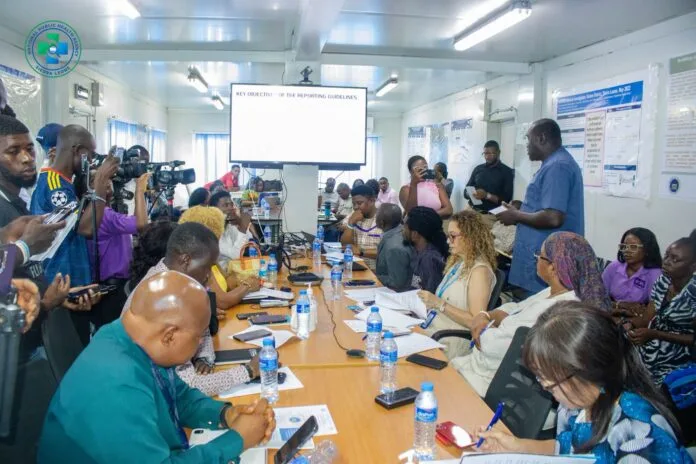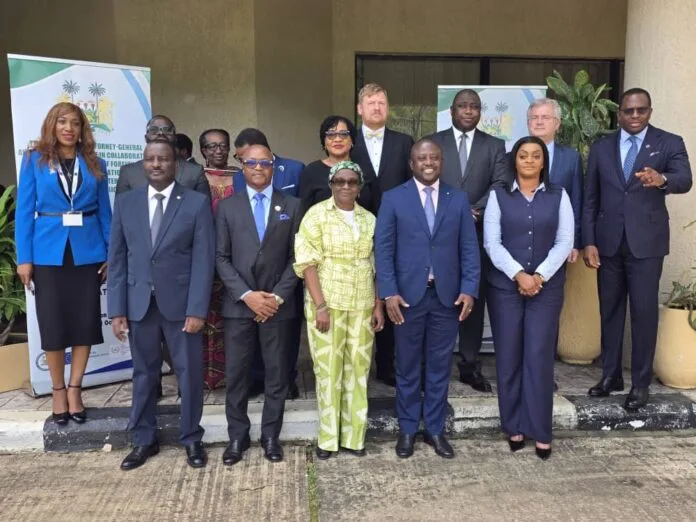
The Radisson Blu Mammy Yoko Hotel in Freetown, Sierra Leone, hosted a regional seminar titled "Strengthening Cooperation and Complementarity with the International Criminal Court: A Partnership in Fighting Impunity for the Gravest Crimes under International Law." This high-level gathering brought together legal professionals, government officials, and representatives from the judiciary to deliberate on the mechanisms required to uphold international justice standards. The seminar served as a platform for fostering dialogue and enhancing the collaborative framework between national legal systems and the International Criminal Court.
ICC Second Vice-President Judge Reine Adélaïde Sophie Alapini-Gansou stated, "The responsibility for combating impunity extends beyond the International Criminal Court." Her remarks emphasized the necessity of a collective approach to international law enforcement. Sierra Leone’s Attorney-General and Minister of Justice, Alpha Sesay, Esq. Added, "National courts must be strengthened to effectively investigate and prosecute serious crimes, thereby reducing reliance on international judicial intervention." His perspective noted the importance of domestic capacity building in the broader legal landscape. Addressing the restorative aspect of justice, Ibrahim Sorie Yillah, Esq. Member of the Board of Directors of the ICC Trust Fund for Victims, noted, "While judicial decisions establish responsibility for crimes, reparations help victims rebuild their lives, restore dignity and recover from the consequences of atrocities."
Regional Cooperation and Participation
Delegates from nine nations attended the sessions to discuss the implementation of international legal standards. The participating countries included Benin, Côte d’Ivoire, The Gambia, Guinea-Bissau, Mauritania, Nigeria, Senegal, Sierra Leone, and Tunisia. Officials from these states engaged in dialogue regarding the domestic application of statutes governed by the International Criminal Court. This collaborative effort allowed for the sharing of best practices and the identification of regional challenges in the pursuit of justice.
Proceedings spanned two days of plenary sessions and workshops, concluding on Friday, 23 October 2026. Experts reviewed procedural barriers to cooperation and identified methods for improving the exchange of legal information between national jurisdictions and the Hague-based tribunal. Participants explored how to harmonize domestic legislation with the requirements of the Rome Statute to ensure that legal systems are equipped to handle complex international criminal cases.
The International Criminal Court and the Government of Sierra Leone jointly organized the event. Financial support for the seminar was provided by the European Union. Planning teams from these entities managed the logistics and the distribution of materials to the representatives from the attending states. The coordination between these organizations ensured that the seminar remained focused on its core objectives of strengthening complementarity and fostering a unified commitment to fighting impunity. By facilitating this exchange, the organizers aimed to solidify the partnership between the International Criminal Court and the represented nations, ensuring that the legal frameworks in place are strong enough to address the gravest crimes under international law effectively.