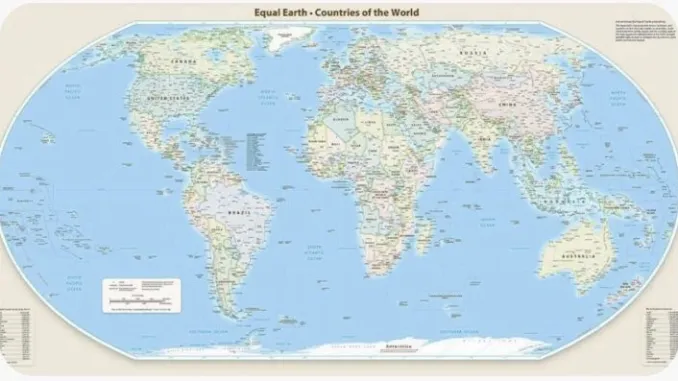
The United Nations recently approved a resolution concerning the representation of Africa on world maps, addressing how the continent is depicted globally. This resolution marked a significant moment, aiming to correct historical inaccuracies in cartographic portrayals. Aminata Sheriff, a prominent voice from Togo, stated that the focus should be on substantial progress rather than mere cartographic adjustments. Sheriff emphasized a desire for Africa to achieve greater prominence in global trade, manufacturing, and innovation. She articulated a clear vision, stating, "We don’t need Africa to look bigger on a map. I want Africa to be bigger where it actually matters." This sentiment shows a call for tangible advancements over symbolic gestures. Sheriff further noted the importance of increased diplomatic influence, economic power, and a stronger role in the defense of human rights. She stressed the importance of Africa being "Bigger in diplomacy. Bigger in economic power. Bigger in the defence of human rights." Sheriff concluded by stressing the need for improvements in the quality of life provided to African populations, reiterating her desire for Africa to be "Bigger in the quality of life we provide our people."
Symbolic Victories vs. Tangible Progress
Togo and the African Union (AU) dedicated significant effort to securing an agreement from 164 countries at the United Nations General Assembly. This agreement stipulated that Africa should be represented at its proper geographical scale on world maps. The initiative focused on correcting cartographic distortions that have historically depicted the continent as smaller than its actual size. The approval of this resolution by the UN was the culmination of these sustained efforts, aiming to rectify a long-standing visual misrepresentation of the continent's true landmass.
However, some argue that such efforts, while symbolic, divert attention from more pressing developmental challenges. Commentators suggest that Asian counterparts, in contrast, secure their global position through practical actions. These include building strong economies, establishing secure supply chains, and achieving dominance in manufacturing. This approach, centered on "cold, hard, practical action," is presented as a model for achieving global influence. These nations invest heavily in critical infrastructure, advanced technology, and human capital development, which are seen as concrete steps towards global influence and prosperity. The stark comparison notes a perceived difference in strategic priorities, suggesting that while cartographic corrections have their place, the focus should remain on foundational economic and social development.
The Real Issues Facing Africa
Across the continent, populations confront significant challenges including hunger, systemic corruption, indignity, and conflict. These widespread issues directly impact the daily lives of millions. Human rights violations are also relentless, according to critics of the cartographic focus. These issues are seen as fundamental concerns requiring immediate attention and substantive action, rather than a preoccupation with how the continent appears on a map. The daily struggles faced by people across Africa are presented as a stark reminder of where resources and political will should be directed.
Observers suggest that real leadership is needed to address these deep-seated problems. This leadership must be committed to implementing effective solutions that tackle the root causes of these challenges. Structural justice and fairer trade practices are also identified as essential for progress, aiming to create an equitable global economic environment. The functioning of institutions and the restoration of human dignity are further noted as critical areas demanding focus, rather than symbolic gestures. These elements are considered foundational for any meaningful and lasting change across the continent. The call for "real leadership, structural justice, fairer trade, functioning institutions and the restoration of human dignity" encapsulates a full agenda for genuine advancement.
Focusing on Economic and Human Power
Africa remains locked out of the rooms where some of the world’s most consequential decisions are made, according to observers. This exclusion extends to global forums where critical issues such as economic policies, security matters, and international development agendas are shaped. The continent's limited influence in these decision-making processes is seen as a barrier to addressing its specific needs and priorities on the global stage. This lack of direct participation means that decisions affecting Africa are often made without its full input or representation.
Critics argue that without a stronger presence in these key arenas, efforts to advance Africa's interests in trade, manufacturing, and innovation are hampered. The focus, they contend, should be on securing a more direct and impactful role in the discussions that affect the continent's future. This involves not just being present at the table, but actively shaping the agenda and influencing outcomes. The argument is that true power and influence stem from economic strength, strong institutions, and the ability to protect human rights, rather than from visual representations. Ultimately, the debate centers on whether symbolic victories, while potentially validating, truly contribute to the profound and systemic changes Africa needs to achieve its full potential on the global stage.