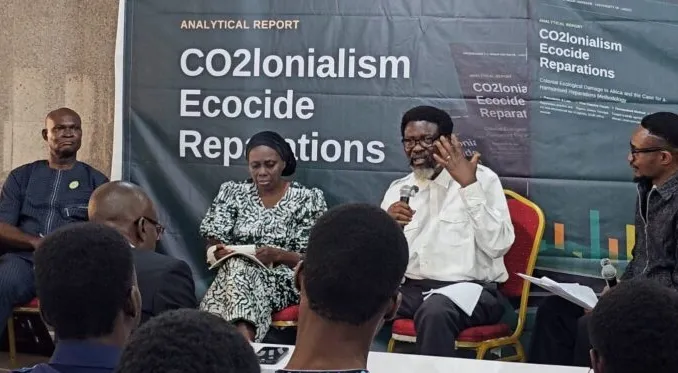
A new report from the University of Lagos has analyzed the environmental effects of British colonial rule in Africa, arguing that the ecological harm caused constitutes a separate and vast category of damage. The report, titled "CO2lonianism, Ecocide, Reparations," specifies this ecological damage is distinct from the humanitarian harm associated with the slave trade. Researchers presented their findings at a press conference at Lagos University on August 28, 2026. The study was formally submitted to the African Union’s Committee of Experts on Reparations (AUCER) and the Legal Reference Group on Reparations (AULER).
The University of Lagos report notes how British colonial rule in Africa led to widespread environmental degradation, arguing that this specific type of damage, often overlooked in broader discussions of colonial impact, warrants distinct recognition and redress. The report's explicit distinction between ecological harm and the humanitarian harm of the slave trade emphasizes the multifaceted nature of colonial legacies and the need for full approaches to reparations. The formal submission of the report to key African Union bodies shows the growing institutional attention to these issues. These findings are presented as the African Union's Decade of Justice and Reparations is set to run from 2026 to 2035, providing a dedicated framework for addressing historical injustices.
Quantifying Colonial Ecological Damage
The report from the University of Lagos delves into the profound economic and environmental costs of colonial exploitation. Researchers estimate that the value of this ecological harm could amount to hundreds of trillions of dollars, a figure that shows the immense scale of the damage inflicted. This staggering estimate places the environmental costs within a broader context of resource appropriation from the global South. A 2022 peer-reviewed estimate, for instance, calculated resources appropriated from the global South through unequal exchange at more than $10 trillion annually in 2015, indicating the ongoing financial drain experienced by formerly colonized nations.
The University of Lagos report provides specific examples of this ecological degradation and its direct impact on communities. Researchers from the University of Lagos report that land degradation in Uganda's Kanungu District shows a statistically significant relationship with farmer livelihoods, with a Spearman’s r value of 0.530 and a p-value of less than 0.01. This statistical correlation notes the direct and measurable impact of environmental damage on the economic well-being of local populations. Local respondents in Kanungu District identified deforestation as the primary driver of this land degradation, according to the study. This identification by local communities points to specific human activities, often exacerbated or initiated during colonial resource extraction, as root causes of environmental decline. The findings are presented as the African Union's Decade of Justice and Reparations is set to run from 2026 to 2035, providing a timely backdrop for these discussions on colonial legacies and their contemporary effects.
Evolving Legal Landscape for Reparations
The legal and institutional environment for reparations claims has shifted significantly since 2021, according to observations made by researchers. This shift indicates a growing international and regional willingness to consider and address historical environmental injustices. A working legal definition of ecocide was adopted by the Independent Expert Panel during this period. This development marked a key change in how large-scale environmental destruction could be legally conceptualized, moving it from a mere environmental issue to a potential international crime. The adoption of this definition by the Independent Expert Panel provides a foundational legal tool for future claims related to ecological harm.
The momentum towards legal recognition of ecocide has continued to build, with new instruments on ecocide, which are either binding or soon-to-be-binding, adopted by the Council of Europe in 2025 and by the European Union in 2024. These adoptions indicate a growing international recognition and legal framework around environmental crimes, signifying a concrete move towards holding perpetrators accountable for widespread ecological destruction. These legal developments at the European level provide important precedents and frameworks that could influence global discussions on ecological reparations. In a related move, the African Union established an ad hoc committee in July 2025. This committee was tasked with examining the classification of "massive destruction of environmental ecosystems" as a crime, signaling a specific regional focus on the issue and demonstrating Africa's proactive stance in addressing environmental harm from a legal perspective.
The African Union further showed its commitment to addressing historical injustices by declaring 2025 as the Year of Reparations. This declaration provided a dedicated platform for discussing and advancing various forms of reparations, including those related to ecological damage, and served to galvanize efforts across the continent. The collective actions from these international and regional bodies reflect a growing momentum in the legal and political spheres to address environmental harm through a reparations lens, moving beyond abstract discussions to concrete legal and institutional frameworks. This evolving legal landscape provides a more strong foundation for claims like those outlined in the University of Lagos report.
Expert Commentary and Precedents
The report from the University of Lagos, titled "CO2lonianism, Ecocide, Reparations," details the extensive ecological damage attributed to British colonial rule. Researchers estimate that the value of this ecological harm could amount to hundreds of trillions of dollars, a figure that notes the profound and lasting impact of colonial practices on the natural environment and the economies of formerly colonized nations. The report's findings emphasize the need for a full accounting of colonial legacies that includes environmental devastation alongside other forms of harm.
In Uganda's Kanungu District, local officials and farmers have directly linked land degradation to "hunger, famine related resource constraints, and insufficient food." This attribution notes the direct impact of environmental damage on human well-being and resource availability in formerly colonized regions, demonstrating a clear connection between historical ecological damage and contemporary challenges faced by communities. The lived experiences of these communities provide key evidence for the broad consequences of environmental exploitation. The report's focus on such local impacts provides a human dimension to the broader claims of ecological debt.
A significant legal precedent cited in the report is the 1990s Certain Phosphate Lands in Nauru case before the International Court of Justice. In this case, the formerly colonized state of Nauru brought a claim against Australia, its former administrator, specifically for environmental devastation caused during the colonial period. This case serves as an example of a state seeking reparations for ecological harm resulting from colonial administration, demonstrating that legal avenues for such claims have existed and been pursued internationally. The Nauru case provides a concrete historical example of a successful claim for environmental reparations, offering a pathway and inspiration for contemporary efforts to address colonial ecological debt. This precedent strengthens the legal arguments put forth by the University of Lagos report, showing that the concept of ecological reparations for colonial-era damage is not without foundation in international law.