Former President Ernest Bai Koroma returned to Sierra Leone yesterday, ending his period of exile. He arrived in Freetown aboard a flight that landed at Freetown International Airport, according to local reports, marking a significant moment for the West African nation. Koroma, a key figure in the All Peoples’ Congress Party (APC), had departed the country in January under an agreement brokered by the Economic Community of West African States (ECOWAS). His return marks a significant development following his departure to Nigeria earlier this year, concluding a prolonged period of diplomatic engagement and legal proceedings.
Journey and Welcome
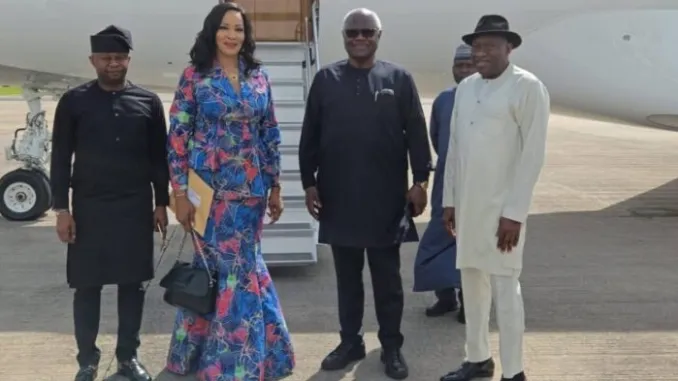
Ernest Bai Koroma departed Nigeria and arrived at the Freetown International Airport, where he was met by a delegation. Upon his arrival in Freetown, the former president was welcomed by senior leaders of the All Peoples’ Congress Party (APC), demonstrating the continued support he commands within his political faction. Family members of Mr. Koroma were also present to greet him, providing a personal touch to the official reception. Former Nigerian President Olusegun Obasanjo, who accompanied Mr. Koroma on his journey, was similarly received by the APC leadership and Koroma's family, showing the high-level diplomatic involvement in the former president’s return. The reception marked the official end of Mr. Koroma's period of exile, allowing him to once again set foot on Sierra Leonean soil.
Background of Exile
Ernest Bai Koroma had been living in exile in Nigeria for over two years prior to his return, a period during which his political future remained uncertain. His departure from Sierra Leone earlier this year was part of an agreement facilitated by ECOWAS, aimed at de-escalating political tensions in the country. During his time away, the Nigerian government under President Tinubu provided him with hosting and protection, an arrangement that ensured his safety and well-being while legal issues in his home country were being addressed. This arrangement allowed the former Sierra Leonean leader to reside in Nigeria while legal proceedings in his home country continued, noting the regional diplomatic efforts to manage the situation. His extended stay in Nigeria concluded with his flight back to Freetown, marking the end of a significant period away from Sierra Leonean politics and public life. The diplomatic efforts of ECOWAS and the Nigerian government were key in facilitating this resolution.
Diplomatic Support and Departure
Ernest Bai Koroma arrived in Freetown accompanied by Nigeria's former president, Olusegun Obasanjo, and Nigeria's foreign minister, Yusuf Maitama Tuggar. Their presence showed the significant diplomatic efforts that facilitated Koroma's return to Sierra Leone, noting the regional commitment to stability. Obasanjo had previously been involved in brokering the agreement for Koroma's initial departure from Sierra Leone to Nigeria, playing a consistent role in the diplomatic process. The accompaniment by these high-level Nigerian officials for the former Sierra Leonean president’s journey back to his home country marked the culmination of these sustained diplomatic engagements, ensuring a smooth and respected return.
Significance of Return
The government of Sierra Leone dropped all charges of treason levied against Ernest Bai Koroma a few months ago, following pressure from ECOWAS. This decision was a critical turning point, paving the way for his eventual return. Those charges had been a central element in the legal proceedings against the former president, creating a significant legal hurdle for his presence in Sierra Leone. Ernest Bai Koroma had always strongly denied the treason allegations throughout the legal process, maintaining his innocence against the serious accusations. His return to Sierra Leone follows the resolution of these significant legal obstacles, marking a new phase in his political and personal life. The dropping of charges, influenced by regional bodies, shows the complex interplay of domestic law and international diplomacy in West Africa.