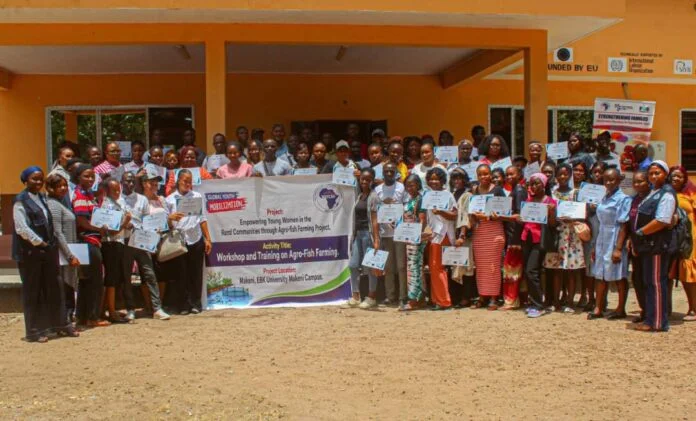
The West Africa Youth and Children’s Advocacy Network (WAYCAN) successfully concluded a full Agro-Fish Farming Training program in Makeni, Sierra Leone. This initiative was specifically designed to equip 250 young individuals with practical and sustainable skills in the vital sectors of agriculture and aquaculture. The training, which aimed to foster self-sufficiency and economic empowerment among participants, was held at the facilities of Ernest Bai Koroma University of Science and Technology in Makeni. The strategic location provided an ideal environment for hands-on learning and practical demonstrations, ensuring trainees gained valuable experience in a relevant setting.
Training Details and Objectives
The intensive training curriculum encompassed a wide range of critical areas essential for successful agro-fish farming operations. Participants received in-depth instruction on sustainable fish farming systems, learning methods that ensure long-term productivity without depleting natural resources. Key modules also included practical sessions on pond construction and management, equipping trainees with the knowledge to establish and maintain efficient fish habitats. Full training was provided on advanced fish breeding techniques, key for increasing yields and ensuring the genetic health of fish stocks.
Beyond these core subjects, participants also received essential instruction on water management, a critical component for maintaining optimal conditions in aquaculture environments. Effective fish feeding practices were taught, focusing on nutrition and cost-efficiency. The program also integrated agribusiness management principles, preparing the young entrepreneurs to run their farming ventures profitably. A strong emphasis was placed on environmental sustainability, encouraging practices that protect natural ecosystems, and entrepreneurship development, equipping trainees with a holistic understanding of the agro-fish farming sector from production to market. These skills are particularly relevant as agriculture and fish farming are widely viewed as key sectors with the potential to significantly improve the livelihoods of young people across Sierra Leone, offering pathways to sustainable employment and income generation.
Outcomes and Partnerships
At the conclusion of the program, certificates were formally presented to all 250 participants who successfully completed the rigorous training regimen. This certification acknowledges their newly acquired expertise and commitment to the agro-fish farming sector. The training specifically targeted 250 young people, providing them with key skills in agro-fish farming that are expected to translate into tangible economic benefits for themselves and their communities. The success of the program was a testament to the collaborative efforts of various stakeholders, all committed to youth development in Sierra Leone.
Vision for Youth Empowerment
The training program received significant support from Global Youth Mobilization, an organization dedicated to empowering young people worldwide. This partnership showed the international recognition of the potential for agro-fish farming to address youth unemployment and food security challenges in Sierra Leone. Sierra Leone's favorable environmental conditions, including its climate and abundant water resources, coupled with the increasing demand for fish products both domestically and regionally, present significant opportunities for the expansion and success of fish farming within the country. This makes investment in skills development in this sector particularly impactful for the nation's future.
Key Voices and Future Prospects
Mohamed Amidu Koroma, Executive Director of the West Africa Youth and Children’s Advocacy Network (WAYCAN), affirmed the organization's unwavering commitment to youth empowerment through skill development initiatives such as this. Mr. Koroma noted that WAYCAN’s initiative aims to foster self-sufficiency and economic independence among young people by providing them with practical and marketable skills in agricultural and aquacultural practices. He reiterated the belief that these sectors are among the most promising capable of transforming the lives of young people in Sierra Leone, offering a sustainable path out of poverty.
In recognition of their invaluable support and partnership, WAYCAN presented a Certificate of Appreciation to Ernest Bai Koroma University of Science and Technology. The university played a key role by hosting the training program, providing advanced facilities and an environment highly conducive to learning for the 250 participants. This gesture showed the collaborative effort behind the successful conclusion of the agro-fish farming training and noted the importance of institutional partnerships in achieving broad youth development goals. The long-term vision is for these newly trained individuals to become successful agro-fish farmers, contributing to food security and economic growth in Sierra Leone.