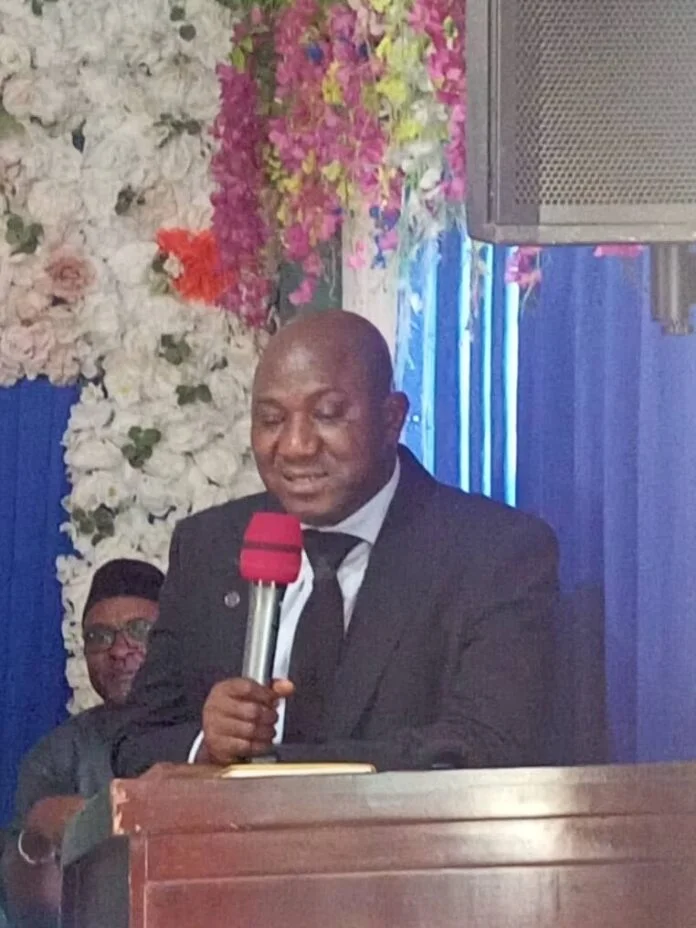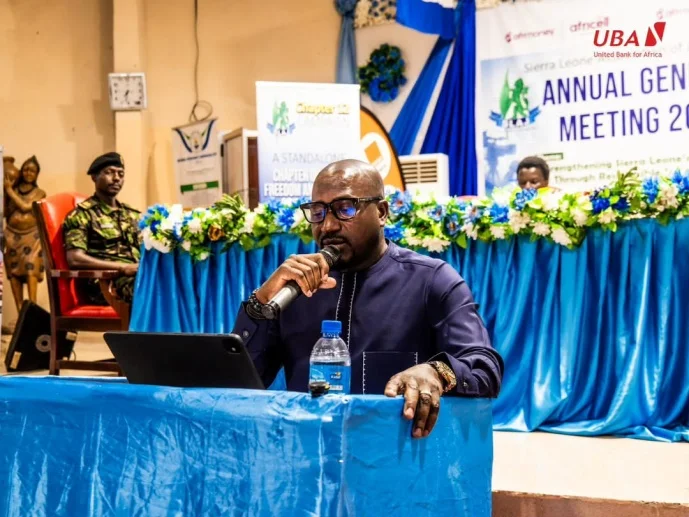
Mohamed Alhajie Samoura, Managing Director and Chief Executive Officer of UBA Sierra Leone and President of the Sierra Leone Bankers Association, delivered the keynote address at the 55th Annual General Meeting (AGM) of the Sierra Leone Association of Journalists (SLAJ) on Friday, June 12, 2026. This significant gathering brought together media professionals from across the nation to discuss the vital role of journalism in national progress. The AGM's theme was “Strengthening Sierra Leone’s Economy Through Responsible Journalism,” a topic that resonated deeply with the challenges and opportunities facing Sierra Leone's media landscape. Samoura stated that credible journalism serves as a key driver of economic growth and national development. He emphasized, "responsible journalism is no longer just a professional obligation but an economic necessity in an era increasingly challenged by misinformation, disinformation, and rapid digital transformation." Samoura further clarified that "responsible journalism should not be mistaken for public relations or the concealment of national challenges." Instead, he urged journalists to report on problems while equally noting solutions and opportunities for national progress. His address showed the profound impact that well-researched and balanced reporting can have on a nation's trajectory.
Journalism as Economic Engine
Mohamed Alhajie Samoura described responsible journalism as an economic necessity in an era challenged by misinformation, disinformation, and rapid digital transformation. He urged journalists to report on problems while equally noting solutions and opportunities for national progress. Samoura emphasized that this approach moves beyond mere criticism to contribute actively to the nation's economic health and stability. He elaborated that by focusing on constructive narratives and potential solutions, journalists can foster a more optimistic and proactive national dialogue. This form of journalism, he explained, helps to identify areas for improvement while simultaneously showcasing successful initiatives and untapped potential, thereby encouraging investment and innovation.
Samoura challenged journalists to familiarize themselves with Sierra Leone’s Medium-Term National Development Plan. He advocated for the use of data-driven reporting to monitor government commitments and development outcomes effectively. This involves scrutinizing progress across various sectors and providing the public with factual, evidence-based information regarding the country's developmental trajectory. Such reporting, Samoura noted, can hold institutions accountable and inform public discourse on national priorities. He suggested that by focusing on verifiable data, journalists can provide a clearer picture of successes and areas requiring further attention, thereby fostering transparency and encouraging better governance. He stressed that a well-informed populace, empowered by accurate and full journalistic coverage, is better equipped to participate in the democratic process and hold leaders accountable for their promises and actions, ultimately driving sustainable development.
Sustainable Media Business Models
Delegates at the Sierra Leone Association of Journalists (SLAJ) 55th Annual General Meeting agreed that a professional, independent, and sustainable media sector is essential for promoting accountability, strengthening democracy, attracting investment, and supporting Sierra Leone’s economic transformation. This consensus noted the critical role of a strong media in the nation's progress, emphasizing that a media landscape free from undue influence can better serve public interest and foster an environment conducive to growth. The delegates showed that such a media sector would not only hold institutions accountable but also provide credible information necessary for informed decision-making by citizens and potential investors alike, thereby contributing directly to the country's economic stability and development goals. The discussions during the AGM reiterated the collective belief that a strong, ethical, and financially viable media is not merely a watchdog but a foundational pillar for national prosperity and democratic resilience.
Mohamed Alhajie Samoura urged media owners to adopt entrepreneurial approaches, embrace digital innovation, and develop sustainable business models that reduce dependence on political patronage and irregular sponsorship. He emphasized that financial independence is key to journalistic integrity and operational longevity. Samoura's call for innovation included exploring new revenue streams and leveraging technology to reach wider audiences and diversify content. The UBA CEO suggested that by moving away from traditional, often precarious, funding sources, media organizations could secure their future, maintain editorial independence, and consistently produce high-quality, development-focused journalism without external pressures compromising their reportage. This strategic shift is aimed at building a resilient media industry capable of fulfilling its national development mandate. He stressed that a media sector that is financially stable and independent is better positioned to report fearlessly and objectively, which is key for fostering transparency and attracting both domestic and international investment.
Press Freedom and Partnership
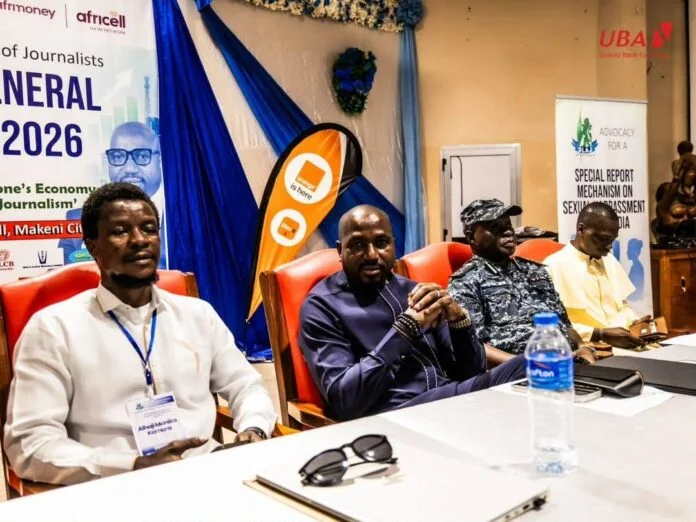
The AGM itself took place at the University of Makeni Auditorium, providing a conducive environment for strong discussions and strategic planning. Alhaji Manika Kamara, President of the Sierra Leone Association of Journalists (SLAJ), reaffirmed the Association’s unwavering commitment to defending press freedom, promoting professionalism, and protecting the welfare of journalists. Kamara stated that "responsible journalism is a national duty that supports transparency, accountability, and sustainable development." He also asserted that the Government of Sierra Leone’s annual subvention to SLAJ does not compromise the independence of the Association or silence the media, reinforcing the importance of maintaining journalistic autonomy despite financial support. He showed that this subvention is viewed as an investment in a critical democratic institution rather than a tool for control.
Dr. Francis Sowa, National Coordinator of the Media Reform Coordinating Group (MRCG), described "responsible journalism as a critical pillar of democratic governance and economic transformation." His remarks noted the interconnectedness of a free press with the broader socio-economic and political health of the nation. Inspector General of Police Mr. William Fayia Sellu praised the longstanding relationship between the Sierra Leone Police and SLAJ, acknowledging the media's role in "giving a voice to the voiceless and contributing to democratic governance while encouraging practitioners to uphold the principles of fairness, accuracy, humanity, and accountability." The keynote presentations and goodwill messages delivered by various speakers were major notes of the two-day AGM, providing diverse perspectives and reinforcing the collective commitment to a vibrant and responsible media in Sierra Leone. These contributions collectively painted a picture of a media landscape striving for excellence, independence, and a profound impact on the nation's future.