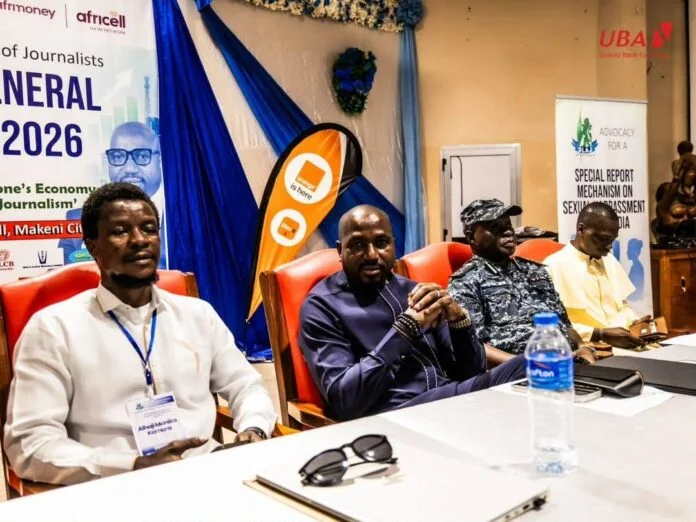
The Sierra Leone Association of Journalists (SLAJ) concluded its 55th Annual General Meeting (AGM) in Makeni City, Sierra Leone, from June 12 to 13, 2026. This significant gathering brought together media professionals, policymakers, and stakeholders to deliberate on the key role of the press in national progress. Participants at the meeting emphasized the critical role of the media in national development, particularly under the overarching theme, "Strengthening Sierra Leone’s Economy Through Responsible Journalism." This theme showed the deep connection between a vibrant, ethical media landscape and the nation's economic prosperity.
Attendees reached a broad consensus, agreeing that a professional, independent, and sustainable media sector is absolutely essential for promoting accountability within the country's governance structures. Such a sector is also deemed vital for strengthening democratic governance, ensuring transparency, and fostering an informed citizenry. Profound agreement was reached that this independent media is key to attracting much-needed investment and supporting full economic transformation across Sierra Leone. The discussions noted that a credible media environment builds investor confidence and provides reliable information key for business decisions.
Key Themes and Commitments
The Annual General Meeting of the Sierra Leone Association of Journalists (SLAJ) was held in Makeni City, serving as a central hub for these vital discussions. The event took place specifically at the University of Makeni (UNIMAK) Auditorium, a prominent educational institution that provided an apt setting for intellectual exchange and strategic planning. These proceedings marked the 55th such gathering for the association, demonstrating a long-standing commitment to media development and advocacy in Sierra Leone. The consistent convening of these AGMs reinforces SLAJ's dedication to its mandate and its members.
During the two-day event, participants explored various facets of responsible journalism and its impact on societal well-being. The agenda included sessions on ethical reporting, media sustainability, and the legal frameworks governing press freedom in Sierra Leone. A core commitment emerging from the meeting was the renewed focus on ensuring that journalistic practices contribute positively to the economic discourse and development initiatives within the country. The discussions showed that an informed public, facilitated by responsible journalism, is better equipped to participate in and benefit from economic growth.
Voices from the Forum
SLAJ President Alhaji Manika Kamara delivered a powerful address, asserting that journalism stands as one of the strongest pillars of democracy and national development. He elaborated on the indispensable function of the media in holding power accountable, disseminating key information, and shaping public opinion in a constructive manner. President Kamara's remarks set a tone of purpose and responsibility for the entire conference, noting the profound impact journalists have on the nation's trajectory. He stressed that a strong and free press is not merely a watchdog but also a catalyst for progress across all sectors of society.
Mohamed Alhajie Samoura, MD/CEO of UBA Sierra Leone and President of the Sierra Leone Bankers Association, delivered the keynote address at the event. Mr. Samoura provided an insightful perspective from the financial sector, emphasizing the symbiotic relationship between a stable economy and reliable information. Mr. Samoura stated that the world has entered an era where misinformation and disinformation can negatively affect economies and public confidence, making responsible journalism more important than ever before. He showed how fake news and unsubstantiated reports can lead to market instability, deter foreign investment, and erode trust in financial institutions. Therefore, he argued, accurate and fact-based reporting is not just a journalistic ideal but an economic imperative.
Dr. Francis Sowa, National Coordinator of the Media Reform Coordinating Group (MRCG), also addressed the gathering, reinforcing the critical messages presented. Dr. Sowa emphasized responsible journalism as a vital contributor to economic transformation and democratic governance. He further added that sustainable media institutions are essential for sustainable democracy and economic growth, urging journalists to continue providing accurate, balanced, and fact-based reporting. His intervention noted the need for media organizations to not only uphold ethical standards but also to develop strong business models that ensure their long-term viability and independence. Dr. Sowa's insights pointed to the key link between the operational health of media outlets and their ability to fulfill their democratic and developmental roles effectively.
The Inspector General of Police, Mr. William Fayia Sellu, delivered a goodwill message to the attendees, acknowledging the media's role in public safety and order. His presence showed the importance of collaboration between state institutions and the press for the betterment of society. The AGM concluded with the SLAJ-Independent Media Commission Media Awards Dinner, a prestigious event recognizing achievements within the media sector. This annual awards ceremony celebrates excellence in journalism, encouraging high standards and professional integrity among practitioners across Sierra Leone. The dinner served as a fitting culmination to the AGM, honoring those who exemplify the principles of responsible journalism.
Broader Implications for Media
The AGM's central theme, "Strengthening Sierra Leone’s Economy Through Responsible Journalism," showed the media's perceived role in national development and noted the proactive stance taken by SLAJ. The Sierra Leone Association of Journalists (SLAJ) is actively advocating for enhanced constitutional protections for media freedom in the country. This campaign seeks the integration of a distinct Chapter 12 into Sierra Leone’s ongoing constitutional review process, aiming to establish stronger legal guarantees for press independence. Such a constitutional amendment would solidify the rights and responsibilities of journalists, providing a strong legal framework that safeguards their ability to report freely and without fear of undue interference. The inclusion of a dedicated chapter would signify a profound national commitment to a free and independent press as a cornerstone of democracy.
Additionally, the Government of Sierra Leone supports SLAJ through an annual subvention of SLE 2.7 million. This financial support demonstrates the government's recognition of the media's importance and its commitment to fostering a conducive environment for journalistic practice. The subvention assists SLAJ in its various initiatives, including capacity building, advocacy, and promoting ethical standards among its members. This partnership between the government and the leading journalistic body is seen as key for the continued growth and professionalization of the media landscape in Sierra Leone, ensuring that the press can effectively contribute to national dialogue and economic progress. The discussions at the 55th AGM reaffirmed the collective resolve to uphold the tenets of responsible journalism for an accountable, democratic, and economically vibrant Sierra Leone.