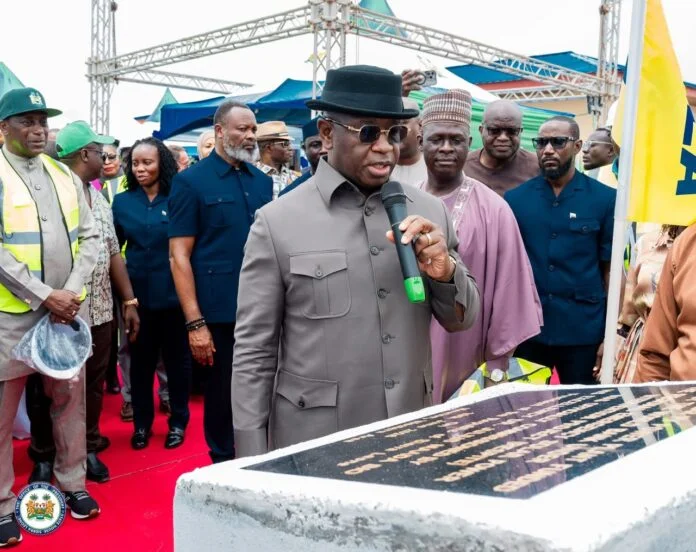
President Dr. Julius Maada Bio officially launched two significant solar power facilities on Wednesday, June 10, 2026, marking a major step in Sierra Leone's energy infrastructure expansion. The commissioning of these two major solar power facilities represents a key moment for the nation's development trajectory. During the ceremony, the President stated, "This ceremony is a statement of Sierra Leone’s ambition. It is a declaration that we are investing in our future." He emphasized the facilities' key role in addressing long-standing energy challenges that have historically hindered progress across various sectors. President Bio noted, "I have visited schools where students struggle to study after sunset. I have seen healthcare workers striving to save lives under difficult conditions." These observations show the direct impact that reliable electricity can have on education and public health. President Bio added that the project's electricity would "do more than just power homes and businesses," aiming to make reliable electricity "a service available to all," thereby fostering equitable access and opportunity for all citizens.
New Solar Facilities Detailed
The newly commissioned solar power facilities have a combined capacity of 40 megawatts. This substantial addition to the national grid is designed to significantly boost the country's power generation capabilities. One of these impressive installations is a 30-megawatt solar power plant, strategically located in Newton Village, Western Area Rural District. This facility is not only a major power generator but is also equipped with a 15-megawatt-hour Battery Energy Storage System (BESS). The integration of the BESS is critical for ensuring grid stability and providing consistent power supply, even during periods of low solar irradiance or peak demand.
A second facility, situated in Lungi, Port Loko District, adds another 10 megawatts to the combined capacity. This plant also incorporates a 6-megawatt-hour Battery Energy Storage System (BESS) as part of its infrastructure, further enhancing the reliability and efficiency of the power supply in its operational area. The strategic placement of both facilities in key districts aims to distribute the benefits of increased energy access more broadly across the country. The total 40 megawatts of new capacity, supported by strong battery storage systems, signifies a full approach to energy provision.
Context and Ambition
The expansion represents the largest single addition to renewable energy generation capacity in Sierra Leone’s history, a testament to the government's commitment to sustainable development. This development targets a significant improvement in electricity access across the nation, which has long been a critical challenge. When President Dr. Julius Maada Bio's administration assumed office, fewer than 30 percent of Sierra Leoneans had access to electricity, noting the vast deficit that needed to be addressed. The new facilities aim to directly tackle this long-standing issue by substantially increasing the availability of power, particularly in underserved and rural areas. The government has stated its clear intention for the new solar plants to contribute substantially towards national energy goals, including universal access and sustainable economic growth. This initiative aligns with broader national development plans that recognize reliable energy as a fundamental driver of progress. The increase in renewable energy capacity is expected to have broad positive effects, from supporting small businesses to improving public services and enhancing the overall quality of life for Sierra Leoneans.
Voices on Energy Transformation
The new solar power facilities are part of the broader Regional Emergency Solar Power Intervention (RESPITE) Project. This ambitious initiative aims to address immediate energy needs and enhance resilience within the region, recognizing that energy security is a shared challenge. The projects were developed with significant support from the World Bank. The World Bank provided key financial backing and technical assistance for the development of these projects, which was instrumental in bringing the facilities to fruition. This collaboration shows an international commitment to sustainable energy development in the country and notes the importance of partnerships in achieving large-scale infrastructure goals. The RESPITE Project's focus on emergency intervention also signifies the urgency with which energy access is being addressed, aiming to quickly deploy solutions that can make an immediate difference. The successful commissioning of these facilities demonstrates the tangible outcomes of such international cooperation, setting a precedent for future renewable energy endeavors in Sierra Leone.