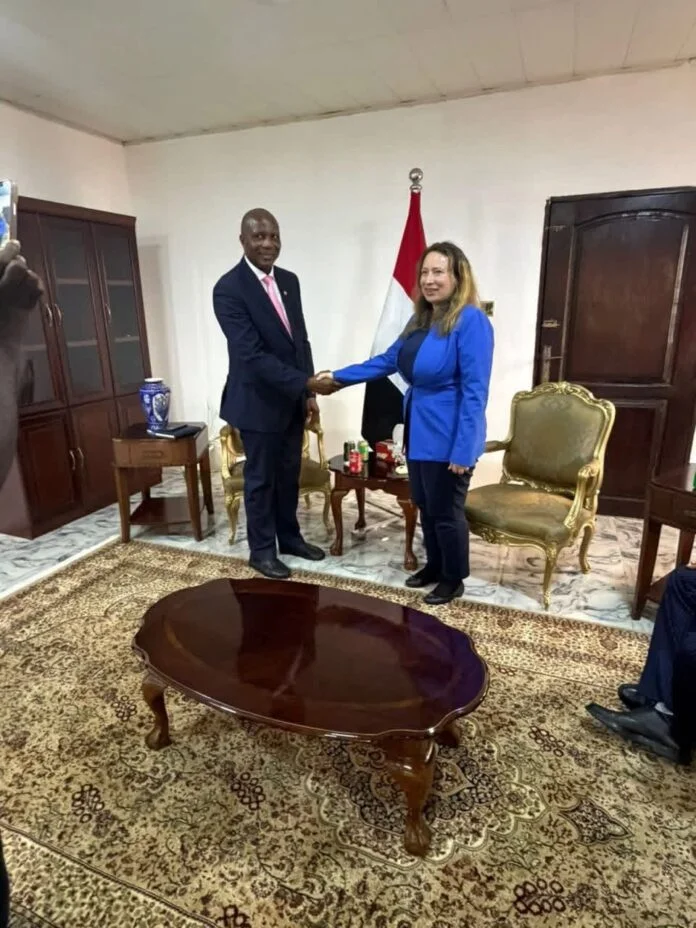
Professor David Francis, Sierra Leone’s former Chief Minister and Foreign Minister, has published a book titled "Governing a Poor Country," which critics describe as a defense and an alibi for the failures of the "New Direction" administration. The publication has quickly become a focal point for discussion regarding the performance and legacy of the government it chronicles. Francis, appointed by President Bio, served as the Chief Minister and was widely considered the "architect" and "CEO of the executive engine" of the "New Direction" government. His central role during this period lends significant weight to the perspectives presented in his work. The book, formally titled "Governing a Poor Country: Perspectives from a Former Chief Minister of Sierra Leone," examines the contributions of the Chief Minister's office to Sierra Leone's political and economic management. It specifically delves into how and why the office impacted these areas during his tenure, offering an insider's view of policy formulation and implementation. This detailed examination aims to provide a full understanding of the operational dynamics within the government during a critical period.
Critique of Governance Concepts
Critics contend that Professor David Francis's concepts of "coordination hubs" and "synergies" within his book amount to "administrative theatre." These concepts are described as tools that erode ministerial autonomy and centralize power within the government structure, rather than genuinely improving efficiency or collaboration. The critique suggests that such frameworks may have inadvertently led to a concentration of authority, potentially undermining the decentralized decision-making processes inherent in a strong democratic system. The book itself, "Governing a Poor Country," has prompted questions regarding the wisdom, constitutionality, and necessity of the "New Direction" administration's decision to utilize the Chief Minister's office for what it framed as innovative governance. These questions challenge whether the establishment and functions of the Chief Minister's office were truly aligned with the nation's best interests and constitutional principles, or if they represented an unnecessary layer of bureaucracy.
The publication is presented as a resource intended for a broad audience. This includes political leaders, academics, and policy practitioners, who might find its insights valuable for understanding governance challenges in developing nations. It also targets diplomats, educators, and journalists, providing them with a nuanced perspective on Sierra Leonean politics and public administration. The book aims to provide insights for anyone interested in Sierra Leone, African politics, and broader national governance issues, positioning itself as a significant contribution to the discourse on state management in challenging environments. Its scope extends beyond a mere historical account, seeking to influence contemporary and future policy discussions.
Past Promises Versus Present Reality
Professor David Francis chaired the 2018 Governance Transition Team (GTT) Report, a document which he also utilized to promise a "cleansing" of the government. That report justified billions in expenditure by the state, outlining a path for financial accountability and reform. The GTT Report was specifically intended to address critical issues of governance and public finance as the "New Direction" administration took power, setting a high bar for anticipated improvements. It laid out a full plan for tackling corruption and inefficiency, which resonated with public expectations for change.
The promises of a "cleansing" articulated in the 2018 GTT Report are being contrasted with the current reality in 2026. This stark comparison notes the gap between initial aspirations and present circumstances. Allegations of drug trafficking and the widespread presence of organized crime have emerged, drawing a stark comparison to the administrative improvements that were pledged and the new direction that was promised. Critics suggest that the current situation indicates a failure to deliver on the initial commitment to reform and transparency, despite the significant financial outlays approved following the GTT's recommendations. The persistence of these serious issues raises concerns about the effectiveness of the governance strategies implemented and the long-term impact of the "New Direction" administration's policies. The current state of affairs, marked by these allegations, stands in sharp contrast to the ambitious goals set forth in the 2018 report, prompting a re-evaluation of the progress made.
An Alibi for Failure
Professor David Francis provides a first-hand account of the Chief Minister's office in his book, "Governing a Poor Country." The book offers a candid, in-depth, and critically reflective perspective on the role and mandate of the position, drawing directly from his experiences at the helm. This publication details how the office contributed to Sierra Leone's political and economic management during his tenure, offering a unique window into the inner workings of government. The former Chief Minister's work aims to shed light on the inner workings of the "New Direction" administration from his direct experience, presenting his narrative as an essential record of that period. His narrative addresses the operational impact and strategic decisions made within the Chief Minister's office, seeking to contextualize the challenges and achievements of his time in public service. Through this personal account, Francis attempts to explain the rationale behind various policy choices and the outcomes that followed.