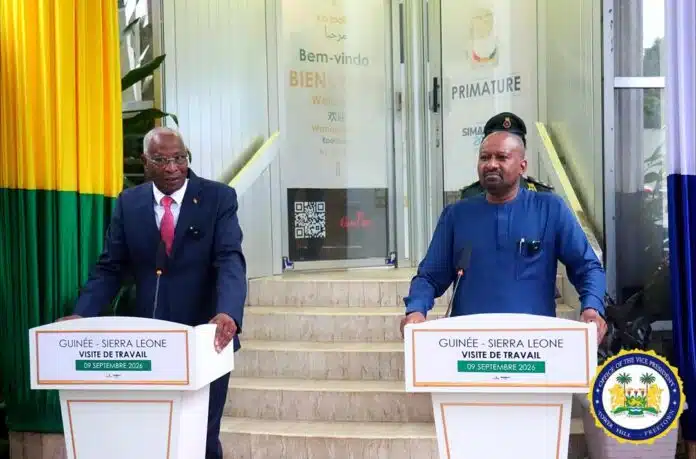
Sierra Leone’s Vice President, Dr. Mohamed Juldeh Jalloh, attended the official launch of Guinea’s new Foreign Policy Document as a special guest of the Guinean Government. The high-level ceremony took place at the Ministry of Foreign Affairs in Conakry, marking a significant diplomatic event for the West African nation. This event was part of Dr. Jalloh’s two-day working visit to Guinea, showing the close bilateral ties between the two countries. The launch was organized under the auspices of Guinea’s Head of Government and Prime Minister, His Excellency Amadou Oury Bah, who played a central role in articulating the nation's new diplomatic vision.
Guinea's Foreign Policy Pillars
Guinea's new foreign policy document outlines five core pillars, emphasizing sovereignty, strategic neutrality, economic transformation, peace, and African integration. These foundational principles are designed to guide Guinea’s engagement with the international community. The policy aims to reshape the nation's international engagement, ensuring that its diplomatic efforts directly contribute to national development and regional stability. As part of this new direction, Guinea's Foreign Ministry stated that the country's embassies abroad are expected to evolve into dynamic platforms. These diplomatic missions will serve as key instruments for influence, negotiation, and economic mobilization, aligning with the broader goals of national development and regional cooperation. The initiative seeks to project Guinea's interests more effectively on the global stage, fostering partnerships that support its economic and political objectives and enhance its standing among nations.
Bilateral Relations Noted
Sierra Leone and Guinea share a common border and collaborate across multiple sectors, including trade, security, transportation, energy, and regional integration efforts. This geographical proximity and shared interests form the bedrock of their strong bilateral relationship. Before the foreign policy launch ceremony, Prime Minister Amadou Oury Bah paid a courtesy call on Vice President Dr. Mohamed Juldeh Jalloh at the Radisson Blu Hotel in Conakry. This meeting provided an opportunity for both leaders to discuss matters of mutual interest and reinforce the spirit of cooperation. During the meeting, Prime Minister Bah emphasized the importance of continental unity in Guinea's diplomatic approach. "Africa is our family, the world is our horizon," Prime Minister Amadou Oury Bah stated, reflecting on the nation's broader international perspective while maintaining strong regional ties. This interaction showed the ongoing engagement between the two neighboring West African nations, noting their commitment to shared progress and stability.
Regional Peace and Integration
Prime Minister Amadou Oury Bah reaffirmed Guinea’s commitment to regional peace and stability during the foreign policy launch. His remarks noted Guinea's dedication to fostering a secure and integrated West African environment, recognizing that national prosperity is intertwined with regional harmony. The Prime Minister emphasized that Guinea's diplomatic efforts would prioritize collaboration with its neighbors to address shared challenges and promote collective prosperity. He reiterated the guiding principle, "Africa is our family, the world is our horizon," showing a foreign policy vision that balances strong regional ties with broader international engagement. This commitment aligns with the nation's efforts to enhance stability and cooperation across the continent, positioning Guinea as a proactive partner in regional development.
Diplomatic Vision Articulated
The launch ceremony for Guinea's new foreign policy document occurred on Wednesday, September 9, 2026. The policy framework stipulates that international partnerships will be evaluated based on their direct contribution to several key areas. These include productive investment, the creation of employment opportunities, and the advancement of infrastructure development within Guinea. The policy prioritizes partnerships that facilitate skills transfer and promote technological advancement, aiming to ensure that collaborations yield tangible benefits for the nation's progress and economic growth. This strategic approach ensures that Guinea's diplomatic engagements are pragmatic and directly serve the interests of its citizens and national development agenda.