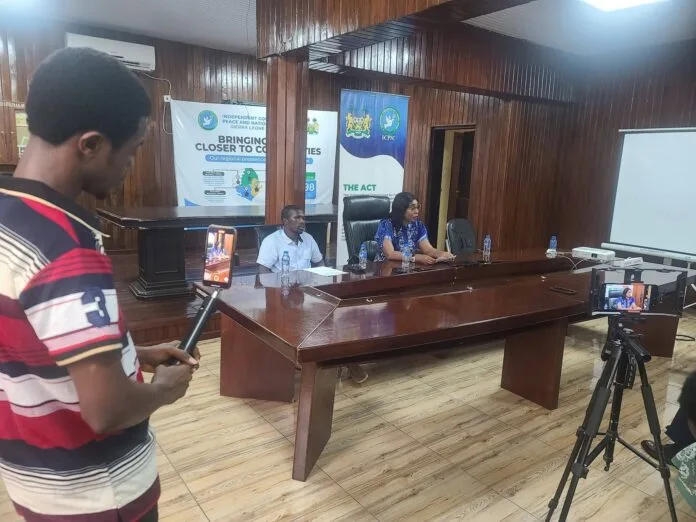
Sierra Leone launched a National Conflict Prevention Strategy today in Freetown as part of the Sustaining Peace and Social Cohesion Through a National-led Prevention Approach in Sierra Leone (SPESOCO) project. Hawa Sally Samai, Executive Secretary of the Independent Commission for Peace and National Cohesion (ICPNC), stated, "effective conflict prevention requires collective responsibility, sustained dialogue and proactive engagement among institutions and communities to address grievances, misunderstandings and emerging disputes that could undermine national stability." She added, "maintaining peace should not be viewed solely as the responsibility of Government or designated peacebuilding institutions but as a shared national obligation requiring the active participation of citizens, traditional authorities, religious leaders, political actors and civil society organizations."
The introduction of this strategy marks a formal step toward integrating peacebuilding efforts across various sectors of the nation. By prioritizing a national-led approach, the initiative seeks to foster an environment where local stakeholders are empowered to intervene before local tensions escalate into broader societal instability. The strategy emphasizes the necessity of a unified framework that connects government policy with the daily realities faced by diverse communities across the country.
Collaborative Planning Meeting Held
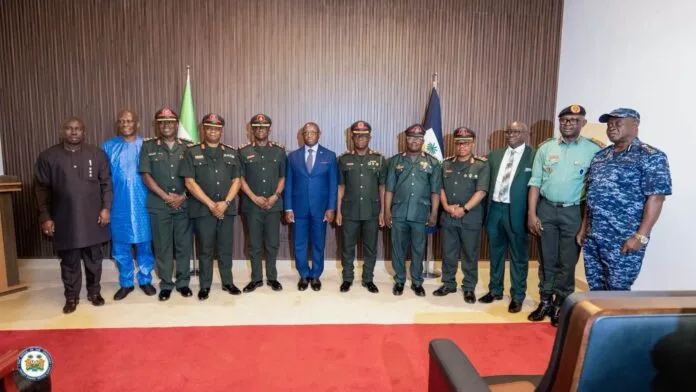
A Local Project Appraisal Committee meeting regarding the project took place at the United Nations Development Programme office in Wilberforce, Freetown. Kevin Petrini, the United Nations Development Programme Deputy Resident Representative, hosted the proceedings. The Minister of Planning and Economic Development attended the session to discuss the initiative’s implementation.
During this gathering, the committee focused on the operational aspects of the SPESOCO project. The Minister of Planning and Economic Development and Kevin Petrini reviewed the project’s timeline and the resources required to ensure its successful rollout. This collaborative session allowed for a detailed examination of how individual national agencies can synchronize their efforts to support the broader objectives defined by the Independent Commission for Peace and National Cohesion.
Participants examined the proposed strategy, which intends to improve institutional coordination across national agencies. The document outlines specific objectives to strengthen early warning systems intended to identify and mitigate potential stability risks. The strategy targets the mitigation of hate speech and misinformation through structured interventions. These measures focus on addressing the spread of inflammatory content that can impact community relations. The committee reviewed these priorities to ensure alignment with the broader goals of the Sustaining Peace and Social Cohesion Through a National-led Prevention Approach in Sierra Leone project.
The strategy’s focus on institutional coordination is designed to eliminate gaps in communication that have historically hindered rapid responses to emerging disputes. By strengthening early warning systems, the project aims to equip local and national authorities with the data and tools necessary to intervene early. The inclusion of measures against hate speech and misinformation reflects a modern, targeted approach to maintaining social cohesion in an era where digital communication can rapidly influence public perception. Through these structured interventions, the project seeks to build a resilient foundation for long-term stability, ensuring that the collaborative spirit established at the United Nations Development Programme office continues to guide the implementation of the National Conflict Prevention Strategy across the country.