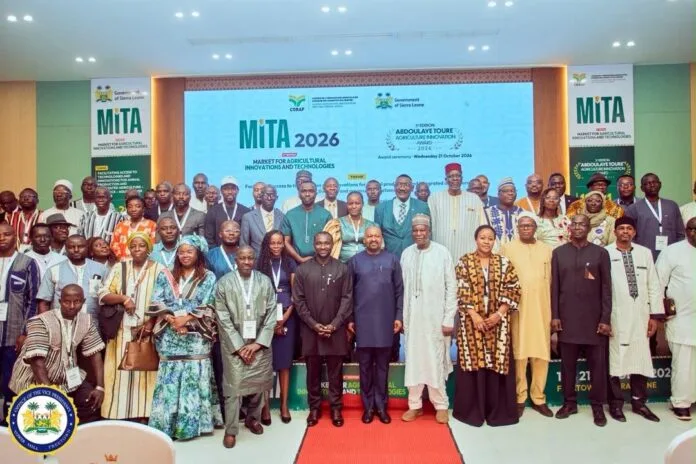
The sixth Market for Agricultural Innovations and Technologies (MITA 2026) conference concluded on October 21, 2026, in Freetown, Sierra Leone. Proceedings for the three-day event took place at the Bintumani Hotel, beginning on October 19, 2026. Organizers convened the conference to address advancements in regional agricultural production and technical development. Attendees gathered at the site to share research and evaluate new practices for the sector. The meeting served as a forum for participants to examine current technologies alongside agricultural experts. Activities concluded on the final day following a series of presentations and scheduled discussions held throughout the venue.
Organizers and Regional Participation
The West and Central African Council for Agricultural Research and Development (CORAF) organized the conference to facilitate regional collaboration. Sierra Leone’s Ministry of Agriculture and Food Security and the Sierra Leone Agricultural Research Institute (SLARI) hosted the event with financing provided by the World Bank.
Attendance included over 500 participants representing eight countries currently implementing the Food System Resilience Programme (FSRP). During the proceedings, Dr. Mohamed Juldeh Jalloh, Vice President of Sierra Leone, addressed the delegation. "I used the opportunity to reiterate the call for CORAF member countries to build resilient infrastructure anchored in energy and food security to strengthen our capacity to withstand global shocks that disproportionately affect small economies," Dr. Mohamed Juldeh Jalloh said. The gathering focused on these regional objectives as delegates examined technical frameworks for agricultural development across the participating nations.
Showcasing Agricultural Technological Advancements
Exhibitors at the event presented more than 100 agricultural technologies and innovations to address production challenges. These displays focused on three primary sectors: livestock, aquaculture, and integrated farming systems. The showcased solutions aimed to improve efficiency and output for producers operating within the participating regions. Attendees examined the functionality of these tools during the final day of the conference. Engineers and researchers provided demonstrations to explain how these systems operate in various environmental conditions. By integrating these practices, the organizers intend to support the modernization of local agricultural frameworks. The presentation of these technologies served as a core component of the three-day meeting in Freetown. Participants from the eight countries involved in the Food System Resilience Programme reviewed these advancements to determine their suitability for implementation at home. These innovations represent the current technical progress achieved by the West and Central African Council for Agricultural Research and Development (CORAF) and its partners.