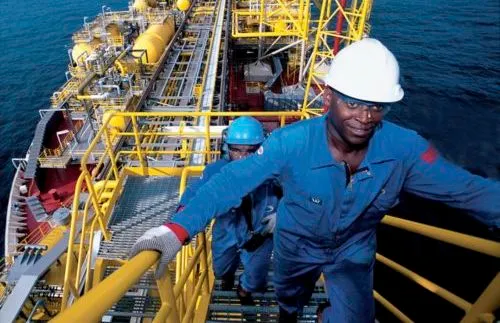
Nigeria’s upstream oil sector has experienced a significant rebound, moving from capturing 4% of Africa’s final investment decisions (FIDs) to 40% within two years, according to recent data. This remarkable shift shows the effectiveness of recent policy and regulatory reforms aimed at revitalizing the nation's key oil and gas industry. The country has gone from capturing 4% of Africa’s upstream final investment decisions (FIDs) to commanding 40% in just two years, a testament to the renewed confidence among investors and operators. This growth coincides with a substantial increase in oil output, which rose by approximately 400,000 barrels per day between 2023 and 2025, reaching 1.6 million barrels per day. The 2025 figure represents the highest onshore production level in 20 years, signaling a strong recovery in a sector that had faced considerable challenges. Continuing this reform trajectory, Nigeria's oil equivalent output further increased to 1.77 million barrels per day in 2026, demonstrating sustained positive momentum.
Policy Reforms Drive Investment Surge
A series of strategic policy directives issued in 2023 played a key role in this resurgence. These directives established clear jurisdictional boundaries between the Nigerian Upstream Petroleum Regulatory Commission (NUPRC) and the Nigerian Midstream and Downstream Petroleum Regulatory Authority (NMDPRA). This clarification was key for streamlining regulatory processes for operators, reducing ambiguity, and fostering a more predictable investment climate. The delineation between the two key regulatory bodies helped to eliminate overlaps and ensure a more efficient administrative framework for oil and gas activities.
Further bolstering the investment landscape, Presidential Directive 40 introduced targeted tax incentives, specifically designed to stimulate investment across the entire upstream sector. These incentives were a direct response to long-standing industry calls for a more competitive fiscal regime that could attract both domestic and international capital. The aim was to make Nigeria a more attractive destination for exploration and production activities, particularly in areas that required significant upfront investment.
In 2024, the government deepened its commitment to attracting major players by implementing a Notice of Tax Incentives for Deep Offshore Production. This critical measure was specifically designed to draw international oil companies (IOCs) back into capital-intensive, long-cycle deepwater projects. These incentives sought to address previous fiscal disincentives that had made deepwater exploration and production in Nigeria less competitive compared to other global basins. By offering more favorable tax terms, the government aimed to unlock the vast potential of Nigeria's deep offshore reserves, which require advanced technology and substantial financial commitments.
Regulatory adjustments continued with the introduction of the VAT Modification Order 2024 and the Upstream Cost Efficiency Order 2025. These orders specifically targeted cost structures that had previously rendered marginal oil and gas projects uneconomic, aiming to improve their viability and encourage further development. The VAT Modification Order 2024 sought to optimize the tax burden on upstream operations, while the Upstream Cost Efficiency Order 2025 focused on standardizing and reducing operational costs, thereby making smaller, more challenging fields financially attractive for development. These measures collectively aimed to maximize the recovery of hydrocarbons from existing assets and encourage new discoveries.
Efforts to enhance operational efficiency also included significant reforms within the Nigerian National Petroleum Company Limited (NNPCL), a key player in the country's oil and gas sector. The company's contracting timelines were dramatically compressed from an average of 36 months to a maximum of six months. This drastic reduction in the contracting cycle is expected to significantly expedite project execution and reduce delays for investors, making NNPCL a more agile and responsive partner. The improved efficiency in contracting processes directly contributes to faster project delivery and quicker returns on investment, which are critical factors for attracting and retaining capital in the upstream sector.
The impact of these full policy and regulatory changes became profoundly evident in 2025, when Nigeria approved 28 field development plans. These plans represented a total investment value of $18.2 billion within that year alone, indicating a renewed confidence and commitment from investors in the Nigerian upstream oil sector. This substantial approval volume notes the success of the reforms in translating policy into tangible investment decisions and project advancement.
Asset Transfers and New Projects
The Nigerian government actively facilitated and accelerated four international oil company (IOC) asset transfers, which collectively represent approximately $4 billion in value. These transfers were key for re-shaping the ownership landscape of Nigeria's oil and gas assets, often moving them into the hands of indigenous companies. Among these significant transactions, Renaissance acquired Shell’s onshore portfolio, marking a major divestment by an international giant and a significant expansion for a local player. Seplat Energy successfully completed its acquisition of ExxonMobil’s Nigerian upstream interests, further consolidating local ownership and expertise within the sector. Additionally, Oando assumed control of assets previously held by Agip, expanding its operational footprint. Chappal also acquired Equinor’s local assets, marking another significant transfer in the sector and contributing to the growing prominence of Nigerian companies in managing the nation's oil and gas resources. These asset transfers not only injected capital into the system but also empowered local operators to take on greater roles in the industry.
In parallel with these asset transfers, several new projects have received final investment decisions (FIDs), showing the renewed appetite for investment in Nigeria. Shell Nigeria Exploration and Production Company (SNEPCo) sanctioned the Bonga North deepwater development in December 2024, an initiative valued at an impressive $5 billion. This deepwater project is expected to significantly boost Nigeria's crude oil production capacity. In a further commitment, SNEPCo also committed an additional $2 billion to the HI Non-Associated Gas (NAG) project, focusing on gas development, which is increasingly vital for Nigeria's energy transition goals. Separately, in June 2024, TotalEnergies and the Nigerian National Petroleum Company Limited (NNPCL) jointly made a final investment decision on the Ubeta gas field development, which is valued at $550 million. This project is poised to contribute to Nigeria's domestic gas supply and export capabilities. These three commitments alone, from SNEPCo, TotalEnergies, and NNPCL, account for more than $10 billion in signed investment, indicating renewed confidence in Nigeria's upstream oil and gas sector and noting the success of the reform agenda in attracting significant capital.
Context of Past Decline
The recent successes stand in stark contrast to the sector's performance in the preceding decade. Between 2014 and 2023, Nigeria ranked among the continent’s weakest performers for upstream final investment decisions (FIDs), a period characterized by underinvestment and declining output. During this nine-year period, the country struggled to attract the necessary capital for new projects. In comparison, Algeria secured a dominant 44% of African upstream FIDs, while Angola accounted for a substantial 26%. Nigeria lagged significantly behind other nations such as Mozambique, Ghana, Senegal, and Namibia in attracting such critical investments, reflecting a challenging operational environment and a lack of competitive incentives.
The country's oil production faced significant challenges during this period, with crude output briefly falling below one million barrels per day in the third quarter of 2022. This alarming decline noted a broader trend of underperformance in the sector, exacerbated by issues such as crude oil theft, pipeline vandalism, and a difficult regulatory landscape. The inability to attract new FIDs meant that existing fields were depleting without sufficient replacement capacity coming online, leading to a steady erosion of production volumes.
Prior to recent reforms, projections indicated a sharp and concerning drop in total crude and condensate production. Without intervention, output was forecast to decrease dramatically from 1.371 million barrels of oil equivalent per day in 2022 to a mere 579,000 barrels by 2030. This trajectory showed a critical need for urgent and full policy shifts to revitalize the upstream oil and gas sector and avert a precipitous decline in national oil revenues and energy security. The grim outlook served as a powerful impetus for the sweeping reforms that have since been implemented.
Future Outlook and Gas Utilization
Looking beyond the immediate successes, a substantial $50 billion project pipeline is currently under development, signaling a sustained capital commitment to the Nigerian upstream sector not witnessed for at least a decade. This impressive pipeline extends across 11 distinct projects, collectively representing a further $50 billion in investment. This development indicates a strong future for capital deployment in the country's oil and gas industry, suggesting that the current wave of reforms has created a long-term attractive environment for investors. The sheer scale of this prospective investment shows the renewed optimism and strategic planning within the sector, promising continued growth and development for years to come.
Alongside these promising investment prospects in oil, Nigeria has also seen significant growth in gas utilization, reflecting a broader strategy to leverage its extensive natural gas reserves. Export gas utilization increased by an impressive 39% over the same period, reflecting enhanced capacity and demand for Nigeria's natural gas resources on the international market. This surge in exports positions Nigeria as a more significant player in the global gas market, contributing to energy security for importing nations. Domestically, gas utilization also expanded, growing by 7%. This dual growth in both export and domestic gas markets points to a broader strategy of leveraging Nigeria's extensive gas reserves for economic development, industrial growth, and improved energy security within the country. The focus on gas aligns with global energy transition trends and provides a more diversified energy portfolio for the nation.