A sanctioned Russian cargo ship, the Sabetta, docked at the Rusal-operated bauxite terminal in Conakry, Guinea, on March 21, 2026. This event preceded a significant escalation of conflict in Mali. In late April 2026, the Azawad Liberation Front and the al-Qaeda affiliate JNIM launched a coordinated offensive across Mali. During this offensive, Kidal fell to the attacking forces. Malian and Russian forces subsequently withdrew southward, abandoning the garrison at Tessalit. This series of events marks a critical development in the security landscape of West Africa. The arrival of the Sabetta in Conakry, a port city strategically important for maritime trade, showed the continued engagement of Russian entities in the region, even amidst international sanctions. The timing of the ship's arrival, just weeks before a major offensive in Mali, drew attention to the evolving security dynamics and the role of external actors. The coordinated offensive by the Azawad Liberation Front and the al-Qaeda affiliate JNIM demonstrated the persistent and complex nature of the insurgency in Mali, challenging the stability of the state. The fall of Kidal, a strategically important town, and the subsequent abandonment of the garrison at Tessalit by Malian and Russian forces, represented a significant setback for the government and its allies, noting the difficulties in securing vast territories against determined insurgent groups.
Russia's Growing Footprint
The Rusal-operated terminal in Conakry is managed by subsidiaries of the Russian aluminum giant Rusal, a company founded by oligarch Oleg Deripaska. This connection emphasizes the intertwining of Russian state-backed and private interests in critical resource sectors across Africa. Guinea has reportedly received Russian materiel, including attack helicopters, as part of an exchange for bauxite. This arrangement illustrates a clear pattern of resource-for-security exchange, where access to valuable natural resources is traded for military support and hardware. This model has been observed in other African nations, such as the Central African Republic and Sudan, where the Wagner Group previously traded security services for mining concessions. In those instances, the Wagner Group's presence provided a form of security to governments facing internal threats, in return for lucrative access to mineral wealth. This established precedent provides a framework for understanding the current dynamics in Guinea, where the exchange of bauxite for military equipment from Russia suggests a similar quid pro quo arrangement aimed at bolstering the Guinean government's security capabilities while securing Russian economic interests. The involvement of companies like Rusal, with ties to prominent Russian oligarchs, further notes the strategic economic dimensions of Russia's engagement in the continent.
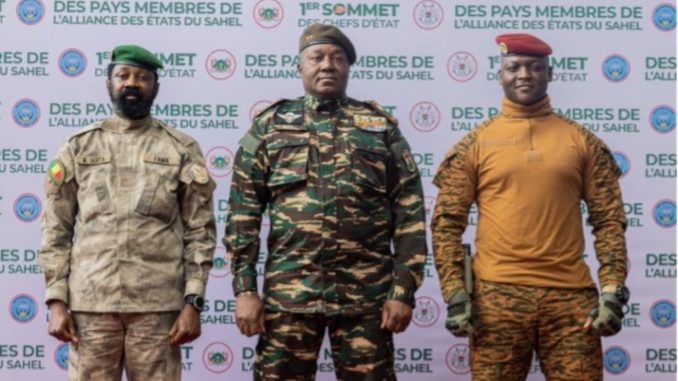
Several West African nations, including Mali, Burkina Faso, and Niger, have shifted their security partnerships from Western nations to Russian entities in their efforts to counter ongoing insurgency. This realignment occurs as violence has increasingly pushed toward the Gulf of Guinea. Northern Côte d’Ivoire, Benin, and Togo have all recorded extremist activity within their borders, signaling a geographical expansion of the insurgency that poses a direct threat to coastal states. The shift away from traditional Western security partners by these Sahelian nations reflects a growing disillusionment with the effectiveness of previous strategies and a willingness to explore alternative alliances, often driven by immediate security needs and promises of swift military assistance. The presence of extremist groups in northern Côte d’Ivoire, Benin, and Togo marks a concerning trend, indicating that the instability once largely confined to the Sahel is now encroaching upon more economically vibrant and densely populated coastal regions. This geographical spread complicates regional security efforts and necessitates a broader, more coordinated response among West African states.
The increased extremist activity has prompted neighboring nations to reinforce their defenses. Ghana and Guinea are currently reinforcing their borders in response to these developments, acknowledging the transnational nature of the threat. Guinea has been under military rule since 2021, adding a layer of internal political complexity to its security posture. The military government in Guinea faces the dual challenge of consolidating its internal power while simultaneously addressing external security threats, a situation that often makes states more receptive to external security assistance, even from non-traditional partners. The decision by Ghana and Guinea to fortify their borders shows the palpable fear among coastal states that the instability from the Sahel could spill over, disrupting their economies and social fabric. This proactive measure reflects a recognition that border security is critical in preventing the infiltration of extremist elements and the flow of illicit goods and arms that fuel conflicts. The political situation in Guinea, with its military leadership, further shapes its approach to security, potentially prioritizing immediate military solutions over long-term institutional reforms.
The Limits of Arms for Bauxite
The Sabetta, the Russian cargo ship that docked in Conakry, reportedly unloaded a significant consignment of military hardware. This included dozens of military vehicles, armored Tigr jeeps, infantry fighting vehicles, mortar systems, and logistics trucks, according to reports. The sheer volume and variety of equipment suggest a substantial effort to enhance the operational capabilities of the recipient forces. The presence of armored Tigr jeeps, known for their versatility and protection, alongside infantry fighting vehicles, indicates a move to modernize and harden ground forces. The inclusion of mortar systems points to an effort to boost indirect fire support capabilities, key in counter-insurgency operations. The provision of logistics trucks notes an understanding of the necessity for sustained supply lines and mobility in challenging operational environments. This full delivery of military assets reflects a strategic investment aimed at empowering local forces to confront the escalating security challenges they face.
The provision of such military hardware, however, cannot unilaterally resolve the underlying issues that contribute to instability in West African nations, the article argues. It states that no amount of weaponry can salvage a state that has forfeited the trust and confidence of its own territory and populace. This perspective critically assesses the limitations of a purely military-centric approach to security, suggesting that while arms can deter or confront immediate threats, they do not address the root causes of instability. The article’s assertion notes a fundamental principle of state legitimacy and governance, where the effective control and loyalty of a population are more key than military might alone. A government that has lost the confidence of its citizens, whether through corruption, inefficiency, or human rights abuses, will struggle to maintain order and stability, regardless of the military resources at its disposal. This argument shows the importance of a holistic approach that prioritizes good governance, social cohesion, and the rule of law.
The article contends that external partners, regardless of their military or economic contributions, cannot replace the fundamental need for strong domestic institutions and the cultivation of public trust within a nation. This perspective suggests that while arms transfers may offer short-term security enhancements, they do not address the deeper governance and societal challenges critical for long-term stability. The presence of external military support, even if significant, can only provide a temporary reprieve if the internal mechanisms of governance are weak or non-existent. Without strong, accountable institutions—such as an independent judiciary, a professional civil service, and a responsive legislature—the foundations for sustainable peace remain fragile. The article emphasizes that true security and stability are internally generated, stemming from a government’s ability to effectively serve its people, ensure justice, and foster a sense of shared national identity and purpose. Relying solely on foreign assistance for security, therefore, risks creating a dependency that bypasses the essential work of nation-building and institutional development.
Sierra Leone's Enduring Lesson
Following the arrival of military hardware in Conakry, the cargo was transported overland towards Mali, intended for the Malian army and Russia’s Africa Corps. This transfer of equipment occurred shortly before a significant security incident in Mali. Malian Defence Minister Sadio Camara was killed by a car bomb in Kati, a town situated near the capital city of Bamako. The assassination of a high-ranking official like Sadio Camara in such close proximity to the capital shows the persistent and widespread nature of the security threats within Mali, even as new military aid arrives. The targeting of a key government figure in Kati, a town known for its military base and strategic importance near Bamako, sends a powerful message about the capabilities and reach of insurgent or opposition elements. This incident notes the internal vulnerabilities that states in the region continue to face, demonstrating that even with enhanced military capabilities, political figures remain at risk from determined adversaries. The attack on Minister Camara complicates the security landscape and potentially undermines confidence in the government's ability to protect its leadership and maintain order.
The broader regional context includes historical periods of instability, such as Sierra Leone's war, which spanned from 1991 to 2002. This long-running conflict notes the deep-seated challenges nations in the region have faced, including issues of governance, resource control, and ethnic tensions. Sierra Leone's civil war, characterized by its brutal nature and widespread human rights abuses, serves as a stark reminder of how quickly state institutions can collapse and how protracted and devastating conflicts can become when underlying grievances are left unaddressed. The conflict's duration, spanning over a decade, illustrates the immense difficulty in restoring peace and stability once a nation descends into widespread violence. This historical precedent shows the critical importance of early intervention and full strategies that go beyond military solutions to tackle the root causes of conflict. The lessons from Sierra Leone's experience emphasize that lasting peace requires not only an end to fighting but also strong efforts in reconciliation, reconstruction, and the establishment of legitimate and inclusive governance structures.
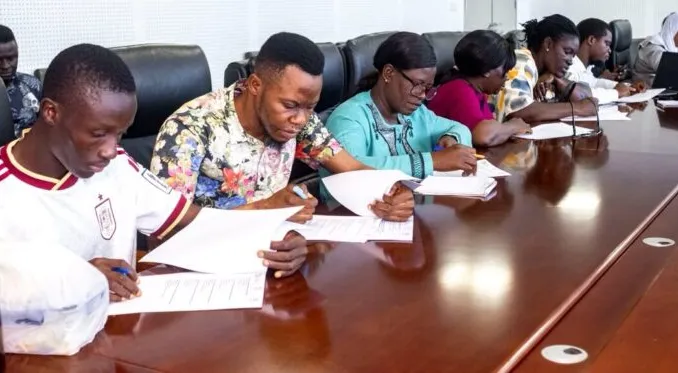
In a move aimed at regional de-escalation, Sierra Leonean officials convened with their Guinean and Liberian counterparts. The meeting took place in Conakry in March 2026 and focused on easing tensions along the Mano River, a shared border region. The discussions show ongoing diplomatic efforts to manage regional disputes and prevent broader instability, even as military provisions continue to flow into the area. This diplomatic engagement between Sierra Leone, Guinea, and Liberia demonstrates a recognition among regional leaders of the interconnectedness of their security and the need for collaborative approaches to maintain peace. The Mano River region, historically a flashpoint for cross-border conflicts and illicit activities, requires careful management to prevent the resurgence of past instabilities. The timing of this meeting, amidst growing security concerns and the influx of foreign military aid, notes a dual approach where military strengthening is pursued alongside diplomatic initiatives. These events collectively illustrate the complex interplay of internal security concerns, regional diplomacy, and external military support in West Africa, emphasizing that a multi-faceted approach involving both hard power and soft power is essential for navigating the region's intricate security challenges.