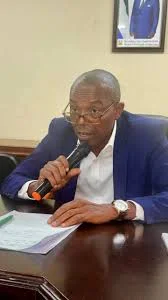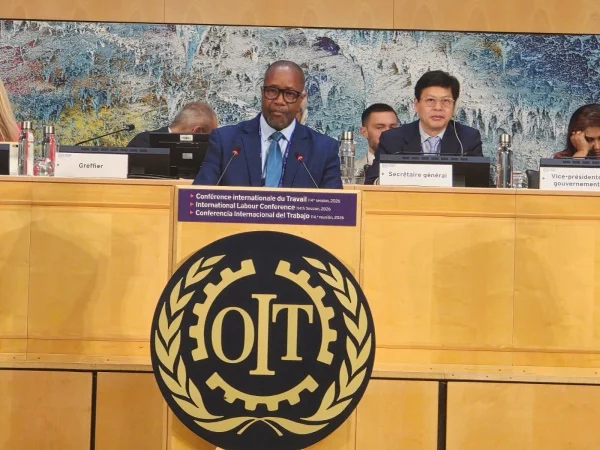
Sierra Leone’s Minister of Employment, Labour and Social Security, Mohamed Rahman Swaray, on Wednesday, 10 June 2026, urged member states of the International Labour Organization (ILO) to adopt a human-centred approach to Artificial Intelligence (AI). The Minister delivered his remarks at the 114th Session of the International Labour Conference in Geneva, Switzerland. Mr. Swaray emphasized that the development and deployment of AI technologies must prioritize human dignity and well-being. This significant international gathering provided a key platform for discussing the profound implications of AI on global labour markets and social structures.
"Artificial intelligence cannot and must not replace our commitment to human dignity," Mohamed Rahman Swaray stated during his address. His call notes the need for international cooperation in ensuring that advancements in AI serve humanity rather than diminishing its value in the global workforce. He stressed that a collective and coordinated effort is essential to shape the future of work in an era increasingly defined by technological innovation, ensuring that the benefits of AI are widely shared and its risks mitigated. The Minister's intervention showed the urgency of establishing ethical guidelines and regulatory frameworks that protect workers' rights and promote social justice in the face of rapid technological transformation.
Africa's Digital Divide Concerns
Mohamed Rahman Swaray cautioned that Africa cannot afford an expanding digital divide, both within individual countries and among nations. He stated that unequal access to internet connectivity, digital devices, and digital skills training could exacerbate existing inequalities across the continent. This growing digital disparity, he argued, poses a significant threat to Africa's inclusive development and its ability to fully participate in the global digital economy. During his address, concerns were also raised regarding worker surveillance, algorithmic bias, data privacy issues, and the potential for job losses due to automation. These challenges, if left unaddressed, could disproportionately affect vulnerable populations and further entrench existing socio-economic disparities. Swaray showed the importance of ensuring that technological advancements do not further marginalize vulnerable populations. He emphasized the need for concerted efforts to bridge the digital gap and ensure equitable participation in the evolving AI landscape, advocating for policies that promote universal access to digital resources and training. The Minister noted that addressing these issues requires not only national commitment but also strong international support and collaboration to build resilient and inclusive digital ecosystems across Africa.
Sierra Leone's Labour Initiatives
Sierra Leone recently hosted the 52nd African Regional Labour Administration Centre (ARLAC) Governing Council Meeting and High-Level Symposium in Freetown. This event convened labour Ministers, experts, and social partners from 13 African countries. The symposium served as a vital forum for discussing regional labour policies, sharing best practices, and formulating strategies to address common challenges faced by African labour administrations. The discussions at the ARLAC event were particularly pertinent in the context of global technological shifts, providing an opportunity for African nations to collectively strategize on harnessing AI for development while protecting their workforces. Nationally, the Second National Labour Conference and Social Dialogue Forum was held during this year’s May Day celebrations, bringing together government, employers, and workers to deliberate on key labour issues pertinent to Sierra Leone.
In terms of economic measures, the national minimum wage was increased by 50 percent, rising from Le 800 to Le 1,200, effective April 2026. This significant adjustment aims to improve the living standards of workers and address economic disparities within the country. The government has also advanced digital initiatives, fully operationalizing a digital work permit system in January 2026. This system streamlines processes for foreign workers and enhances efficiency in labour administration, reflecting the government's commitment to modernizing its services. Efforts are currently underway to establish an Informal Sector Social Security Scheme designed to provide coverage for workers outside the formal employment sector, a key step towards extending social protection to a larger segment of the population. Additionally, Cabinet has approved a new Data Protection and Right to Access Information Bill, aiming to strengthen privacy rights and transparency within the country. This legislative development is particularly timely given the increasing reliance on digital technologies and the growing importance of safeguarding personal data. These initiatives collectively demonstrate Sierra Leone's proactive approach to improving labour conditions, embracing digital transformation, and ensuring social justice for its citizens.
Minister's Call for Dignity
Technological advancement must promote decent work and social justice instead of deepening inequality, according to Mohamed Rahman Swaray, Sierra Leone’s Minister of Employment, Labour and Social Security. The Minister emphasized this principle during his address at the 114th Session of the International Labour Conference in Geneva, Switzerland. "Artificial intelligence cannot and must not replace our commitment to human dignity," Mr. Swaray stated, showing the need to prioritize human well-being in AI development. His remarks resonated with the overarching theme of the conference, which sought to explore the intricate relationship between AI and the world of work.
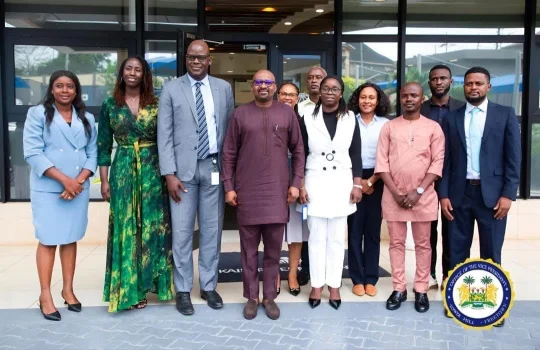
The conference itself was themed “A Moment of Choice: Harnessing Artificial Intelligence for Decent Work,” reflecting the global discussion on AI's impact on employment. This theme noted the critical juncture at which the international community finds itself, with decisions made today shaping the future trajectory of AI's integration into society and the economy. Mohamed Rahman Swaray was accompanied to the event by Sierra Leone’s Deputy Permanent Representative to the United Nations Office and other International Organizations, Samuel U.B. Saffa Esq. Their participation noted Sierra Leone's engagement in international dialogues regarding the ethical implementation of AI technologies and its commitment to advocating for policies that ensure AI serves humanity's best interests. The delegation actively contributed to discussions on how to leverage AI's potential for economic growth and social progress while mitigating risks such as job displacement, discrimination, and privacy breaches.