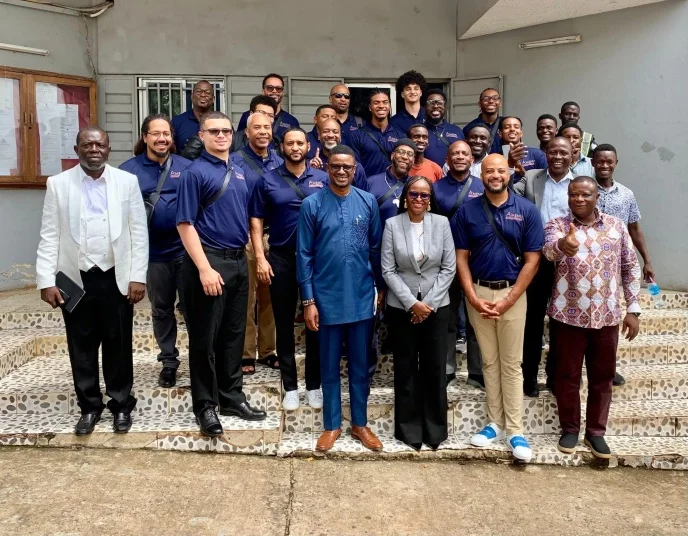
The National Council for Technical and Vocational Education (NCTVE) held its inaugural Council Meeting on Thursday, June 25, 2026. This significant gathering marked a key moment for the newly established body, setting the stage for its critical role in transforming Sierra Leone's educational landscape. The meeting, key for the council's establishment and future direction, took place at the NCTVE Conference Room. Located on A.J. Momoh Street in Tower Hill, the venue hosted the council's first official gathering as it begins its mandate to reform technical education in Sierra Leone. This initial meeting served to formalize the council's operational framework and articulate its strategic objectives, laying the groundwork for its extensive work ahead.
New Council's Mandate and Goals
The NCTVE Act 2025, the legislative backbone of this initiative, focuses on enhancing quality assurance, accreditation, certification, and institutional accountability within Sierra Leone's technical and vocational education and training (TVET) system. Dr. Haja Ramatulai Wurie, Minister of Technical and Higher Education, showed the importance of this new legislation, stating that it "strengthens quality assurance, accreditation, certification, institutional accountability and aligns Sierra Leone’s TVET system with international best practices." This legislative framework is designed to bring the nation's TVET standards into conformity with global benchmarks, ensuring that technical and vocational education meets recognized international criteria and produces graduates with globally competitive skills. The Act represents a full approach to modernizing the TVET sector, aiming to address existing challenges and foster a more strong and responsive educational environment.
During the inaugural meeting, the Council pledged to work collaboratively over the next three years to build a modern, inclusive and respected TVET system. This commitment outlines a strategic period for the NCTVE to implement reforms and establish new operational standards. The goal is to transform the existing TVET landscape into one that is accessible to a wider demographic, incorporates contemporary educational methodologies, and draws respect both domestically and internationally. The collaborative approach indicates engagement across various stakeholders, including government bodies, educational institutions, the private sector, and civil society, to achieve this systemic overhaul over the specified timeframe. This long-term vision emphasizes sustainable development and continuous improvement within the TVET sector. The Council's dedication to an inclusive system means ensuring that TVET opportunities are available to all citizens, regardless of their background or location, thereby contributing to national development and individual empowerment.
Leadership and Vision
Edleen B. Elba was appointed Chairperson of the National Council for Technical and Vocational Education (NCTVE) following parliamentary approval earlier this month. Elba assumes leadership of the newly formed council tasked with reforming technical education in Sierra Leone. Her appointment signals the government's commitment to strong leadership for this vital national initiative. The NCTVE comprises 21 Council members, including four women. This composition reflects the council's structure as it begins its work to establish a modern and inclusive technical and vocational education and training (TVET) system nationwide. The inclusion of women in leadership roles within the council is a positive step towards gender mainstreaming and ensuring diverse perspectives are considered in policy formulation and implementation. The collective expertise of the 21 members is expected to drive the council's agenda forward, ensuring a holistic approach to TVET reform.
Government Commitment and Expectations
A defining feature of the new legislation establishing the National Council for Technical and Vocational Education is the stronger role assigned to the private sector in TVET governance. This emphasis signals the government's intention to align technical and vocational education and training more closely with industry needs. By integrating private sector perspectives, the NCTVE aims to ensure that training programs produce graduates equipped with skills directly relevant to the demands of the Sierra Leonean job market. This strategic involvement is expected to bridge the gap between educational offerings and industry requirements, thereby enhancing the employability of TVET graduates.
The move is expected to foster greater collaboration between educational institutions and businesses, potentially leading to more practical, demand-driven curricula and improved employment outcomes for TVET graduates. The inclusion of private sector stakeholders in the governance structure is designed to facilitate a responsive and adaptable TVET system capable of meeting evolving economic requirements. This strategic integration seeks to enhance the overall quality and relevance of technical education across the nation. It is anticipated that this partnership will result in curricula that are regularly updated to reflect technological advancements and market shifts, ensuring that students acquire skills that are immediately applicable upon entering the workforce. Private sector involvement can open doors for internships, apprenticeships, and direct employment opportunities, strengthening the link between education and economic growth. The government's vision is to create a TVET system that is not only academically sound but also practically oriented and deeply connected to the needs of the national economy.