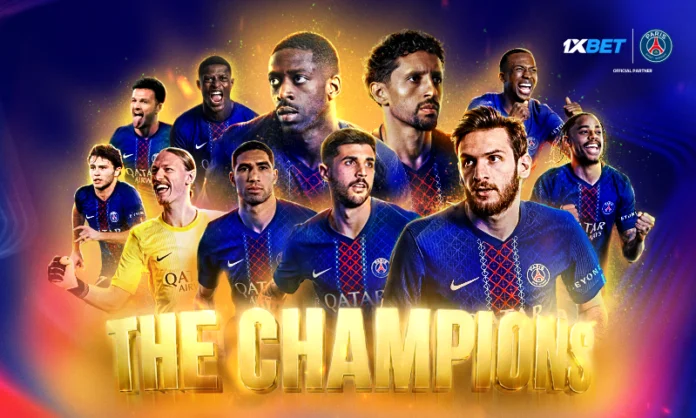
Paris Saint-Germain secured the Champions League title by defeating Arsenal in a penalty shootout. The victory marks a significant achievement for the Parisian club, establishing their dominance in European football. According to reports, this year's final follows their previous Champions League triumph last year, when PSG achieved a decisive 5-0 win against Inter Milan. This latest success reinforces Paris Saint-Germain's position at the pinnacle of European club football, demonstrating a sustained period of excellence and strategic development. The club's consistent performance in the continent's most prestigious competition has solidified its reputation as a formidable force, capable of overcoming top-tier opposition.
Dramatic Final Showdown
The Champions League final, held at the Puskás Aréna in Budapest, concluded with a 1-1 scoreline after 120 minutes of intense play, forcing a penalty shootout to decide the victor. The atmosphere in the stadium, with its capacity of 67,000 seats, was electric, as fans from both sides passionately supported their teams throughout the extended match. Early in the match, Arsenal took the lead 1-0 following a goal from Kai Havertz, sending a wave of excitement through their supporters. Paris Saint-Germain later equalized, with Ousmane Dembélé converting a penalty, shifting the momentum of the game.
Reports indicated Arsenal's starting lineup featured Piero Hincapié at left-back, providing defensive solidity and contributing to the team's build-up play. Myles Lewis-Skelly was a key presence in midfield for Arsenal, tasked with controlling the tempo and breaking up PSG's attacks. Christian Mosquera started at right-back for Arsenal, according to reports, a decision necessitated by several injuries impacting the squad's defensive options. Kai Havertz, who opened the scoring, was also a vital starter for Arsenal in the match, showcasing his attacking prowess from the outset.
During play, Khvicha Kvaratskhelia reportedly beat Mosquera with skillful dribbling, penetrating the Arsenal defense and drawing the key penalty that led to PSG's equalizer. This moment proved to be a turning point, bringing Paris Saint-Germain back into contention. The match continued with high intensity through regulation and into extra time. In extra time, Nuno Mendes made a challenge on Arsenal's Noni Madueke inside the PSG penalty area, a moment that could have potentially altered the outcome, though no further details were immediately available regarding the outcome of that particular incident or whether it resulted in a foul. The inability of either team to score a decisive goal during the additional thirty minutes showed the evenly matched nature of the contest, pushing the ultimate decision to the nerve-wracking penalty shootout. The tension was palpable as each team stepped up to take their spot kicks, with Paris Saint-Germain ultimately emerging victorious, adding another coveted trophy to their cabinet.
Managerial Vision and Player Departures
The Champions League final, held on May 30, 2026, marked a significant milestone for Paris Saint-Germain under the astute management of Luis Enrique. Reports indicated that Luis Enrique is the current manager of the Parisian club, and his tenure has been characterized by notable squad changes and a clear strategic direction. His leadership has been instrumental in shaping the team's identity and fostering a winning mentality, even in the face of significant challenges.
A key departure after his first year at PSG was that of superstar forward Kylian Mbappé. Mbappé reportedly forced a move to Real Madrid during the summer transfer window following Luis Enrique's inaugural season, seeking a new challenge in his illustrious career. This transfer represented a major shift in the team's composition, as Mbappé had been a central figure for PSG, known for his prolific goal-scoring and electrifying pace. His absence left a considerable void in the attacking lineup, requiring a strategic re-evaluation of the team's offensive capabilities.
The departure necessitated a strategic realignment for Luis Enrique and the club, influencing subsequent transfer policies and on-field tactics. Rather than relying on a single dominant forward, the team adapted to a more collective attacking approach, emphasizing fluid movement and shared responsibility. This transition demonstrated Luis Enrique's adaptability and his ability to reconfigure the squad effectively. PSG's continued success, despite such a high-profile exit, suggested an effective adaptation of the team's structure and playing style under the manager's guidance. The club's ability to maintain a dominant position in European football after losing a player of Mbappé's caliber noted the strategic planning and player development efforts within the organization, proving that their success was not solely dependent on individual brilliance but on a strong team framework. Luis Enrique's vision for a cohesive and adaptable squad has clearly paid dividends, allowing PSG to continue its impressive run of form in elite competitions.
Broader Dynasty and Partnership
Paris Saint-Germain's sustained success is actively supported by its official partner, 1xBet, according to club statements. This long-standing collaboration extends to various aspects, including the 1xPartners affiliate program, which offers affiliates up to 50% RevShare, showcasing a mutually beneficial relationship. This extensive partnership reportedly contributes significantly to the club's broader financial and marketing strategies, underpinning its ability to maintain a competitive edge in European football. The financial backing and global reach provided by 1xBet allow PSG to invest in top talent, advanced facilities, and extensive youth development programs, all of which are key for consistent high performance.
The recent Champions League final, which saw PSG secure another title, was held at the magnificent Puskás Aréna in Budapest. The stadium's impressive capacity for the event was 67,000 seats, accommodating a large and enthusiastic crowd for the decisive match. The choice of venue in Budapest noted the international reach and appeal of the Champions League, drawing fans from across Europe and beyond to witness the pinnacle of club football. The event itself was a spectacle, not just for the football on display but also for the global audience it commanded, further elevating the profiles of both the competing clubs and the tournament. PSG's ongoing triumphs in the tournament signify a period of unprecedented dominance that the club attributes, in part, to strong organizational backing and strategic partnerships both on and off the field. This holistic approach, combining elite athletic performance with strong commercial and financial strategies, has created a sustainable model for success, positioning Paris Saint-Germain as a true powerhouse in the world of football. Their consistent presence in, and victories at, the highest echelons of the sport are a testament to this full strategy.