Professor Ezekiel Kalvin Duramany-Lakkoh, the Deputy Vice Chancellor of the Institute of Public Administration and Management (IPAM), recently concluded a series of engagements in Monrovia, Liberia, aimed at fostering academic collaborations and addressing regional challenges. His visit included participation in the West Africa Academic Leadership Meeting, a partnership meeting with the Liberian Institute of Public Administration (LIPA), and a Memorandum of Understanding (MoU) review meeting with African Methodist Episcopal University (AMEU). Professor Duramany-Lakkoh also took part in the sixth session of Model United Nations Liberia 2026.
He emphasized the importance of collaboration, stating, "African academic institutions must move away from working in isolation and develop sustainable partnerships that promote knowledge exchange, academic mobility and cross-border research." Professor Duramany-Lakkoh also noted the potential for synergy between education and governance, remarking, "Higher education institutions and public-sector organisations possess complementary strengths that could be combined to address governance and development challenges confronting African countries." He stressed that "Institutional partnerships must go beyond ceremonial agreements and produce measurable benefits for students, academics, professionals and communities."
Strengthening Academic Partnerships
Professor Ezekiel Kalvin Duramany-Lakkoh visited Monrovia, Liberia, as part of his engagements. His meeting with the Liberian Institute of Public Administration (LIPA) specifically focused on strengthening institutional cooperation, joint consultancy, research, and professional capacity development in areas such as governance, leadership, and public administration. Professor Duramany-Lakkoh emphasized the need for collaboration, stating, "African academic institutions must move away from working in isolation and develop sustainable partnerships that promote knowledge exchange, academic mobility and cross-border research." He added that "Higher education institutions and public-sector organisations possess complementary strengths that could be combined to address governance and development challenges confronting African countries." He further asserted that "Institutional partnerships must go beyond ceremonial agreements and produce measurable benefits for students, academics, professionals and communities."
Addressing broader regional challenges, Professor Duramany-Lakkoh stated that Africa must build economies that create opportunities to avoid migration issues. He explained, "If we strengthen institutions, invest in education and entrepreneurship, improve regional integration and create dignified employment, migration becomes a choice, not a survival strategy." He concluded by noting, "The future of Africa will be shaped by the quality of its institutions, the strength of its partnerships, the opportunities available to its young people and our collective willingness to work together across national boundaries."
Model UN Liberia Notes
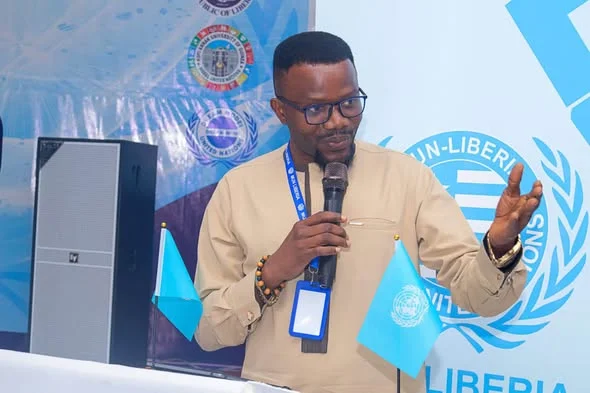
Professor Ezekiel Kalvin Duramany-Lakkoh's visit to Monrovia also aimed to promote stronger academic partnerships, collaborative research, postgraduate education, and youth participation in Africa’s development. He served as a guest speaker at the opening of Model United Nations Liberia 2026 in Monrovia, an event designed to foster youth engagement. The MUN-Liberia 2026 gathering brought together 250 delegates from different countries, participating in simulated United Nations sessions. More than 1,000 participants attended the two-day conference, showing its reach and significance for youth.
Professor Duramany-Lakkoh emphasized the importance of collaboration, stating, "African academic institutions must move away from working in isolation and develop sustainable partnerships that promote knowledge exchange, academic mobility and cross-border research." He added that "Higher education institutions and public-sector organisations possess complementary strengths that could be combined to address governance and development challenges confronting African countries." He stressed that "Institutional partnerships must go beyond ceremonial agreements and produce measurable benefits for students, academics, professionals and communities." Addressing broader regional challenges, he stated, "To avoid migration issues, we must build economies that create opportunities. If we strengthen institutions, invest in education and entrepreneurship, improve regional integration and create dignified employment, migration becomes a choice, not a survival strategy." Professor Duramany-Lakkoh concluded, "The future of Africa will be shaped by the quality of its institutions, the strength of its partnerships, the opportunities available to its young people and our collective willingness to work together across national boundaries."
Vision for Africa's Future
The West Africa Academic Leadership Meeting convened academic and institutional leaders to discuss strengthening higher education, joint consultancy, research initiatives, and the establishment of joint doctoral programmes. A partnership and Memorandum of Understanding (MoU) review meeting with African Methodist Episcopal University (AMEU) assessed existing cooperation, considering new opportunities for academic and research collaboration, including joint research projects, consultancy services, and postgraduate programmes.
During Model United Nations Liberia 2026, six specialized committees were active: the United Nations Security Council, UN Women, UNICEF, the United Nations Development Programme, the United Nations Framework Convention on Climate Change, and the United Nations Population Fund. These committees facilitated discussions among participants on various global issues.