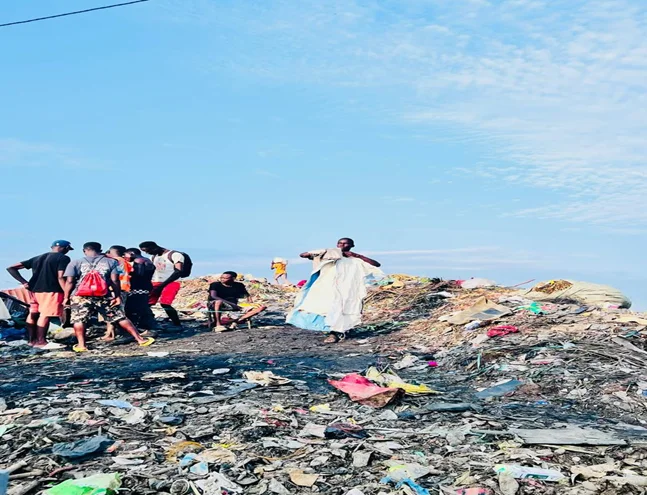
The air at Waterloo dumpsite, locally known as Bomeh, is thick with the stench of rotting refuse, a widespread smell that characterizes the area and permeates the surrounding community. Among those working amidst the waste is Ibrahim Sesay, a young male worker recruited by the Western Area Rural District Council (WARDC). Sesay is observed shoveling rotting refuse, a task that notes the daily struggles faced by individuals at the site. The ongoing work at the dumpsite shows the persistent environmental and public health challenges in the community, impacting both those who work there and residents living nearby.
Dangerous Living Conditions
Rugiatu Kamara, a primary school teacher in the Deep Eye Water community, stated she has never observed any formal waste management collector operating in the area. This absence of organized waste collection contributes significantly to the accumulation of refuse that impacts residents. Amina, a plantain seller and single mother of three, operates her stall directly by the dumpsite to secure her livelihood. Her daily presence notes the economic pressures that compel individuals to work in close proximity to the hazardous waste, despite the clear health risks involved. The constant presence of refuse and the lack of proper disposal mechanisms contribute to an environment ripe for disease transmission.
The indiscriminate dumping practices at the Waterloo dumpsite result in severely clogged drains. These blockages lead to significant flooding during heavy rains, transforming parts of the community into stagnant pools. Such conditions create ideal breeding grounds for mosquitoes, which contributes to outbreaks of malaria. The lack of proper waste disposal and subsequent flooding also fuels the spread of other waterborne diseases, including cholera and typhoid, posing ongoing public health risks to the local population. These health threats are a direct consequence of inadequate waste management infrastructure and practices.
Worker's Plight and Broken Promises
A 2021 government promise included the relocation of the hazardous dumpsite and the provision of modern facilities for waste management. Further details emerged in March 2021 when Sierra Leone’s Minister of Lands, Housing, and Country Planning announced that 200 acres of state land had been allocated to the Western Area Rural District Council (WARDC) specifically for the dumpsite's relocation. This allocation aimed to address the long-standing environmental and health concerns associated with the current site, offering a potential solution to the community's plight. However, despite this allocation, the dumpsite remains operational in its original location, and the promised modern facilities have not materialized.
The proximity of the dumpsite also poses significant health risks to the wider community. The World Health Organization warns that food prepared or sold near waste disposal sites is highly vulnerable to contamination, a concern for vendors like Amina and residents in the Waterloo area. The health implications extend beyond direct contact with waste. Air pollution alone accounts for 155 deaths per 100,000 people in Sub-Saharan Africa, a statistic that shows the broader environmental health challenges in the region, including those exacerbated by uncontrolled waste sites like Bomeh. The foul odor emanating from the site is not merely an inconvenience but a indicator of airborne pollutants.
Community Impact and Official Silence
Officials at the Western Area Rural District Council (WARDC) were unavailable for comment when a reporter visited their offices, leaving questions about the dumpsite's future unanswered. The lack of official response coincides with residents' growing concerns about waste management. Mariama Jalloh, a resident of Cole Street in Waterloo 555, stated her community lacks a nearby designated dumpsite and waste collection services. This forces residents to manage waste independently, often resorting to unsafe disposal methods that further exacerbate environmental problems.
Regarding worker safety, Ibrahim Sesay, a worker at the dumpsite, claimed WARDC provided protective gear. However, no worker was observed wearing any protective equipment at the site during a recent visit, raising serious questions about the implementation of safety measures for those working directly with the waste. The absence of protective equipment potentially exposes workers to a multitude of health hazards associated with uncontrolled refuse, including cuts, infections, and exposure to toxic substances. This discrepancy between stated policy and observed reality notes a critical gap in worker protection at the Waterloo dumpsite. The continued operation of the dumpsite without proper safeguards for its workers and the surrounding community shows the urgent need for intervention and accountability.