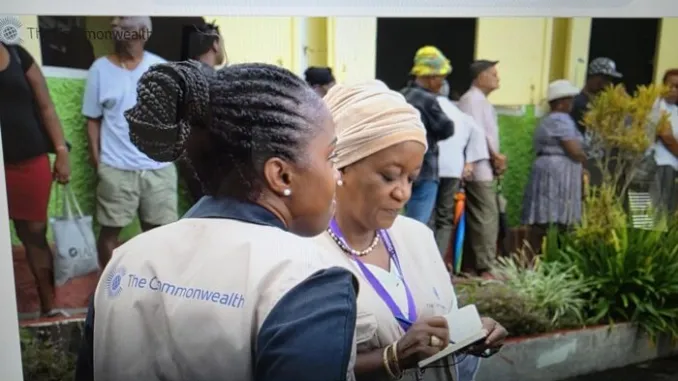
The Commonwealth Observer Group released its final report on the 30 April 2026 general elections in Antigua and Barbuda, recommending reforms to the country's electoral boundaries. The full report noted the significant demographic changes that have occurred in Antigua and Barbuda since 1984, which have led to pronounced disparities in constituency sizes. This situation, the Group noted, impacts the fundamental principle of equal suffrage and necessitates a thorough review of the current electoral map to ensure fair representation for all citizens. The Commonwealth Observer Group stated unequivocally that updated boundaries would better reflect the contemporary distribution of the electorate and, crucially, enhance the democratic process in the nation by ensuring every vote carries comparable weight.
Election Conduct Praised
In a positive assessment, the Commonwealth Observer Group's report commended the overall peaceful and transparent conduct of the polls in Antigua and Barbuda. The elections were conducted in a peaceful, orderly, and transparent manner, according to the Group's findings, which provided detailed observations on the electoral proceedings. Polling procedures were generally followed with diligence, and election officials carried out their duties professionally throughout the entire process, from the opening of polls to the tabulation of results. The Group specifically commended the vital role played by voters for their active participation, political parties for their engagement, the police for maintaining security and order, and the media for their extensive coverage and contribution in supporting a credible electoral process. These observations regarding the election's positive conduct were initially reflected in the preliminary statement issued by the Commonwealth Observer Group on 1 May 2026, immediately following the general elections, and were further elaborated upon in this final report. The consistent adherence to established procedures and the collaborative efforts of various stakeholders were key factors in the Group's positive appraisal.
Boundary Reform Call
Despite the commendation for the conduct of the polls, the Commonwealth Observer Group's report calls for urgent reform of constituency boundaries in Antigua and Barbuda. This pressing recommendation stems from the critical fact that the electoral boundaries in the country have remained largely unchanged since 1984. This static demarcation, in the face of significant population shifts over more than four decades, has led to substantial demographic imbalances across various constituencies. Such imbalances directly impact the principle of equal representation for voters, as some constituencies may have significantly more or fewer electors than others, thereby diluting or amplifying the power of individual votes.
The Group recommended that the government urgently empower the Boundaries Commission to undertake an independent, data-driven redistribution of seats. This process is deemed key for ensuring that the electoral map accurately reflects the current population distribution across the twin-island nation. The report specifies that this redistribution should be based on the most recent and full demographic information available, specifically the 2022 to 2025 census data, providing the most up-to-date statistical foundation for an equitable redrawing of lines. A key aspect of the recommendation, emphasized repeatedly by the Observer Group, is that the entire process should be conducted free from any political influence, safeguarding its integrity and impartiality at every stage. This independence is essential to build and maintain public trust in the electoral system and to ensure that the new boundaries serve the democratic principles of fair representation rather than being manipulated for partisan interests. The Group stressed that a transparent and objective boundary review is fundamental to the long-term health of Antigua and Barbuda's democracy.
Observer Group Composition
The Commonwealth Observer Group, tasked with monitoring the 30 April 2026 general elections, was formally constituted by Commonwealth Secretary-General the Hon Shirley Botchwey. The mission, comprising four eminent persons from across the diverse member states of the Commonwealth, brought together a wealth of experience in electoral processes and governance. This distinguished group was led by Hon Pelonomi Venson, the former Minister of Foreign Affairs of Botswana, whose extensive diplomatic and political background provided invaluable leadership to the observation effort. The collective expertise of the mission members ensured a thorough and balanced assessment of the electoral environment and conduct.
Commonwealth Secretary-General the Hon Shirley Botchwey expressed profound gratitude for their diligent work and the full nature of their final report. "I would like to extend my sincere thanks to the observers for completing and presenting this report in a timely manner," she stated, acknowledging the efficiency and dedication of the team. "The work undertaken throughout the mission and in producing this report has been thorough and thoughtful, and it is greatly appreciated by the entire Commonwealth Secretariat." Botchwey further noted the report's particular significance for Antigua and Barbuda, especially as the nation prepares to host the prestigious Commonwealth Heads of Government Meeting (CHOGM). She added, "The findings of this report provide an important assessment of the electoral process and the wider democratic context in Antigua and Barbuda. They will help bolster the credentials of the country with respect to upholding Commonwealth values, while simultaneously informing our continued engagement with stakeholders across the political spectrum and civil society." The Secretary-General showed the report's role in promoting good governance and strengthening democratic institutions within the Commonwealth family.
Broader Implications
The disparities in voter numbers across constituencies, which have resulted from the static electoral boundaries since 1984, risk seriously undermining the principle of equal suffrage, a core tenet of democratic elections globally. Such imbalances mean that a vote cast in one constituency may hold significantly more or less weight than a vote in another, potentially leading to unequal representation in the national legislature. These significant disparities could also affect public confidence in the electoral process itself, as citizens may perceive an inherent unfairness in how their votes are valued. A perceived lack of fairness in the electoral map can erode trust in democratic institutions and, consequently, challenge the legitimacy of election outcomes, according to observers of democratic processes. The Commonwealth Observer Group's report emphasizes that addressing these boundary issues is not merely a technical exercise but a key step towards reinforcing the foundations of democracy and ensuring that all citizens feel their voices are heard equally. Without reform, the long-term stability and perceived fairness of the electoral system could be jeopardized, detracting from the otherwise commendable conduct of the recent polls.