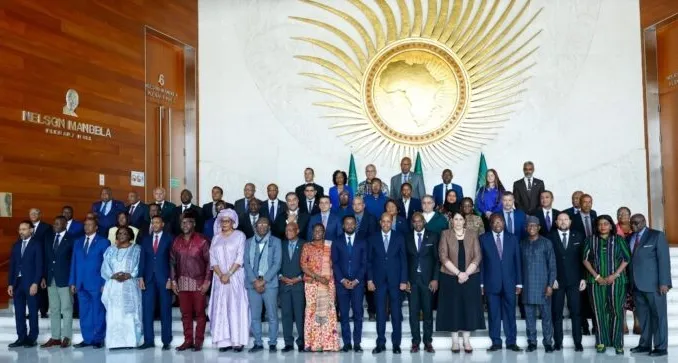
The 52nd Ordinary Session of the Permanent Representatives’ Committee (PRC) officially commenced on June 3, 2026, in Addis Ababa, Ethiopia, bringing together African Union representatives. The African Union Headquarters is located in Addis Ababa, Ethiopia, serving as the central hub for such critical continental deliberations. Ambassador Willy Nyamitwe, Chairperson of the PRC and Ambassador of the Republic of Burundi to Ethiopia, opened the session. As Chairperson, Ambassador Nyamitwe set a reflective tone for the proceedings, urging members to consider their enduring legacy. He stated, "History will remember whether we strengthened the institutions entrusted to us. It will remember whether we chose solidarity over division and vision over hesitation." Ambassador Nyamitwe further expressed his confidence in the committee's collective ability to navigate the complex challenges ahead and to build a stronger and more effective African Union for the benefit of all member states.
Key Meetings and Agenda
The Permanent Representatives' Committee (PRC) has a structured agenda designed to address critical continental issues. The Committee plans to deliberate extensively on reports submitted by its various Sub-Committees, the African Union Commission, and other AU organs and specialized agencies. These deliberations are key for shaping the strategic direction and operational efficiency of the Union. Following these in-depth discussions, the Committee will proceed to adopt its full report and prepare draft decisions. These meticulously prepared documents are specifically intended for the 49th Ordinary Session of the Executive Council. The Executive Council session is scheduled to convene from June 24-25, 2026, in El Alamein, Egypt, where these recommendations will be further considered and acted upon. Additionally, the 8th Mid-Year Coordination Meeting (MYCM) is also slated to occur in El Alamein, Egypt, building directly on the outcomes of the PRC's preparatory work and aiming to ensure smooth coordination across the Union's various bodies.
Acknowledged Continental Challenges
Mahmoud Ali Youssouf, Chairperson of the AU Commission, delivered a sobering assessment of the multifaceted challenges currently confronting the continent. He acknowledged ongoing geopolitical tensions, which often have broad implications for African stability and development, and macroeconomic instability as significant hurdles impacting economic growth and social welfare. Youssouf further cited delays in fertilizer imports, a critical issue that directly impacts agricultural productivity and food security across the continent. Various ongoing conflicts across African regions were also noted, showing the persistent need for peace and security initiatives. Health emergencies, such as the Ebola outbreak, continue to present critical concerns, demanding strong public health responses and international cooperation. Additionally, the Chairperson noted the closure of the Strait of Hormuz as another significant factor contributing to the complex global environment African nations currently navigate, affecting trade routes and energy supplies. The wide range of issues noted by Chairperson Youssouf shows the multifaceted nature of the difficulties requiring collective attention and concerted action from the African Union member states.
Resource and Staffing Shortfalls
The African Union (AU) currently operates with only 30% of its required staffing levels, a significant human resource deficit that impacts its operational capacity and ability to implement its mandate effectively. This critical shortfall in personnel is further compounded by substantial resource constraints. The organization currently utilizes approximately 25% of its global budget, a figure that includes programs funded by statutory contributions from member states. These severe financial and human resource limitations present ongoing challenges to the AU's operational capacity, hindering its efforts to address continental issues comprehensively. Addressing the persistent resource shortfalls and in recognition of the prevailing economic realities, the organization has indicated that the upcoming 2027 budget will be an austerity budget, reflecting a commitment to fiscal prudence amidst operational demands.
Calls for Solidarity and Action
Upcoming key gatherings, including the 49th Ordinary Session of the Executive Council and the 8th Mid-Year Coordination Meeting (MYCM), are both scheduled for June 27, 2026, with the MYCM specifically taking place in El Alamein, Egypt. These key meetings are expected to build on the full discussions and recommendations emanating from the Permanent Representatives' Committee. The collective aim of these sessions is to foster greater continental cooperation, enhance resource mobilization efforts, and strengthen institutional frameworks amidst the existing complex challenges, thereby reinforcing the African Union's role as a unifying force for progress and stability on the continent.