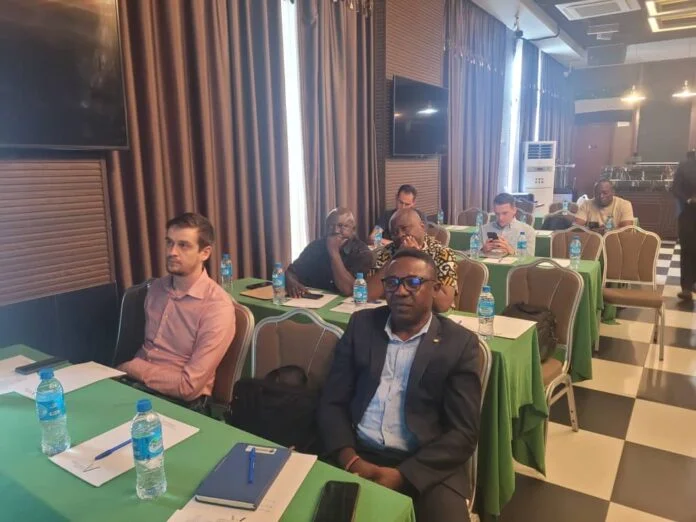
A significant conference focusing on Village Savings and Loan Associations (VSLAs) convened on May 6, 2026, at the Atlantic Lumley Hotel in Freetown, Sierra Leone. The event, which brought together key stakeholders, aimed to foster stronger collaboration among these vital community-based microfinance groups. VSLAs are designed to enable members to collectively save money, access small loans, and receive key emergency support, thereby providing essential financial services independent of formal banking institutions. This model empowers local communities by offering a self-managed approach to financial inclusion, particularly in areas where traditional banking access may be limited.
VSLA Landscape and Demographics
A recent full baseline study identified 979 distinct Village Savings and Loan Association (VSLA) groups actively operating across various regions of Sierra Leone. These groups collectively serve a substantial total membership of 33,826 individuals, demonstrating the widespread impact of the VSLA model within the country. The demographic breakdown of these members indicates a significant and empowering female participation, with 23,311 women actively involved compared to 10,515 men. This notes the key role VSLAs play in women's economic empowerment. Additionally, youth engagement within VSLAs is substantial, as 14,538 members are below the age of 35. This vibrant youth contingent represents 43 percent of the total VSLA membership mapped in the study, showing the associations' appeal and relevance to younger generations seeking financial independence and opportunities. Data further indicates that approximately 70 percent of VSLAs consist predominantly of women, many of whom also occupy leadership positions within these groups, reinforcing their key role in community financial management.
Challenges and Digitalization Push
Despite their successes, several challenges continue to affect the sustainability and operational efficiency of Village Savings and Loan Associations. These include issues such as low savings contributions from members, poor record keeping practices, and instances of loan defaults. Internal leadership disputes, low meeting attendance, a persistent lack of adequate training for members and leaders, and an ongoing dependence on external donor support also contribute significantly to these difficulties. Recognizing these hurdles, a significant number of VSLA groups view digitalization as a practical and effective solution to some of these pressing issues. For instance, the baseline study revealed that 852 VSLA groups explicitly indicated a belief that digital record keeping would offer a substantial improvement over existing manual systems, promising greater accuracy and transparency. An even larger number, 912 VSLA groups, expressed a clear willingness to transition to digital bookkeeping methods, suggesting a widespread readiness and enthusiasm among many associations to adopt new technologies to enhance their operations and improve accountability.
Calls for Collaboration and Sustainability
During the discussions at the Freetown conference, participants strongly emphasized that greater efforts are required to reduce donor dependency among Village Savings and Loan Associations, fostering a path towards true self-sufficiency. A key recommendation was the urgent need to enhance training programs, not only for general VSLA members but particularly for their leaders, to equip them with the necessary skills for effective management and governance. Strengthening collaboration among the various organizations that support community savings schemes was also noted as absolutely essential for ensuring the long-term sustainability and growth of these vital groups. This collective, coordinated approach aims to build more resilient, self-sufficient, and impactful VSLAs across Sierra Leone, ultimately benefiting more individuals and communities.
Stakeholder Perspectives and Organization
The Freetown conference, a key event for the VSLA sector, was meticulously organized by Woord en Daad in dedicated partnership with Solidaridad Sierra Leone, World Vision International, and Cotton Tree Foundation. These prominent organizations collaborated effectively to bring together a diverse range of stakeholders, including VSLA representatives, policymakers, and development partners, to discuss the critical future of Village Savings and Loan Associations (VSLAs) in the country. Their combined efforts facilitated a productive dialogue on overcoming challenges and leveraging opportunities for growth and sustainability within the VSLA landscape.