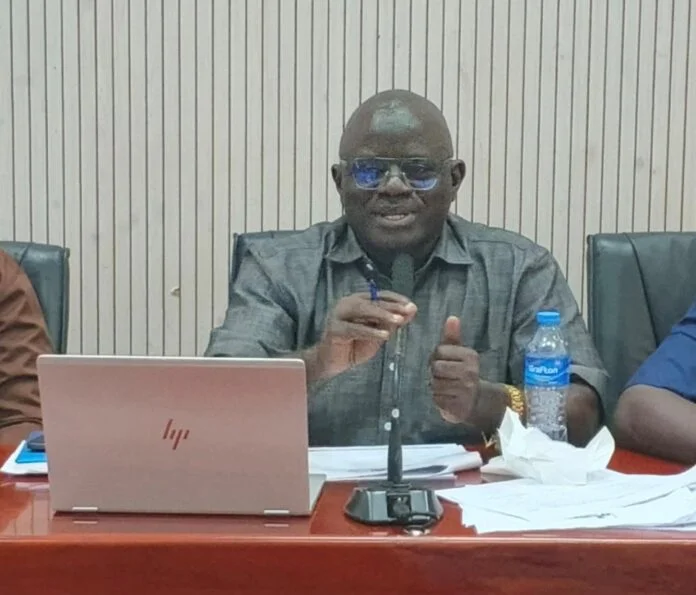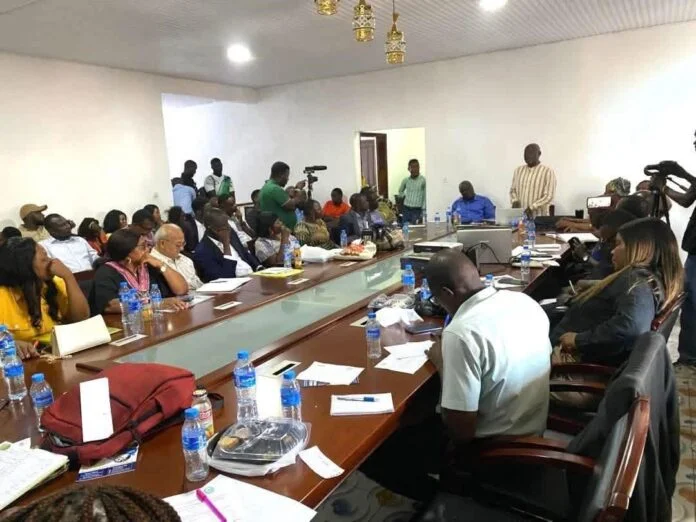
The Sierra Leone Chamber for Agribusiness Development (SLeCAD) has called for enhanced collaboration among Government, financiers, investors, and agribusiness stakeholders to bolster agricultural output and support Sierra Leone’s food security goals under the 'Feed Salone' programme. This initiative, launched in 2023, aims to reduce hunger, improve domestic food production, and lessen the nation's reliance on imported food commodities. SLeCAD made its appeal during a high-level engagement held on Tuesday, May 26, 2026, at its office located on Beach Road in Freetown. The chamber emphasized that stronger partnerships are essential to accelerate the 'Feed Salone' agenda and ensure its successful implementation. This call for stronger collaboration among Government, financiers, investors, and agribusiness stakeholders is central to SLeCAD's strategy to accelerate agricultural production and support Sierra Leone’s food security agenda.
Transforming Agriculture Through Collaboration
Ahmed Nanoh, Executive Chairman of the Sierra Leone Chamber for Agribusiness Development (SLeCAD), emphasized the necessity for Sierra Leone to evolve from subsistence farming into a competitive agribusiness destination capable of attracting significant investment. Mr. Nanoh stated that government policies alone are insufficient to transform the agricultural sector without strong financing mechanisms, increased private sector participation, and effective implementation strategies. He observed that major agribusiness companies in countries like Nigeria, Ghana, and Kenya actively support farmers through financing, contractual agreements, and guaranteed markets. These examples, he noted, illustrate effective models for private sector engagement that Sierra Leone could emulate. Mr. Nanoh also encouraged local businesses to utilize the opportunities presented by the African Continental Free Trade Area, noting its potential to open new markets and foster regional economic integration. "Finance is not only at the bank, it is also in the market," he stated, pointing to broader sources of capital and investment beyond traditional banking institutions. He further reiterated the need for Sierra Leone to transition from subsistence farming to a competitive agribusiness destination that can attract large-scale investment, stressing that this shift is critical for long-term food security and economic growth.
Deputy Chief Agriculture Officer, Aiah J. Thollie, affirmed that agriculture is no longer solely the responsibility of the government. Mr. Thollie noted the critical role of the private sector, stating, "The private sector must drive market aggregation, input supply, processing, packaging and commercial farming." He added that reforms implemented by the Ministry of Agriculture are designed to attract private investment and gradually shift the government away from directly distributing fertilizers and seeds, a move aimed at fostering a more market-driven agricultural sector. This strategic shift is intended to empower private enterprises to take a leading role in various aspects of the agricultural value chain. Mr. Thollie identified limited access to finance as a significant hurdle for agribusinesses in the country, impeding their ability to invest in modern equipment, expand operations, and adopt improved farming techniques. Agribusiness entrepreneur Naasu Fofanah further showed these challenges, specifically noting difficulties faced by women-led businesses in securing financial resources and expanding their market opportunities, pointing out systemic barriers that often disproportionately affect female entrepreneurs in the sector.
Government's Commitment and Support
Deputy Minister of Agriculture II, Sahr Hemore, reaffirmed the Government of Sierra Leone's commitment to collaborating with private sector stakeholders. Mr. Hemore stated that this collaboration aims to transform agriculture into a modern, commercially driven sector within the country, moving away from traditional, less productive methods. The government recognizes that achieving this transformation requires a concerted effort involving all key players.
The Ministry of Agriculture is actively engaging with various banks and development partners to enhance access to agricultural credit and introduce more strong insurance schemes for farmers and agribusinesses. This initiative seeks to address one of the primary challenges faced by the sector, as identified by industry experts, by mitigating financial risks and providing necessary capital. These partnerships are key for creating a more stable and predictable financial environment for agricultural ventures, encouraging investment and growth.
Concurrently, the government is directing investments towards critical infrastructure development. This includes the construction and improvement of roads and bridges, which are essential for transporting agricultural produce efficiently from farms to markets and processing centers. Additionally, investments are being made in storage facilities to reduce post-harvest losses, a significant problem that diminishes farmers' profits and overall food availability. The government is investing in energy infrastructure to support agro-processing activities across the nation, ensuring that value-added agricultural products can be processed and stored effectively, thereby increasing their market value and shelf life.
Sierra Leone has demonstrated progress in increasing local production across several key agricultural commodities. These include onions, rice, and eggs, alongside a growing output of various agro-processed products. This progress is a testament to the combined efforts of farmers, government initiatives, and nascent private sector involvement, signaling a positive trajectory for the 'Feed Salone' programme. The increased domestic production contributes directly to the program's objectives of reducing reliance on imported food and enhancing national food security.
Challenges and Proposed Solutions
The engagement convened officials from the Ministry of Agriculture, Forestry and Food Security, alongside farmers, investors, insurers, agribusiness operators, and various development partners. This diverse group of attendees facilitated a full discussion on the state of the agricultural sector. During the discussions, participants identified several challenges hindering agricultural development in Sierra Leone. These included inadequate infrastructure, climate risks such as unpredictable weather patterns and extreme events, high input costs for essential resources like fertilizers and seeds, limited mechanization that restricts efficiency and scale, insufficient storage facilities leading to spoilage, and weak market access for small and medium-scale farmers who often struggle to connect with buyers. These factors collectively impede the sector's growth and its contribution to national food security, creating significant barriers for farmers and agribusinesses alike.
To address these issues and foster greater collaboration, the Sierra Leone Chamber for Agribusiness Development (SLeCAD) announced plans to revive its end-of-month engagement forums. These forums are intended to serve as platforms connecting farmers, buyers, donors, and international investors directly with local agribusinesses, aiming to streamline partnerships and investment opportunities. The re-establishment of these regular gatherings is designed to create a consistent dialogue and facilitate direct interactions that can lead to concrete business deals and support mechanisms.
SLeCAD has prior experience in seeking external investment, having previously engaged financiers from the Middle East and other international partners regarding potential investment packages. These packages, which exceeded US$5 million, subsequently stalled, noting the complexities involved in securing and finalizing significant foreign capital for the agribusiness sector. The chamber's renewed focus on regular forums aims to create a more consistent and accessible channel for such partnerships, addressing some of the structural and financial barriers identified by stakeholders. By providing a structured environment for networking and negotiation, SLeCAD hopes to overcome past hurdles and successfully attract the necessary capital to drive agricultural transformation.
Broader Vision for Agribusiness
The Sierra Leone Chamber for Agribusiness Development (SLeCAD), established in 2008, continues its advocacy for a strengthened private sector role in agricultural transformation. The organization’s long-standing commitment shows efforts to move Sierra Leone's farming practices beyond subsistence levels, aiming for a more dynamic and prosperous agricultural economy. Through its initiatives, SLeCAD aims to build a more resilient and commercially viable agribusiness sector. This includes fostering environments conducive to investment and collaboration between various stakeholders, from local farmers to international investors. The chamber's foundational mission since 2008 has been to champion policies and partnerships that can accelerate agricultural growth and contribute significantly to national food security objectives. Their continued efforts are seen as key for realizing the full potential of Sierra Leone's agricultural sector and ensuring a sustainable future for its food supply. The chamber's vision extends to creating a strong ecosystem where all participants can thrive, contributing to both economic development and improved livelihoods across the nation.