A report released Thursday, September 3, 2026, raised significant concerns regarding a reforestation and carbon credit project situated in Sierra Leone's Tonkolili and Port Loko districts. The full report, titled "Uprooted Promises: A Case Study of Carbon Credits, Land Rights and Community Impacts in Sierra Leone," was the collaborative effort of Swedwatch, HEKS, and the Sierra Leone Network on the Right to Food (Silnorf). It meticulously examines the "Reforestation of Degraded Lands in Sierra Leone" project, which encompasses approximately 10,000 hectares dedicated to commercial forestry plantations. Within this substantial area, about 5,000 hectares are reportedly eligible to generate valuable carbon credits. The ownership of these extensive plantations rests with UK-based Miro Forestry Developments Limited, a company that has maintained operations in Sierra Leone since 2012. Swiss climate consultancy South Pole was engaged by Miro Forestry Developments Limited to facilitate the registration of these plantations as a carbon project under Verra’s Verified Carbon Standard and to assist in the subsequent sale of the generated credits. The project was officially registered in 2021, with its crediting period retrospectively beginning in 2016. Since its inception, the initiative has reportedly generated more than 480,000 carbon credits, showing its scale within the voluntary carbon market.
Community Impacts and Land Access
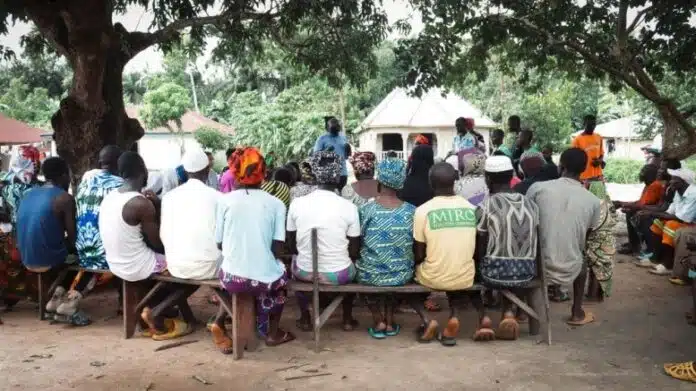
The report alleges that several communities experienced a loss of access to land that had been historically utilized for subsistence farming and the collection of essential natural resources. This occurred after significant portions of the project area were converted into commercial plantations. Researchers conducting fieldwork in October 2025 visited six communities within the project zone. During their investigation, they uncovered a notable discrepancy between official project documentation, third-party assessments, and the direct experiences shared by residents of these communities. Residents consistently reported that specific parcels of land, now part of the plantations, had been actively used for farming various crops and for harvesting key resources such as fruit, firewood, and other natural materials. This testimony directly contradicts initial project descriptions, which had characterized the entire area as “degraded” and thus suitable for reforestation without significant pre-existing usage.
Many interviewees directly associated their newly restricted access to the land with a discernible increase in food insecurity, a rise in poverty levels, and a decline in overall household income. Some individuals indicated that they did not fully comprehend the long-term duration and specific conditions stipulated within the land leases they had agreed to. Several landowners described the reported annual rent of US$12 per hectare as profoundly inadequate, particularly when weighed against the substantial loss of farming income and the cessation of access to vital natural resources that the land previously provided. Despite these significant concerns, the report did acknowledge certain positive impacts stemming from the project. These included the creation of some employment opportunities for local residents, the restoration of tree cover in certain areas, and observed improvements to the local microclimate. However, the report critically noted that these positive impacts were not experienced equally or equitably across all affected communities, leading to an uneven distribution of benefits.
Carbon Credits and Financial Discrepancies
A significant finding within the report was the widespread unawareness among many residents, key informants, and even some local authorities regarding the generation of carbon credits by the Miro Forestry Developments Limited plantations. According to the report, these stakeholders largely believed that the land was being utilized solely for commercial timber production, rather than also serving as a source of tradable carbon offsets. Project documents cited in the report explicitly indicated a provision wherein five percent of the net profits derived from the venture would be allocated to a dedicated community fund. However, interviewed landowners unequivocally stated that they had not received any share of the carbon credit proceeds, leading to considerable disillusionment and a sense of inequity. This gap between stated policy and actual experience forms a core component of the report's critique.
In response to these concerns, Miro Forestry Developments Limited clarified its position, explaining that the company had not yet recorded a net profit from the project, which it stated was a prerequisite for triggering the community fund distribution under the existing agreement. Nevertheless, acknowledging the community's concerns and the potential for perceived unfairness, the company reportedly committed to reviewing a revenue-based benefit-sharing arrangement. This alternative model, which would be considered from January 2027, represents a possible departure from the current net-profit model and aims to more directly address the issues surrounding the distribution of financial benefits to affected communities, regardless of overall project profitability.
The report by Swedwatch, HEKS, and the Sierra Leone Network on the Right to Food (Silnorf) further notes substantial financial figures, noting that Miro Forestry Developments Limited reportedly earned a significant US$6.7 million from carbon credit sales across its two African projects in 2024. This figure encompasses sales generated from both the Sierra Leone project under scrutiny and another project operated by the company on the African continent. The stark discrepancy between these reported earnings from carbon credit sales and the stated lack of net profit for the project, which in turn affects profit sharing with landowners, has emerged as a central point of contention and concern within the communities directly impacted by the reforestation initiative. The report strongly suggests that the current financial model and its implementation have created a considerable gap in both understanding and tangible benefits for those whose ancestral land is being utilized by the project.
Responses and Recommendations
A particularly critical aspect noted by the report involved the experiences of women within the affected communities. Women interviewed indicated a direct loss of access to essential firewood and fruit trees, resources key for their households and livelihoods. They further asserted that they were largely excluded from the initial land negotiations and subsequent lease payment processes. The report noted a prevalent practice where payments were commonly distributed through male community elders, effectively sidelining women from direct financial benefit and decision-making regarding their land.
Both Miro Forestry Developments Limited and South Pole issued responses disputing the report’s characterization of the project’s negative effects. Both companies maintained that their operational practices strictly comply with all applicable Sierra Leonean laws, adhere to established international sustainability standards, and follow approved carbon methodologies. Miro Forestry Developments Limited expressed its willingness to thoroughly investigate the specific concerns raised in the report, commit to engaging relevant stakeholders in constructive dialogue, and implement improvements to its practices wherever necessary and feasible. South Pole, for its part, stated that it had already established independently assured internal procedures designed to conduct more rigorous project screening processes, exceeding the baseline requirements of existing carbon standards. At the time the report was published, Verra, the standard body under which the project is registered, had not yet issued a public statement regarding the findings.
The report put forth a series of clear and actionable recommendations for various stakeholders. It specifically recommended that Miro Forestry Developments Limited renegotiate relevant land leases to ensure they are in full accordance with Sierra Leone’s Customary Land Rights Act of 2022, a key piece of legislation designed to protect traditional land tenure. It urged the company to promptly introduce a revenue-based benefit-sharing system, moving away from the net-profit model, and to actively ensure that women participate fully and equitably in all aspects of land governance and benefit distribution. South Pole and Verra were strongly encouraged to significantly strengthen their human rights due diligence processes, enhance project supervision, and foster more meaningful and direct engagement with affected communities. The report also extended recommendations to the Government of Sierra Leone, encouraging it to introduce and rigorously enforce full carbon market policies that effectively protect customary land rights, establish accessible and effective grievance mechanisms for affected populations, and mandate greater transparency from all investors operating within the country’s carbon sector. The organizations behind the report concluded with a significant overarching statement: that third-party certification alone, while important, could not adequately address or mitigate the complex social effects and potential negative impacts of carbon projects on local communities.