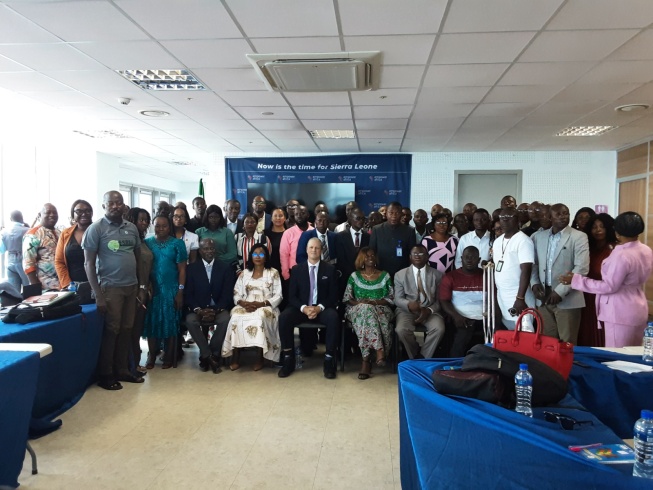
The National Monitoring and Evaluation Agency (NaMEA), supported by the United Nations Development Program (UNDP), successfully concluded a two-day workshop on May 14, 2026. This significant event, held at the Freetown City Council Hall on Wallace Johnson Street in Freetown, was dedicated to the key task of validating ten Public Investment Projects Monitoring Reports. These ten projects are currently being implemented by various Government Ministries, Departments, and Agencies (MDAs) across the nation, representing a diverse portfolio of development initiatives. The workshop showed a commitment to transparency and accountability in the execution of public investment projects, ensuring that progress and outcomes are rigorously assessed and verified.
Workshop Details and Scope
The validation workshop brought together a wide array of representatives from key government ministries, departments, and agencies. Attendees included senior officials and technical staff from the Ministries of Basic and Senior Secondary Education, Fisheries and Marine Resources, Agriculture, Works, Health, Energy, and Development and Economic Planning. Further emphasizing the cross-sectoral importance of the projects, representatives from the National Commission for Social Action (NaCSA), the National Youth Commission, and the National Telecommunications Agency also participated. Their collective presence was central to the process of thoroughly reviewing, discussing, and ultimately endorsing the project monitoring reports, ensuring that all relevant stakeholders had input into the validation process. This collaborative approach is vital for fostering shared ownership and understanding of project performance.
NaMEA conducted the extensive monitoring and evaluation exercises for these projects over a two-month period, specifically between November and December of 2025, preceding the workshop. This dedicated timeframe allowed for the careful collection of full data and observations directly from the field, providing a strong foundation for the subsequent validation discussions. The preparatory work by NaMEA was key in gathering the detailed evidence necessary for an informed and accurate assessment of each project's status and achievements.
During this period, NaMEA actively monitored and surveyed a total of ten public investment projects. These projects were not concentrated in one area but were geographically dispersed, covering all 16 Districts nationwide. This extensive reach of the monitoring efforts ensured a broad and inclusive assessment of government initiatives, capturing conditions and progress across various sectors and diverse regions of the country. By extending its oversight to every district, NaMEA aimed to provide a holistic view of national development efforts and identify both successes and areas needing improvement on a widespread scale. The full nature of this pre-workshop assessment was a cornerstone of the validation process, providing participants with detailed, on-the-ground insights.
Project Funding and Impact
The German Development Bank is a significant financial contributor, providing funding for a range of critical infrastructure and agricultural development initiatives across the country. These projects include the construction of vital infrastructure along border districts, enhancing connectivity and accessibility, and in riverine areas of Kambia District, addressing specific regional development needs. The bank's substantial support also extends to enhancing key economic sectors through improvements in the cattle, rice, and cacao value chains, aiming to boost agricultural productivity and farmer incomes. Additionally, the funding facilitates the construction of essential roads and culverts in various regions, improving transportation networks and market access. The provision of rice stores, modern rice milling machines, and accessible water wells to local communities directly addresses food security and basic living conditions. These multifaceted efforts are strategically designed to bolster economic development, foster resilience, and significantly improve living conditions in the target areas, contributing to sustainable national growth.
In a broader context, NaMEA's mandate extends far beyond these ten validated projects. The agency oversees the monitoring of more than 200 ongoing projects nationwide. This extensive portfolio encompasses a diverse array of governmental and development initiatives currently in various stages of implementation across Sierra Leone, reflecting the breadth of the nation's development agenda. The agency's continuous monitoring activities are indispensable for ensuring accountability, tracking progress, and identifying potential challenges for these numerous projects, thereby safeguarding public and donor investments and promoting efficient resource utilization. This full oversight is a testament to NaMEA's key role in the country's development framework.
Statements on Accountability and Partnership
The workshop proceedings were expertly chaired by Mr. Saidu Amara, who serves as the Director of Capacity Building Development at NaMEA. Mr. Amara's leadership was instrumental in guiding the discussions and facilitating the rigorous validation processes throughout the two-day event. His role involved ensuring that all voices were heard, all data points were thoroughly scrutinized, and that the validation process adhered to established protocols. The primary focus remained steadfastly on ensuring the accuracy, completeness, and reliability of the monitoring reports for the ten Public Investment Projects, reinforcing the commitment to evidence-based decision-making. The successful conclusion of this workshop notes the strong partnership between NaMEA and UNDP in strengthening national monitoring and evaluation systems, which are fundamental for effective governance and sustainable development in Sierra Leone.