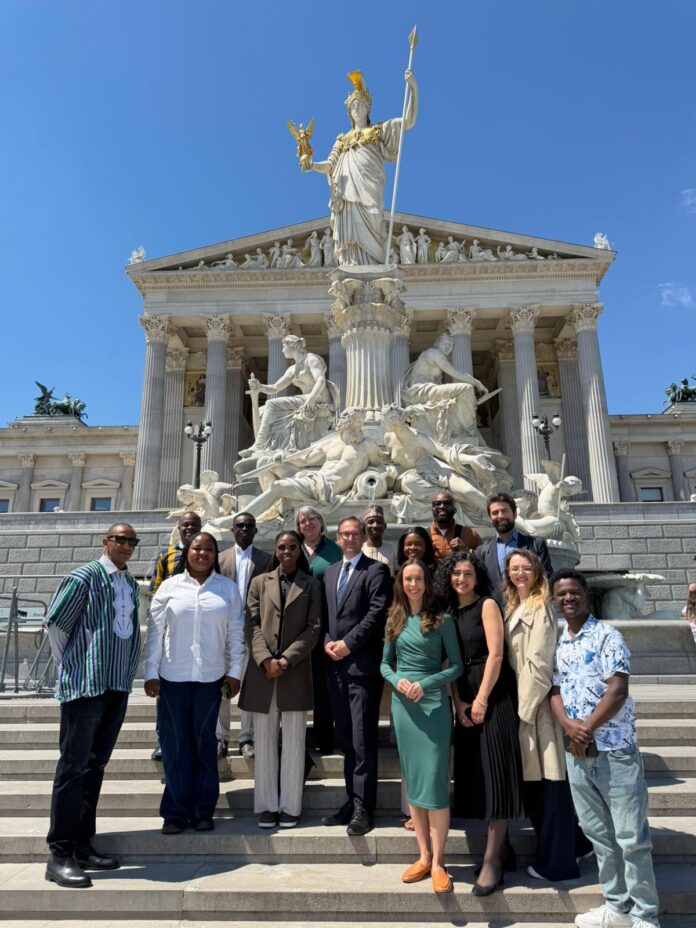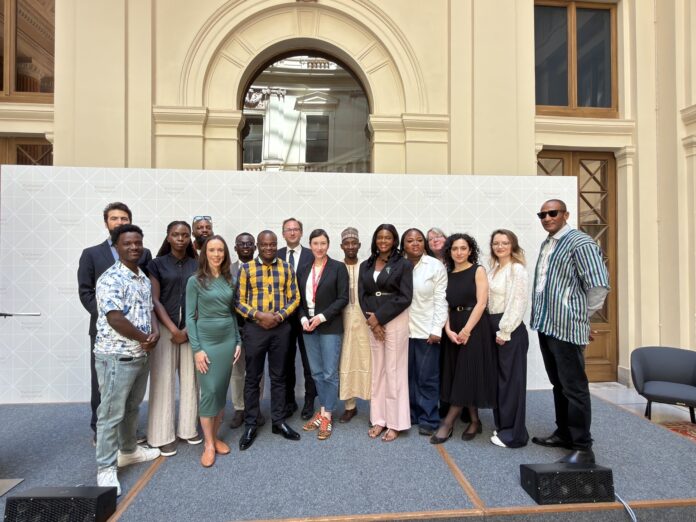
Ten journalists from various African countries participated in the Austria-Africa Media Fellowship Programme in Vienna, Austria, on Tuesday, May 19, 2026. This significant event brought together media professionals from across the African continent to engage directly with Austrian parliamentarians and officials. The program facilitated in-depth discussions on critical global issues, including the foundational principles of democracy, the importance of media literacy in an increasingly complex information landscape, and the widespread challenge of misinformation. The dialogue delved into the broader scope of Austria–Africa relations, specifically addressing foreign disinformation campaigns targeting democratic institutions and societies. The fellowship provided a key platform for an exchange of ideas and strategies to combat these challenges.
Andreas Minnich, a Member of the Austrian National Council and Vice-Chair of the Foreign Affairs Committee, took part in the engagement, offering insights from the Austrian parliamentary perspective on international relations and the fight against disinformation. His participation showed the importance Austria places on fostering international cooperation on these vital issues. Henrike Brandstötter, also a Member of the Austrian National Council, participated, emphasizing Africa's growing importance on the global stage. Brandstötter stated, "The future is in Africa," a declaration that resonated throughout the discussions and noted a forward-looking perspective on continental development. She further showed the need for a fundamental shift in approach, adding, "Europe must rethink its approach and begin engaging African countries more as strategic partners capable of driving global economic growth and innovation." This sentiment reflects a growing recognition within European policy circles of Africa's dynamic potential and its key role in global affairs.
African Journalists' Perspectives on Disinformation
Journalists from Sierra Leone, Nigeria, Ghana, South Africa, Kenya, Ethiopia, and Zimbabwe shared practical examples of how misinformation and propaganda have influenced political discourse, elections, and public perception across the African continent. Their firsthand accounts provided invaluable insights into the real-world impact of false narratives on nascent and established democracies alike. These journalists noted the significant challenges posed by the rapid and often deliberate spread of false information, detailing how it can destabilize societies and undermine public trust. The discussions revealed a shared understanding of the multifaceted nature of disinformation and its profound effects on civic life.
Participants in the program noted that misinformation spreads rapidly through various channels, including popular messaging applications like WhatsApp, widely used social media platforms such as Facebook, traditional media like radio stations, influential personalities often referred to as influencers, and numerous other online platforms. They observed that fact-checking mechanisms on these platforms are often weak or nonexistent, contributing significantly to the widespread dissemination of unverified content. This lack of strong verification tools allows false narratives to proliferate unchecked, reaching vast audiences in a short period. The journalists described how these narratives are frequently amplified, especially during critical times such as electoral campaigns or periods of social unrest, making it difficult for citizens to distinguish truth from fabrication.
Misleading narratives, the journalists explained, commonly gain traction during elections, protests, and periods of political uncertainty, capitalizing on heightened emotions and pre-existing societal divisions. They provided specific instances where such disinformation campaigns were meticulously designed to sway public opinion, suppress voter turnout, or incite unrest, thereby directly impacting democratic processes and social cohesion. The discussions showed the widespread nature of these challenges within their respective countries, revealing common patterns and tactics employed by those seeking to manipulate public discourse. The shared experiences of the African journalists painted a vivid picture of the urgent need for effective countermeasures against these sophisticated and often malicious campaigns.
Austria's Stance on Disinformation and Media Literacy
Austria's National Council, comprising 183 members, operates under a coalition government, a democratic arrangement designed to maintain stability despite ideological differences among the governing parties. This system, while fostering compromise, also faces unique challenges from external pressures, including disinformation. Disinformation has emerged as a major threat to democracy, national security, and public trust across Europe, according to Austrian officials. Misinformation campaigns frequently exploit social tensions, target vulnerable populations, and seek to weaken confidence in democratic institutions and traditional journalism, making them a potent tool for undermining societal stability. The Austrian government views these campaigns not merely as a nuisance but as a deliberate assault on the foundational pillars of its democratic system.
Misinformation, particularly online disinformation, spreads rapidly and cheaply, presenting a formidable challenge to public discourse and the integrity of information. Fake news and manipulated content continue to shape political narratives, influence public opinion, and deepen societal divisions, especially through digital platforms and social media, where content can go viral almost instantly. In response to these challenges, Austria is increasingly introducing educational programmes aimed at helping young people identify fake news, verify information, and better understand responsible digital behaviour. These initiatives are seen as key for empowering the next generation to critically assess the vast amount of information they encounter daily.
Schools in Austria are gradually incorporating media literacy and digital awareness programmes into their curricula to equip students with essential skills to navigate online content responsibly and discern credible sources from unreliable ones. These educational efforts are designed to foster a more discerning and resilient citizenry. Discussions are also ongoing within Austria about strengthening safeguards for children and young people against harmful online content and excessive social media influence, recognizing the unique vulnerabilities of younger users. These initiatives reflect a broader, concerted effort within the country to counter the insidious effects of disinformation and promote a more informed and engaged citizenry, capable of upholding democratic values in the digital age.
Strengthening Austria-Africa Relations
Austria is increasingly treating misinformation not only as a media challenge but also as a national security issue requiring coordinated responses at both domestic and international levels. Officials within Austria’s government have emphasized the urgent need for a full strategy to address the multifaceted threats posed by disinformation campaigns, acknowledging their potential to destabilize democratic processes and undermine public confidence. This approach recognizes the potential for false information to undermine national stability and public trust in democratic processes, extending its implications far beyond the realm of traditional media. The shift reflects a broader understanding that combating misinformation requires more than just media literacy initiatives, extending to national security frameworks and international cooperation.
Austria is repositioning its approach toward African partnerships through a renewed Africa Strategy focused more on trade, investment, innovation, and equal cooperation. This strategy aims to foster deeper economic ties and mutual development, moving beyond traditional aid-based relationships to create more equitable and sustainable partnerships. The renewed focus shows Austria's recognition of Africa's growing geopolitical and economic significance, seeking to establish partnerships built on shared interests and reciprocal benefits that serve both continents. This strategic reorientation aligns with a global trend of European nations seeking more strong and diversified engagements with African countries, recognizing the continent's dynamic growth and its key role in future global prosperity. The fellowship program itself is an embodiment of this renewed strategy, fostering direct engagement and mutual understanding.
The discussions among participants noted the urgent need for governments, journalists, educators, and civil society organizations to work collaboratively in promoting media literacy, protecting democratic values, and combating the spread of false information. This collective effort is seen as indispensable in building resilient societies that can withstand the pressures of disinformation. Participants stressed that a multi-stakeholder approach is essential to effectively counter disinformation, advocating for joint efforts to educate the public, enhance fact-checking capabilities, and safeguard informational integrity across all platforms. This collaborative framework is viewed as critical for building resilient societies capable of discerning truth from falsehood in an increasingly complex information environment, ensuring that democratic principles remain strong in the face of evolving threats.
Parliamentarians' Call for Collaboration
Henrike Brandstötter emphasized that strengthening media literacy, particularly among young people and citizens in rural communities, represents one of the most effective strategies to combat misinformation. She stressed that equipping individuals with the skills to critically evaluate information is a powerful defense against manipulation. The Member of the Austrian National Council also previously stated, "The future is in Africa," a statement that frames the continent as a key partner in global development and the fight against shared challenges. She further advocated for a fundamental shift in approach, noting, "Europe must rethink its approach and begin engaging African countries more as strategic partners capable of driving global economic growth and innovation." Both Brandstötter and Andreas Minnich, also a Member of the Austrian National Council, showed the importance of trusted journalism, ethical reporting, and professional fact-checking as key defenses for democracy against the spread of misinformation. They noted that a strong, independent press is an indispensable pillar of any democratic society, acting as a bulwark against the forces of deception and propaganda.